 MineArchive
Commonhead Colliery
| Also known as | Common Head Colliery |
|---|---|
| Location | Commonhead, north side of Airdrie, North Lanarkshire |
| Commodity | Coal |
| Type | Coal |
| Worked | to By 1872 |
| Maximum depth | Unknown. |
| Operators | David and James Sneddon (?–1850) |
Overview
A coal pit at Commonhead on the north side of Airdrie, beside the Glasgow and Airdrie railway, worked by David and James Sneddon. On 23 July 1850 a firedamp explosion killed seventeen of the nineteen men who went down; its owners were charged with culpable homicide. Its Drumgray and Kiltongue workings were abandoned by 1872.
History
Commonhead Colliery lay at Commonhead, immediately north of Airdrie and next to the Glasgow and Airdrie railway, and in 1850 belonged to David and James Sneddon. It was a fiery pit worked with naked lights: each morning the fireman went round with a safety lamp and chalked on a shovel where gas lay, and the colliers then cleared it by 'waffing' with their jackets before work. The ventilating furnace was not kept burning night and day.
The pit stood idle from Saturday 20 July 1850. When nineteen men went down on the Tuesday morning, the oversman, Alexander Willison, went ahead to examine the workings, and minutes later firedamp exploded, wrecking the workings and the mid-wall of the shaft. Only his brother James, at the shaft bottom, survived (see Disasters, below). The owners were charged with culpable homicide.
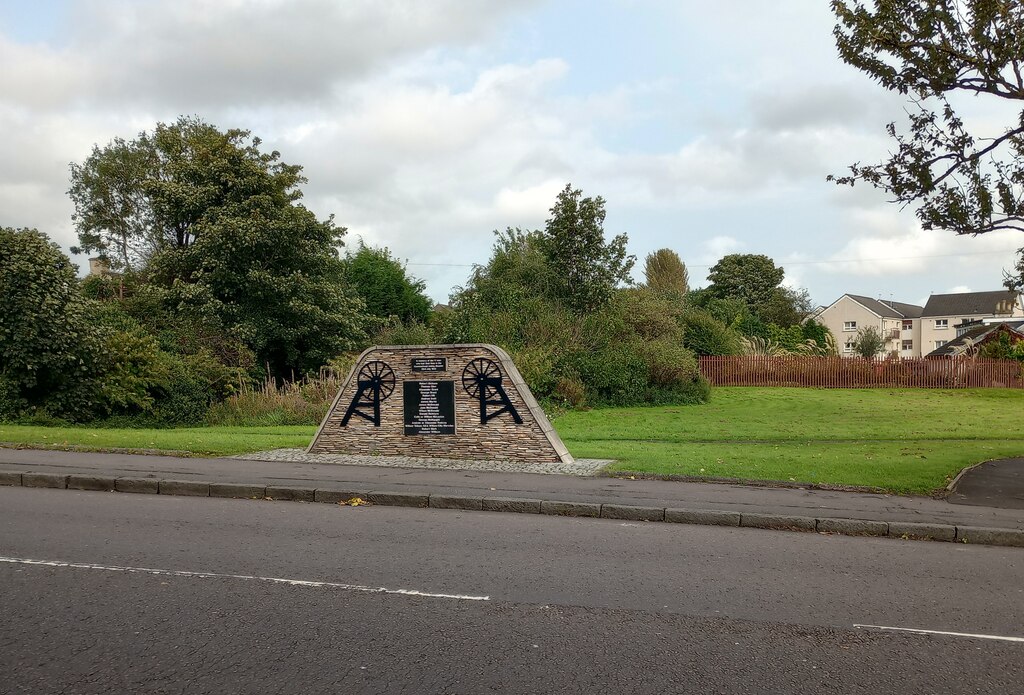
The colliery worked the Drumgray seam, abandoned in 1869, and with Mavisbank Easter the Drumgray and Kiltongue seams, abandoned in 1872. A memorial to the seventeen dead now stands in Airdrie.
Geology
The Drumgray and Kiltongue coals of the Lanarkshire coalfield.
Workings
A shaft with a mid-wall dividing it, a cage, and a ventilating furnace; workings in the Drumgray and Kiltongue seams.
Closure
Its Drumgray workings were abandoned in 1869 and the joint Commonhead and Mavisbank Easter workings in 1872.
What remains
A memorial to the seventeen men killed in 1850 stands in Airdrie.
Redevelopment
Unknown.
Disasters & major incidents
-
Commonhead Colliery explosion, 1850
23 July 1850 · Explosion · 17 fatalities
Just after six on the morning of 23 July 1850, nineteen men went down Commonhead pit at Airdrie, idle since the Saturday. The oversman, Alexander Willison, had barely gone forward to examine the workings when firedamp exploded. Seventeen were killed; only his brother James, near the shaft bottom, escaped. The owners were charged with culpable homicide.
What's uncertain
Points where sources disagree or the record could not be settled; both accounts are kept. All open questions in the archive.
- In 1850 the pit belonged to David and James Sneddon. (disputed) 1
- James and John Seddon were charged with culpable homicide after the 1850 explosion. (disputed) 2
Recorded claims
Individual factual claims, each attached to the source(s) that support it below. Where sources disagree, both are kept.
- In 1850 the pit belonged to David and James Sneddon. (disputed) 1
- James and John Seddon were charged with culpable homicide after the 1850 explosion. (disputed) 2
- The pit stood immediately north of Airdrie, next to the Glasgow and Airdrie railway. 1
- Firedamp was cleared by the colliers 'waffing' it with their coats after the fireman marked where it lay. 2
- An explosion on 23 July 1850 killed all but one of the men who went down. 1,2
- The Commonhead and Mavisbank Easter workings in the Drumgray and Kiltongue seams were abandoned in 1872. 3
Photographs & further reading
Newspaper reports and the list of the dead of 1850.
View sourceSources
- (secondary) Scottish Mining Website: Commonhead 1850 — Scottish Mining Website
- (secondary) NMRS: Commonhead Colliery Explosion, Airdrie, 1850 — Northern Mine Research Society
- (primary) BGS / Mining Remediation Authority mine plan: Commonhead and Mavisbank Easter (Drumgray and Kiltongue), abandoned 1872 — British Geological Survey
- (primary) BGS / Mining Remediation Authority mine plan: Commonhead (Drumgray), abandoned 1869 — British Geological Survey
Record created: 11 October 2026 · Last researched: 11 October 2026