 MineArchive
Cocken Colliery
| Also known as | Cocken Pit |
|---|---|
| Location | Cocken, above the Wear opposite Finchale Priory, County Durham — 54.8206, -1.5393 (approximate) |
| Commodity | Coal |
| Type | Coal |
| Worked | By 1842–by the 1890s |
| Maximum depth | Unknown. The upcast was sunk from the surface to the Low Main seam in 1869. |
| Operators | Earl of Durham |
Overview
One of the Lambton family’s Durham pits, on the high ground at Cocken above the wooded bend of the Wear opposite Finchale Priory, three and a half miles north-north-east of Durham. It was at work by the early 1840s, returned coal in the official lists from 1855 to 1873 and was still working for the Earl of Durham in 1880, and it was one of the two collieries — with Littletown — from which Lambton Collieries Ltd worked what remained of the Rainton royalty after the Londonderry pits there closed in 1896. It had gone by the end of the century.
History
Coal at Cocken belonged to the Lambtons of Lambton Castle, whose commercial working of the Wear valley coal began with the first of seven pits sunk at Bournmoor from 1783. In 1822 Lord Lambton bought Nesham’s waggonway and Newbottle Colliery and extended the waggonway south-westwards to join up with his other collieries at Cocken, Littletown and Sherburn — a move that gave him what the Hetton Company already had, independence from the middlemen who controlled the Wear. The colliery itself appears in the official output lists for 1855, 1860, 1865 and 1873, all for coal, and was returned to the Earl of Durham in the 1860s and again in the official list of collieries at work in 1880. Its upcast shaft was sunk from the surface to the Low Main seam in 1869. The men killed there whose names the mining museum has collected span 1842 to 1882 and give the flavour of the place: a quarryman crushed in 1844 while winning scalds on the pit heap to repair the roads; a twelve-year-old rolley driver run over in 1855 after going back to the furnace to roast potatoes; a sixteen-year-old putter crushed between a full tub and a prop in 1882 when the pony went on. The colliery outlasted the Londonderry pits at Rainton. When those closed in November 1896, the rest of the Rainton royalty was taken over by Lambton Collieries Ltd and worked from existing collieries at Cocken and Littletown. Cocken itself was disused by the 1890s, though its Hutton seam was not formally abandoned until 1934.
Geology
Coal Measures of the Durham coalfield, on the high ground above the Wear at Cocken. The Low Main was the seam the upcast shaft was carried down to in 1869, and the Hutton seam was formally abandoned in 1934, long after the colliery stopped work.
Workings
An upcast shaft, sunk from the surface to the Low Main seam in 1869, with a pit heap that was itself worked for scalds to repair the colliery roads. Underground haulage was by rolley and tub with pony drivers, and there was an incline; a furnace provided ventilation. The colliery was connected by waggonway to the Lambton railway network, and a brick field lay to the south of the site.
Closure
The closure date is not known. The colliery was still returned as at work in 1880 and was one of the two pits from which Lambton Collieries Ltd worked the remains of the Rainton royalty after 1896, but it was disused by the end of the 1890s. The Hutton seam was formally abandoned in 1934.
What remains
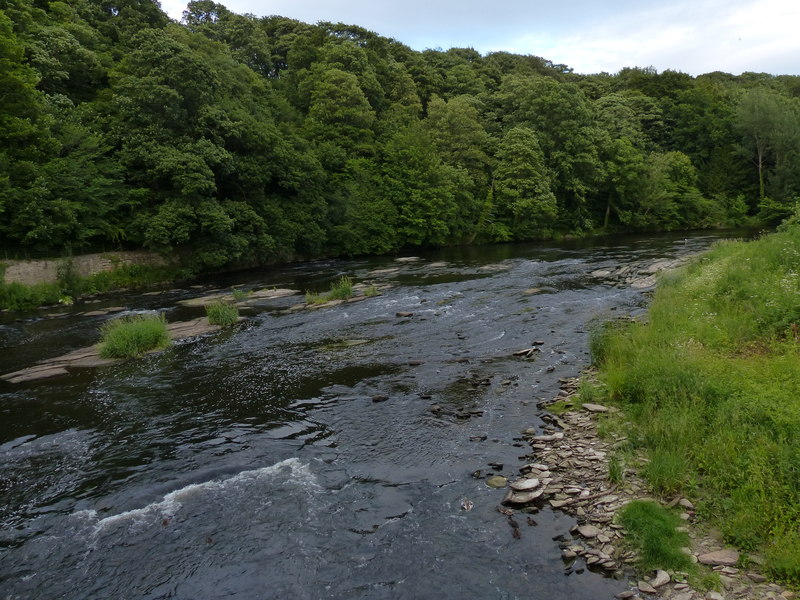
Nothing of the colliery is identifiable. The ground at Cocken is farmland and woodland above the wooded gorge of the Wear, with Finchale Priory on the far bank; Cocken Wood runs down to the river below the site.
None identified.
Related mines
- Harbour House Drift — A 20th-century drift at Low Cocken near the site of the Lambton family's 19th-century Cocken Colliery; kept as two records.
Nearby mines
- Harbour House Drift — 0.8 miles (1.4 km) W
- Brasside Colliery — 1.1 miles (1.8 km) SE
- Adventure Pit — 1.2 miles (1.9 km) E
- Frankland Colliery — 1.4 miles (2.3 km) S
- Rainton Meadows Colliery — 1.8 miles (2.8 km) E
Straight-line distance, within 9 miles (15 km). Show on the map.
What's uncertain
Points where sources disagree or the record could not be settled; both accounts are kept. All open questions in the archive.
- The BGS mine-plans catalogue holds a Mining Remediation Authority abandonment plan titled 'Cocken' (catalogue 1446, Low Main, dated 1883); the catalogue gives no location and the plan's details do not clearly tie it to this working, so it may belong to another of the same name. (uncertain) 4
Recorded claims
Individual factual claims, each attached to the source(s) that support it below. Where sources disagree, both are kept.
- The colliery was returned to the Earl of Durham in the 1860s and again in the official list of collieries at work in 1880. 1,2
- In 1822 Lord Lambton bought Nesham’s waggonway and Newbottle Colliery and extended the waggonway south-westwards to join his other collieries at Cocken, Littletown and Sherburn. 3
- The upcast shaft at Cocken Colliery was sunk from the surface to the Low Main seam in 1869. 2
- After the last four Londonderry pits at Rainton closed in November 1896, the rest of the Rainton royalty was taken over by Lambton Collieries Ltd and worked from the existing collieries at Cocken and Littletown. 3
- Coal was returned from Cocken in the official output lists for 1855, 1860, 1865 and 1873. 2
- The BGS mine-plans catalogue holds a Mining Remediation Authority abandonment plan titled 'Cocken' (catalogue 1446, Low Main, dated 1883); the catalogue gives no location and the plan's details do not clearly tie it to this working, so it may belong to another of the same name. (uncertain) 4
Photographs & further reading
The colliery’s location and grid reference, its owner and output returns, the 1869 shaft sinking, and the museum’s collected list of men killed there between 1842 and 1882.
View sourceA long account of the Durham colliery waggonways, in which Cocken appears twice: as one of the pits Lambton’s 1822 waggonway purchase reached, and as one of the two collieries left working the Rainton royalty after 1896.
View sourceSources
- (secondary) List of coal mines UK 1880 — Coalmining History Resource Centre
- (primary) Cocken Colliery — Durham Mining Museum
- (secondary) Colliery railways of County Durham — Durham Records Online
- (primary) BGS / Mining Remediation Authority mine plans: COCKEN — British Geological Survey / Mining Remediation Authority
- (secondary) Earl of Durham Collieries — Grace's Guide to British Industrial History
Record created: 6 September 2026 · Last researched: 6 September 2026