 MineArchive
Rainton Meadows Colliery
| Also known as | Meadows Pit, Rainton Meadows Pit |
|---|---|
| Location | West Rainton, near Houghton-le-Spring, County Durham — 54.8236, -1.4953 (approximate) |
| Commodity | Coal |
| Type | Coal |
| Worked | 1824–1896 |
| Maximum depth | Unknown. |
| Operators | Marquess of Londonderry, North Hetton Coal Company |
Overview
One of the Marquess of Londonderry's Rainton collieries near Houghton-le-Spring, the Meadows Pit was sunk from 1821 to the Hutton seam, abandoned in 1896, and briefly reopened in 1936 to serve Houghton Colliery.
History
Rainton Meadows was one of the main pits of the Rainton colliery complex, a few miles north-east of Durham. The Meadows West Pit was begun on 1 June 1821 and won the Hutton Seam, the sinking finishing on 12 June 1824. It belonged to the greatest of the Durham coal estates. When Frances Anne inherited, the Rainton complex held six main pits and many small ones across some nine square miles, the main pits being Nicholson's, Rainton Meadows, the Plain Pit, Woodside, Hunter's House and Resolution. Ownership was registered in the Marchioness's name rather than the Marquess of Londonderry's, and the Tyne and Wear historic environment record also names the North Hetton Coal Company — the Earl of Durham with Messrs Wood, Philipson, Burrell and others — among its owners. In 1894 it employed 362 people; Whellan's directory of the same year credits the Rainton colliery as a whole with thirty-one stationary engines, thirty-eight boilers, 1,185 workers and 835 workmen's houses. Getting the coal away shaped the landscape as much as getting it out. On 25 July 1831 the first coals ran down the new Rainton and Seaham Railway to be loaded onto the brig Lord Seaham; the line was five miles long from Seaham Harbour to Rainton Meadows pit, and later additions made a network of more than eighteen miles. Fixed steam engines hauled the coal to the top of Copt Hill. The pit was also linked to the Rainton and Seaham line by the Adventure Branch, and to the North Eastern and Londonderry railways. The Five Quarter, High Main, Maudlin and Low Main seams were abandoned on 31 December 1896 as unprofitable to work, and the four Rainton pits still at work — Rainton Meadows, Nicholson's, Alexandrina and Lady Seaham — were closed that November. The coal was not exhausted; it had become uneconomic. Buyers were found for Rainton Meadows and for the Adventure drift, and the Meadows had closed again by 1923. The shaft was reopened in 1936, by then connected by an underground drift to Houghton Colliery, to raise Meadows coal to Houghton's screens. In modern times the ground was taken for opencast working as the Rye Hill Surface Coal Mine, the northern part of the old Rainton colliery — roughly the triangle of the Plain Pit, Rainton Meadows and Nicholson's Pit — being a large opencast site visible from the Durham to Sunderland road. It has since been restored as a nature reserve.
Geology
Worked the Hutton, Five Quarter, High Main, Maudlin and Low Main seams of the East Durham coalfield.
Workings
The Meadows West Pit worked the Hutton Seam from 1824, and by the time of abandonment the Five Quarter, High Main, Maudlin and Low Main were being worked as well. The pit was tied into the Rainton and Seaham Railway by the Adventure Branch, with fixed steam engines hauling to the top of Copt Hill, and was later connected underground by drift to Houghton Colliery, which raised its coal after 1936.
Closure
The Five Quarter, High Main, Maudlin and Low Main seams were abandoned on 31 December 1896 as unprofitable. The shaft was reopened in 1936, connected by drift to Houghton Colliery, to raise Meadows coal through the Houghton pit.
What remains
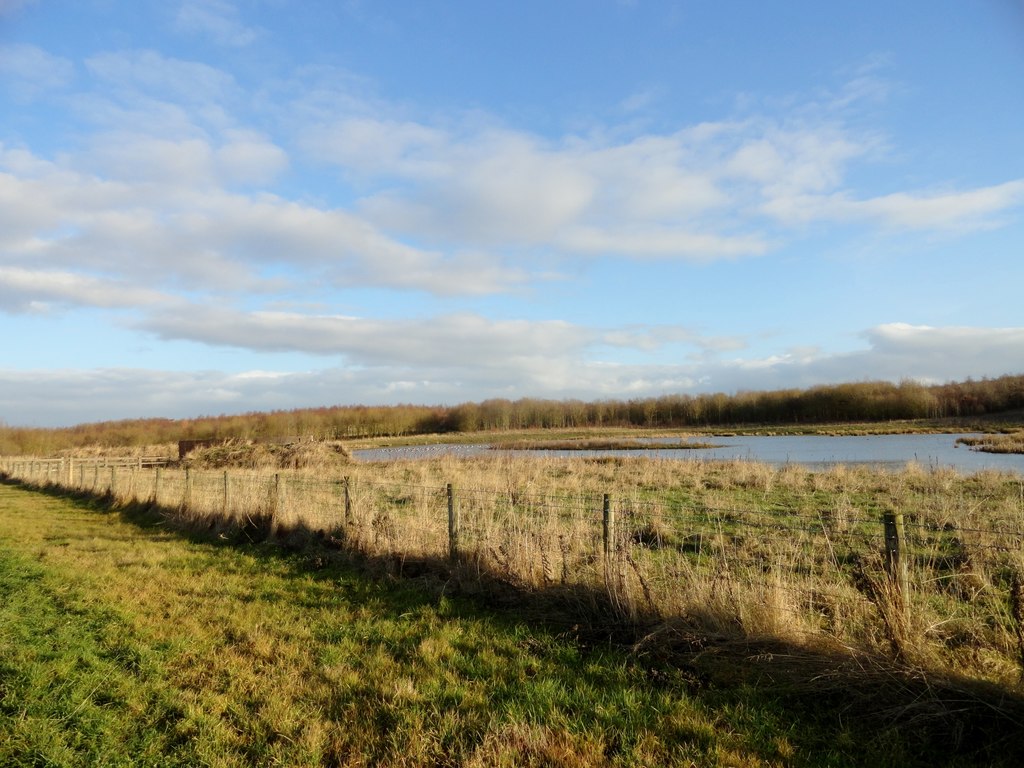
The site has been worked opencast as the Rye Hill Surface Coal Mine and afterwards restored. It is now the Rainton Meadows nature reserve, run by the Durham Wildlife Trust, with pools and wetland over the old colliery ground.
Nothing of the colliery. The ground was removed by opencast working and then restored to pools, wetland and rough grassland.
Redevelopment
The site was reclaimed in the early 2000s as the Rainton Meadows nature reserve.
Related mines
- Houghton Colliery — The Meadows shaft was connected by an underground drift to Houghton Colliery, and from 1936 Meadows coal was wound at Houghton.
Nearby mines
- Cocken Colliery — 2.8 km W
- Houghton Colliery — 2.9 km NE, Tyne and Wear
- Lambton Colliery — 3.0 km N
- Elemore Colliery — 3.8 km SE
- Eppleton Colliery — 4.0 km E, Tyne and Wear
Straight-line distance, within 15 km. Show on the map.
Recorded claims
Individual factual claims, each attached to the source(s) that support it below. Where sources disagree, both are kept.
- The Meadows West Pit was begun on 1 June 1821 and reached the Hutton Seam, the sinking finishing on 12 June 1824. 1
- Worked by the Marquess of Londonderry's Rainton collieries, employing 362 people in 1894. 1
- The Five Quarter, High Main, Maudlin and Low Main seams were abandoned on 31 December 1896 as unprofitable to work. 1
- The shaft was reopened in 1936, by then connected by an underground drift to Houghton Colliery, to raise Meadows coal through the Houghton pit. 1
- The workings are recorded in the mine-plans catalogue of the British Geological Survey. 2
- Rainton Meadows was one of six main pits in the Rainton complex, which covered some nine square miles; the others were Nicholson's, the Plain Pit, Woodside, Hunter's House and Resolution. Ownership was registered in the Marchioness of Londonderry's name. 3
- The first coals ran down the new Rainton and Seaham Railway on 25 July 1831, to be loaded onto the brig Lord Seaham. The line ran five miles from Seaham Harbour to Rainton Meadows pit and later grew into a network of over eighteen miles, worked up Copt Hill by fixed steam engines. 3
- The Tyne and Wear historic environment record gives the pit's owners as the North Hetton Coal Company — the Earl of Durham with Messrs Wood, Philipson, Burrell and others — as well as Lady Frances Anne Vane Londonderry in the 1850s, and dates its opening to 1824. 4
- The four Rainton pits still at work, Rainton Meadows among them, were closed in November 1896. The coal at Rainton was not exhausted; it had become uneconomic to produce. Buyers were afterwards found for Rainton Meadows, which had closed again by 1923. 3
- The northern part of the old Rainton colliery, the triangle of the Plain Pit, Rainton Meadows and Nicholson's Pit, was later taken for opencast working as the Rye Hill Surface Coal Mine. The site is now a nature reserve run by the Durham Wildlife Trust. 4,3
Photographs & further reading
Sinking history, owners, seams worked and the 1936 reopening linked to Houghton Colliery.
View sourceSources
- (primary) Meadows Pit / Rainton Meadows Colliery (DMM m029) — Durham Mining Museum
- (primary) Rainton Meadows abandonment plans (BGS mine-plans catalogue) — British Geological Survey
- (secondary) Colliery Railways: Rainton and Seaham Railway 1831-1988 — Durham Records Online
- (primary) Rainton Colliery, Meadows Pit (Tyne and Wear HER 6848) — Tyne and Wear Historic Environment Record
Record created: 23 September 2026 · Last researched: 23 September 2026