 MineArchive
Bedwas Navigation Colliery
| Also known as | Bedwas Colliery |
|---|---|
| Location | Trethomas, on the slopes of Mynydd y Grug, two miles north of Caerphilly — 51.5980, -3.1872 (exact) |
| Commodity | Coal |
| Type | Coal |
| Worked | 1912–May 1985 |
| Maximum depth | 802 yards (about 733 m) at the South shaft; the North shaft was 768 yards (about 702 m). |
| Operators | Bedwas Colliery Company (1909–1947), National Coal Board (1947–1985) |
Overview
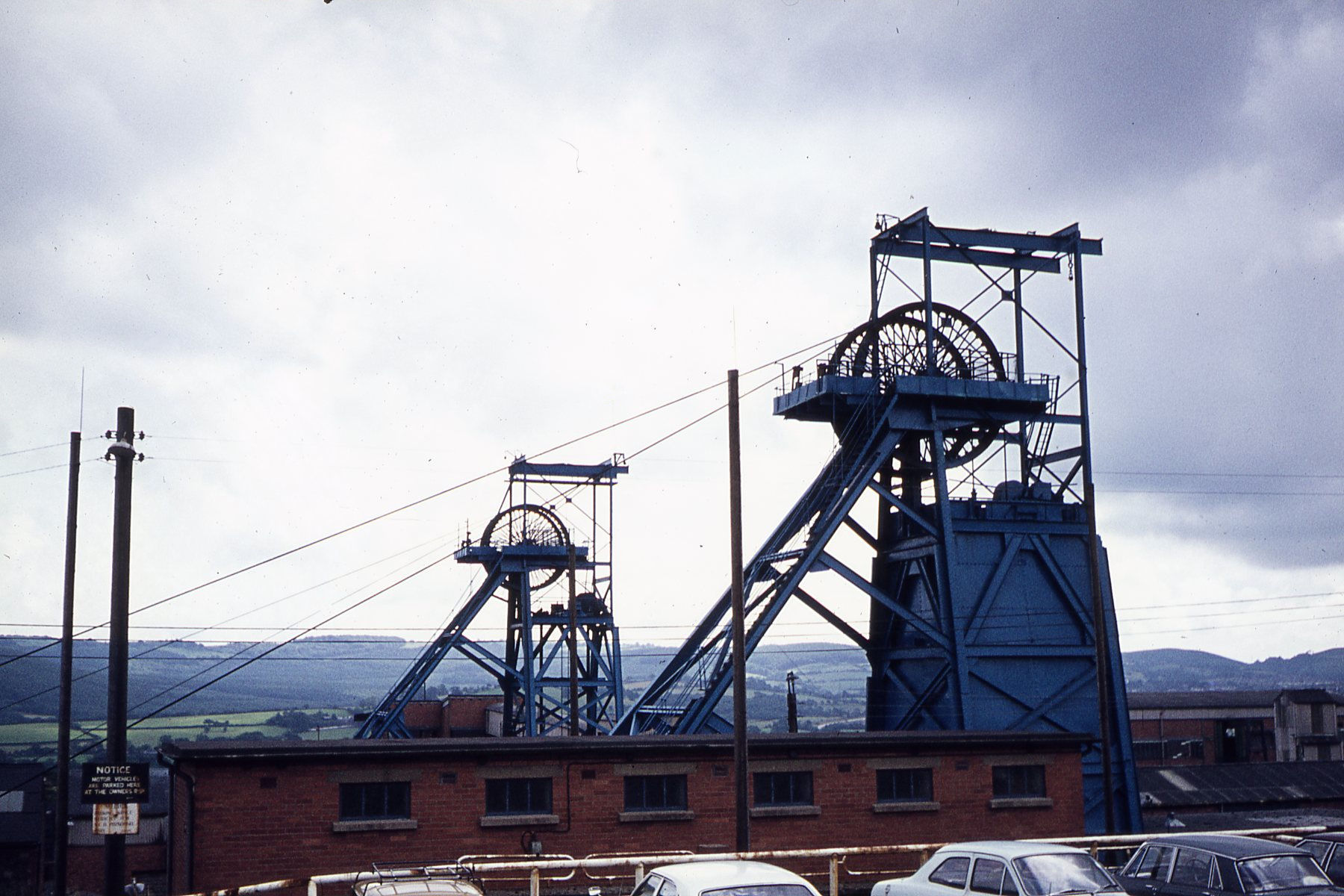
A deep Rhymney Valley colliery on the slopes of Mynydd y Grug, sunk from 1909 because the easier mineral rights had already gone and designed by the Austrian engineer Edmund L. Hann. Its shafts reached 768 and 802 yards to the Black Vein, and its 'Navigation' name was chosen to attract Admiralty orders. It became notorious in the 1920s and 30s for the banning of the miners' union and the breakaway union that filled the gap, and closed in 1985 with some of the largest claimed reserves of any South Wales pit.
History
In 1909 the Bedwas Colliery Company leased 1,475 acres on the slopes of Mynydd y Grug outside Trethomas. The best and easiest mineral rights in the district had already been taken, so Bedwas had to go deep, and the company engaged the Austrian engineer Edmund L. Hann — who had designed Penallta Colliery — and the Caerphilly mining contractor Fred Piggott to sink it. Work began in May 1909, and the first coal was raised in early 1912.
Sir Samuel Instone, founder of the Instone Air Line, became controlling shareholder in 1921. By 1923, 2,578 men were raising half a million tons a year from the Black Vein, Lower Black Vein and Rock Vein. But the disturbed geology at that depth meant Bedwas made and lost money in cycles. To keep it profitable the owners asked for a 20 per cent pay cut in the mid-1920s; riots followed, and the South Wales Miners' Federation was banned from the pit. After a two-month stoppage, non-union labour restarted production, and by 1933 1,300 were employed. Bedwas became one of the strongholds of the South Wales Miners' Industrial Union, the breakaway body whose officials were welcomed by owners while the Federation's were shut out; the Federation campaigned against it from 1934 and it was disbanded in 1938. The Federation was not recognised again at Bedwas until 1936, after a sit-in.
By the outbreak of the Second World War 1,850 men were producing 675,000 tons, the colliery's best figure. It was nationalised on 1 January 1947, and in the late 1950s the National Coal Board approved a £4 million reorganisation: electrified winding, a new pit-bottom area, an underground locomotive roadway and a new surface coal preparation plant. Through the mid-1970s about 650 men raised 230,000 tons a year from the Black and Meadow veins.
By 1980 geological problems had confined production to the Meadow Vein under Machen and the Big Vein, most of it going by rail along the former Rumney Railway to the British Steel works at Llanwern, the rest to the coking plant at Trethomas beside the colliery. Vital maintenance went undone during the 1984–85 strike, and when it ended on 3 March 1985 the NCB declared the pit closed on geological grounds. The National Union of Mineworkers pressed for an independent colliery review under the October 1984 national agreement; the NCB offered every Bedwas worker alternative work at other pits such as Nantgarw, and closure was confirmed in May 1985.
Geology
Two shafts were sunk through the Mynyddislwyn seam down to the Rhas Las or Black Vein, and thence by a cross-measure drift to the Hard Vein — the lowest coal then known in the Caerphilly area, later called the Lower Black Vein. The Rhas Las coal was the point of the whole enterprise: the Royal Navy favoured it, which is why so many pits working that seam, Bedwas included, put 'Navigation' in their names. The strata at that depth were badly disturbed, and Bedwas was beset by geological trouble throughout its life; by 1980 it had been reduced to the Meadow Vein under Machen and the Big Vein.
Geological setting: Sedimentary Beds and Seams (well documented example)
Workings
Two shafts, North and South, 768 and 802 yards deep and both 21 feet in diameter — depth that made Bedwas one of the first South Wales collieries to use double-deck winding for efficiency. The colliery was designed by Edmund L. Hann, who had designed Penallta, and sunk under contract by Fred Piggott of Caerphilly. A £4 million NCB reorganisation in the late 1950s electrified the winding, rebuilt the pit bottom, drove an underground locomotive roadway and put up a new surface coal preparation plant. A coking plant stood adjacent at Trethomas, leased to the British Benzol and Coal Distillation Co.
Closure
Vital maintenance was not carried out during the 1984–85 miners' strike, and when the strike ended on 3 March 1985 the NCB declared the pit closed on geological grounds. The NUM pressed for an independent colliery review under the national agreement of October 1984; the NCB offered every Bedwas worker alternative employment at other pits, and closure was confirmed in May 1985. At its closure Bedwas had among the largest claimed coal reserves of any South Wales mine.
What remains
Nothing stands. The colliery was demolished quickly after closure and the shafts filled with rubble — possibly, it has been suggested, to foreclose any prospect of reopening. The surface structures including the adjacent coking plant were demolished, though foundations and below-ground installations were left in place. The railway was lifted from Trethomas to Newport in 1967 and later as far as Machen, where a single line still carries stone from Machen quarry down to Bassaleg.
None above ground; foundations and below-ground installations were left in place when the site was cleared.
Nearby mines
- Bryngwyn Colliery — 1.0 miles (1.7 km) W
- Rhos Llantwit Colliery — 1.4 miles (2.2 km) SW
- Nine Mile Point Colliery — 1.5 miles (2.4 km) NE
- Rudry Colliery — 1.5 miles (2.5 km) SE
- Machen Colliery — 1.9 miles (3.0 km) E
Straight-line distance, within 9 miles (15 km). Show on the map.
Disasters & major incidents
-
Bedwas Navigation Colliery shaft accident, 1911
15 July 1911 · Winding / Shaft Accident · 2 fatalities
Two sinkers were thrown from the bowk and fell to their deaths in the North Pit sinking at Bedwas on 15 July 1911, after improper signalling took the bowk past its landing. -
Bedwas Navigation Colliery Explosion, 1912
27 March 1912 · Explosion · 3 fatalities
An underground explosion at Bedwas Navigation Colliery on 27 March 1912, within weeks of the pit raising its first coal, badly injured twelve men, three of whom died. The cause was attributed to a spark from the colliery's electric signalling system. -
Bedwas Navigation Colliery Roof Fall, 1914
18 December 1914 · Collapse / Roof Fall · 2 fatalities
On 18 December 1914 two men were killed together by a fall of roof at Bedwas Navigation Colliery, near Caerphilly in Monmouthshire. -
Bedwas Navigation Colliery roof fall, 1930
28 February 1930 · Collapse / Roof Fall · 1 fatality
A three-ton stone fell on two men turning a conveyor at Bedwas Navigation Colliery on 28 February 1930, mortally injuring John William Howley; the accounts differ on whether his companion James Williams was killed or injured.
Recorded claims
Individual factual claims, each attached to the source(s) that support it below. Where sources disagree, both are kept.
- The Bedwas Colliery Company leased 1,475 acres on the slopes of Mynydd y Grug in 1909; forced to go deep because the easier mineral rights had gone, it engaged the Austrian engineer Edmund L. Hann, designer of Penallta Colliery, and the contractor Fred Piggott of Caerphilly to sink the shafts. 1
- The North and South shafts were 768 and 802 yards deep respectively, both 21 ft in diameter, sunk through the Mynyddislwyn seam to the Rhas Las or Black Vein and by cross-measure to the Hard Vein; the depth made Bedwas one of the first South Wales collieries to use double-deck winding. 1,2
- 'Navigation' was inserted in the name to attract orders from marine customers including the Admiralty; the Royal Navy favoured coal from the Rhas Las seam, and many pits working it adopted the word. 1
- By 1923, 2,578 men were producing half a million tons a year; by the outbreak of the Second World War 1,850 men produced 675,000 tons, the colliery's best figure. 1
- After the owners sought a 20 per cent pay cut in the mid-1920s, riots followed and the South Wales Miners' Federation was banned from the pit; production restarted with non-union labour after a two-month stoppage, and the Federation was not recognised again until 1936, after a sit-in. 1
- Bedwas was one of the strongholds of the South Wales Miners' Industrial Union, the breakaway body whose officials were welcomed at the pits by owners while Federation officials were banned; the Federation campaigned against it from 1934 and it was disbanded in 1938. 1
- In the late 1950s the National Coal Board approved a £4 million reorganisation which electrified the winding, provided a new pit-bottom area and an underground locomotive roadway, and built a new surface coal preparation plant. 1
- When the 1984–85 strike ended on 3 March 1985 the NCB declared Bedwas closed on geological grounds, vital maintenance having gone undone; closure was confirmed in May 1985, the colliery having among the largest claimed reserves of any South Wales mine. 1
Photographs & further reading
The sinking and shaft dimensions, and the named dead of the 1912 explosion and of a 1914 roof fall.
View sourceThe colliery's full history, including the pay dispute that led to the banning of the miners' federation and the breakaway union that took its place.
View sourceSources
- (secondary) Bedwas Navigation Colliery — Wikipedia
- (secondary) Bedwas Colliery, Trethomas — Welsh Coal Mines
Record created: 3 September 2026 · Last researched: 3 September 2026