 MineArchive
Andrews House Colliery
| Also known as | Bobgins, Beckley Colliery, Bob Gins |
|---|---|
| Location | Causey, near Stanley, County Durham — 54.8988, -1.6850 (approximate) |
| Commodity | Coal |
| Type | Coal |
| Worked | 1726–1962 |
| Maximum depth | The 1767 engine drew water from a shaft twelve fathoms (about 22 m) deep. |
| Operators | Grand Allies (1726–?), Sir Francis Clavering (1726–?) |
Overview
A colliery in the Tanfield country of north-west Durham, leased with Beckley and Byermoor to the Grand Allies in February 1726 and drained that same year by a water-powered beam pump on the burn below it. The pump — a bobgin, the north-eastern word for a bobbing or beam engine — gave its name to the Bobgins Burn, and its engine house survives as a mound of masonry a few hundred yards downstream of the Causey Arch.
History
The Claverings held North Causey, Andrews House, Beckley and Byermoor at the beginning of the 18th century, and in February 1726 Sir Francis Clavering of Whitehouse near Winlaton granted the Grand Allies partnership liberty to work the coal in those estates, with way-leave for wagonways not more than fifteen yards wide except where they crossed denes and hollows, and leave to put up colliery buildings and workmen's houses, cut watercourses and take stone and gravel for winning the coal. In the same year Beckley colliery is recorded as being drained from a shaft in the Andrews House ground by a beam pump driven from the burn alongside, which came to be called the Bobgins Burn: a rocker beam raised and lowered at one end by the axle of a waterwheel, working pumps in the shaft at the other. Such water-driven pumping mills were known locally as coal mills, and this one stood a few hundred yards below the Causey Arch, built the next year, and the 1717 culvert that carries the Causey Burn under the wagonway embankment. By 1738 the boundary barrier between these collieries and Mr Bowes's Northbanks colliery had been broken in several places, sending a watercourse down towards Bobgins and making part of the Hutton seam at Andrews House harder to work; the four acres of ground next to the Bob Gins House were still untouched, and the Grand Allies' viewers — Nicholas Walton, Amos Barnes and William Daglish — found the drift between Beckley North pit and Andrews House badly timbered. Andrews House colliery was redeveloped in 1767, a new beam engine being added to raise water from a shaft twelve fathoms deep, though the older pump probably went on draining both mines. Pay sheets for the Success pit at Andrews House for the fortnight ending 21 October 1767 come to £29 4s 1d, signed by the viewer William Unthank and his deputy Thomas Hall; twelve hewers were paid 22d a score with extra for headways and trouble bords, and in nine and a half days' work made between 26 and 30 pence a day. The shaft at Bobgins was still in use when East Tanfield colliery closed in 1962.
Geology
The colliery worked the coal measures of north-west Durham, the Hutton seam among them. The ground falls steeply to the Causey and Bobgins burns, which gave the water power to drain it.
Workings
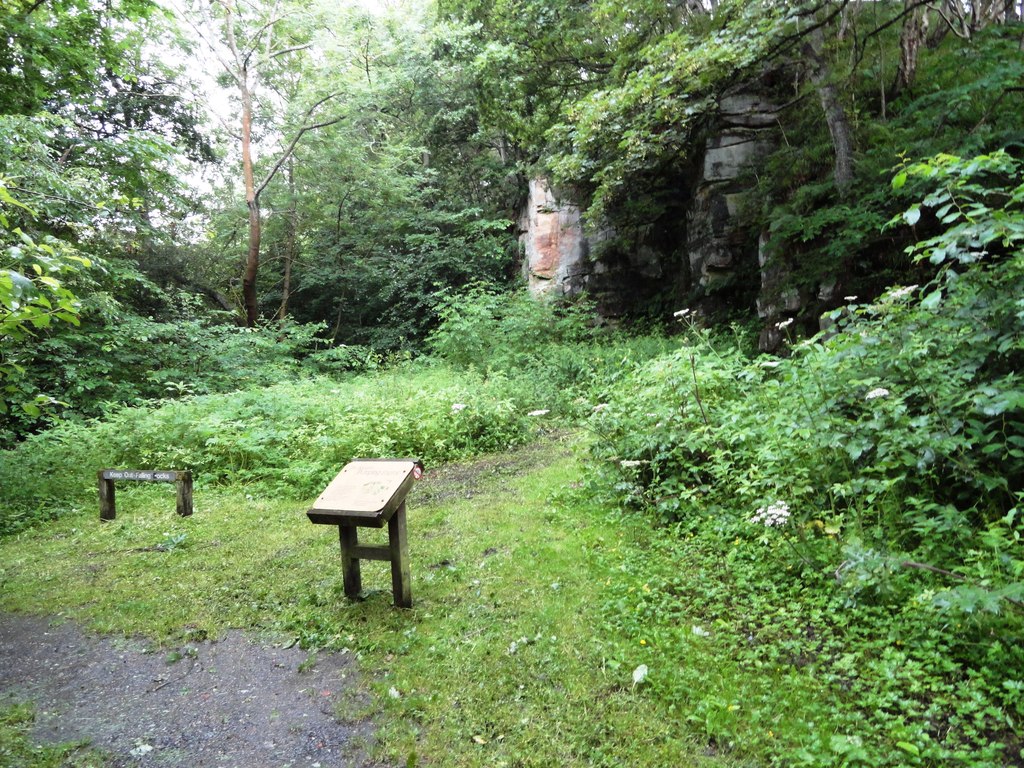
The engine house stands at the confluence of the Bobgins and Causey burns, at the foot of a steep slope, and survives as a pronounced rectilinear mound about 13 m square and 1.5 m high, its masonry showing at the north-east corner where several courses remain, with a masonry retaining wall built against the slope on the west side. A shaft on the south side, now marked by a concrete post, is part of the layout and is likely to keep evidence of the pit-head arrangements around it. The colliery's own pits lay in the Andrews House and Beckley ground above, among them Beckley North pit and the Success pit, linked by drifts and by the Grand Allies' wagonways towards the Tyne.
Closure
No date is recorded for the end of working at Andrews House itself. The Bobgins shaft outlasted the colliery by two centuries, still in use when East Tanfield colliery closed in 1962; the engine house was a ruin long before that.
What remains
The ruins and buried remains of the engine house are a scheduled monument. The mound is obscured by dense scrub in the wooded gill, with masonry visible at one corner; a visitor's account of 2018 found the site marked by an interpretation board, the shaft head by a post in the ground, and the burn often reduced to a trickle in dry weather.
The engine house mound with its exposed masonry and retaining wall, the marked shaft head, and a wall between the engine house and the Causey Burn that may be the site of the coal mill itself. The 1717 culvert and the Causey Arch of 1727 stand a little upstream.
Redevelopment
None. The site is woodland in the Causey gill.
Related mines
- Byermoor Colliery — Byermoor was leased with Beckley and Andrews House to the Grand Allies in the same agreement of February 1726 with Sir Francis Clavering.
Nearby mines
- Marley Hill Colliery — 1.5 km N, Tyne and Wear
- Byermoor Colliery — 1.8 km NW, Tyne and Wear
- Beamish Colliery — 2.6 km S
- Burnopfield Colliery — 2.9 km W
- West Stanley Colliery — 2.9 km S
Straight-line distance, within 15 km. Show on the map.
Recorded claims
Individual factual claims, each attached to the source(s) that support it below. Where sources disagree, both are kept.
- In February 1726 Sir Francis Clavering granted the Grand Allies liberty to work the coal seams at Beckley, Andrews House and Byermoor, with way-leave for wagonways not more than fifteen yards wide. 1
- Beckley colliery was drained in 1726 from a shaft in the Andrews House ground by a beam pump powered from the adjacent burn, later called the Bobgins Burn. 2
- The Andrews House colliery was redeveloped in 1767, when a new beam engine was added to raise water from a shaft twelve fathoms deep. 2
- Pay sheets for the Success pit at Andrews House for the fortnight ending 21 October 1767 total £29 4s 1d, twelve hewers being paid 22d a score and making 26 to 30 pence a day over nine and a half days' work. 1
- The shaft at Bobgins was still in use at the closure of East Tanfield Colliery in 1962. 3
Photographs & further reading
The society's history of the Andrews House and Beckley estates, with the 1726 Clavering lease to the Grand Allies, the viewers' reports of 1738 and the 1767 Success pit pay sheets.
View sourceA walk round the Bobgins site with photographs of the engine house remains, the marked shaft, the burn and the neighbouring Causey Arch and culvert.
View sourceSources
- (secondary) Andrews House — Sunniside Local History Society
- (primary) Bobgins engine house 250m south west of New House, Causey, Stanley (List entry 1018225) — Historic England
- (observational) Bobgins Environs — Tanfield Railway
Record created: 22 September 2026 · Last researched: 22 September 2026