 MineArchive
Alexandra Colliery
| Also known as | Alexandra Pit |
|---|---|
| Location | Between Ravenhead and Thatto Heath, St Helens, Merseyside — 53.4414, -2.7536 (approximate) |
| Commodity | Coal |
| Type | Coal |
| Worked | 1867–1925 (last coal) |
| Maximum depth | 325 yards, the depth the underlooker gave at the 1879 inquest, which the Northern Mine Research Society renders as 297 metres. The Liverpool Mercury's next-day report said the cage fell 400 yards. |
| Operators | Pilkington Brothers (1867–?), St Helens Collieries Co. Ltd (1876–?) |
Overview
Pilkington Brothers sank this pit at the corner of Alexandra Street and St John Street in St Helens in 1867 and named it for Alexandra, Princess of Wales. It worked the Rushy Park and Little Delf mines from shafts 325 yards deep, was a safety-lamp pit from the start, and had a bad shaft. Three men died in 1868 when the ventilating furnace hung halfway down a shaft fell and set the coal at the bottom alight, and seven were killed on 22 October 1879 when an engineman who had never made a mistake in eight or nine years started his engine the wrong way and overwound the cage into the headgear in the dark. The jury blamed the unlit pit brow and the catches left unused, and recommended detaching hooks. The pit wound its last coal in 1925 and then pumped for Ravenhead.
History
Pilkingtons were at the coal under St Helens long before they had a colliery there. Roger Whyte, whom they employed to prospect near Dentons Green, has the earliest reference in his diary of 1833; coal was got in February 1845 but the working did not last long. The firm sank a pit at Eccleston in the early 1850s, bought the remains of the St Helens colliery in 1857, and in 1863 put a shaft down to the Rushy Park seam. On 4 November 1867 the St Helens Standard recorded that 'a new pit was sunk and in honour of the Princess of Wales was called the Alexandra Pit'. The Princess had visited the colliery during the sinking — the Northern Mine Research Society says so, and the Sutton Beauty history says instead that she visited the Ravenhead glassworks nearby in 1865, which would make the name a compliment at one remove. The colliery stood at the corner of Alexandra Street and St John Street, and the papers place it variously at Ravenhead and at Thatto Heath; the cage that killed seven men in 1879 was being loaded from the Thatto Heath side.
It was a safety-lamp mine, and the court records show what that meant. In July 1868 Thomas Manley was summoned for a breach of the rules at the colliery, 'where only safety lamps were used', on evidence that he had been smoking in the stables with the top off his lamp; the case collapsed because the only witness was a boy of about eleven who had never been to school and whose evidence the bench would not convict on. In March 1869 James Welding was fined a pound and costs for riding up the shaft on top of the cage at the Crop Pit, against the first rule of the colliery. In April 1870 Richard Heathcote was sent to prison for two months for presenting a tally worth £1 10s 2d that belonged to Thomas Winstanley: the colliery agent found two men of that name in the books and Heathcote with access to the keys that secured the tallies.
Ventilation came at first from a furnace suspended halfway down one of the two shafts. At the start of the first week of November 1868 the chain holding it broke, and the live coals set fire to the coal at the shaft bottom; the fire burned unnoticed for days before the smoke began to spread through the pit. John Campbell, the underground manager, William Naylor, the underlooker, and William Foster, a wagoner, went in to warn the men, got them out through the smoke, then went further into the workings and did not come back. Their bodies were recovered the following week. Deaths of the ordinary kind ran alongside: Thomas Aspinall, a collier of sixty-two, under a roof fall in 1867; Robert Rylance and Peter Ashall crushed in the Rushy Park mine in July 1869 while timbering on the Monday reckoning day, with three others hurt; William Mather, seventeen, run over by wagons in 1872 when a balance rope broke; Hugh Lynch, a pusher-on, who lay down between the rails to rest after fifteen hours in a very warm atmosphere in 1891 and was run over by the next tub.
On the morning of 22 October 1879 the banksman Martin Mullen had sent three cages of men down without incident. Nine men stepped into the fourth from the Thatto Heath side; Mullen set the catches back, knocked 'Down', and turned away to chalk the number on the board. The cage came up instead. William Eccleston, nine days in the pit, saw it rising, shouted for 'Hold', jumped from about four yards above the mouth and knocked the banksman down as he fell, dragging a second man out with him; the cage went on into the headgear, the rope broke on the impact, and the cage fell the depth of the shaft. Seven men died: the colliers Peter Aspinall, Henry Norton, William Parr, Thomas Ray and James Webster, and the drawers Joseph Holland and David Dixon, who was sixteen. Three were found in the cage, two at each end of it and two underneath, all of them gone through the scaffolding into the water of the sump.
Joseph Naylor, who had been the engineman for eight or nine years and never before made a mistake, told his relief at six the next morning, 'I have had a bad accident; I have done it', and could not say whether he had killed anyone. At the inquest at the Fleece Hotel the Inspector, Mr Hall, found the engine — a double horizontal with 25-inch cylinders, a four-foot stroke and a drum tapering from twelve feet to ten — in good order and fitted with a proper indicator, and reported that nothing about it made safe winding difficult 'except for the fact of there being no light at the surface'. The gas light at the pit top had not worked since the summer and the banksman had been seeing men down by his own lamp. Hall put the national figures beside it: forty-five lives lost in overwinding accidents in British coal and ironstone mines up to December 1878, one fatal accident for nine and a half million windings. He advocated the use of detaching hooks. The jury found that the men had been pulled to their deaths by Naylor, refused manslaughter, said that had the pit brow been lighted and the catches in use the accident would not have happened, thought Mullen not competent to be in charge of so many lives, and recommended unanimously that safety or detaching hooks be supplied to the pit.
By then the colliery belonged to the St Helens Colliery Company Limited, formed in 1876 out of the firms owning Ravenhead, St Helens and several smaller pits, though the papers went on calling it Pilkingtons'. Francis France was the certificated manager in 1879 and 1882, managing Ravenhead and the Deep pits as well; by 1894 William Arnold held the certificate with William Pendlebury as under-manager. Alexandra was one of the eight pits left inside the old Sutton township by 1920, out of thirty-six collieries in St Helens in 1850 and a dozen by then. It wound its last coal in 1925 and was kept on as a pumping pit for Ravenhead.
Geology
Coal Measures of the St Helens coalfield. The two seams the records name are the Rushy Park mine, reached by a Pilkington shaft in 1863 and where the fatal roof falls of 1869 and 1873 happened, and the Little Delf or Little Delph mine, where a man was buried by three tons of dirt in January 1880 and from which a collier gave evidence at the 1879 inquest. Slips in the roof are named as the cause of fall after fall.
Geological setting: Sedimentary Beds and Seams (well documented example)
Workings
Two shafts 325 yards deep, ventilated at first by a furnace hung halfway down one of them and, after that killed three men in 1868, by other means. Winding was by a double horizontal engine with 25-inch cylinders and a four-foot stroke, its drum tapering from twelve feet to ten, fitted with an indicator; the cages were held at the landing by catches, and there were no detaching hooks until the 1879 jury asked for them. Separate pits within the colliery are named in the police-court reports as the Crop Pit and the Cross Pit, the latter with a furnaceman and a cage running up and down every ten minutes through the night to balance a pumping bucket. Underground there were endless-rope and balance-brow haulage roads and a jigbrow. The pit brow was lit by gas until the summer of 1879, after which the only light was one in the banksman's cabin.
Closure
Alexandra wound its last coal in 1925 and then became a pumping pit for Ravenhead, which is the usual end for a shaft in a district where the pits share their water. Deaths recorded in the Mines Inspectors' reports for 1923 and 1924 and a shaft accident noted in 1926 show men still at work about the place either side of the stoppage.
What remains
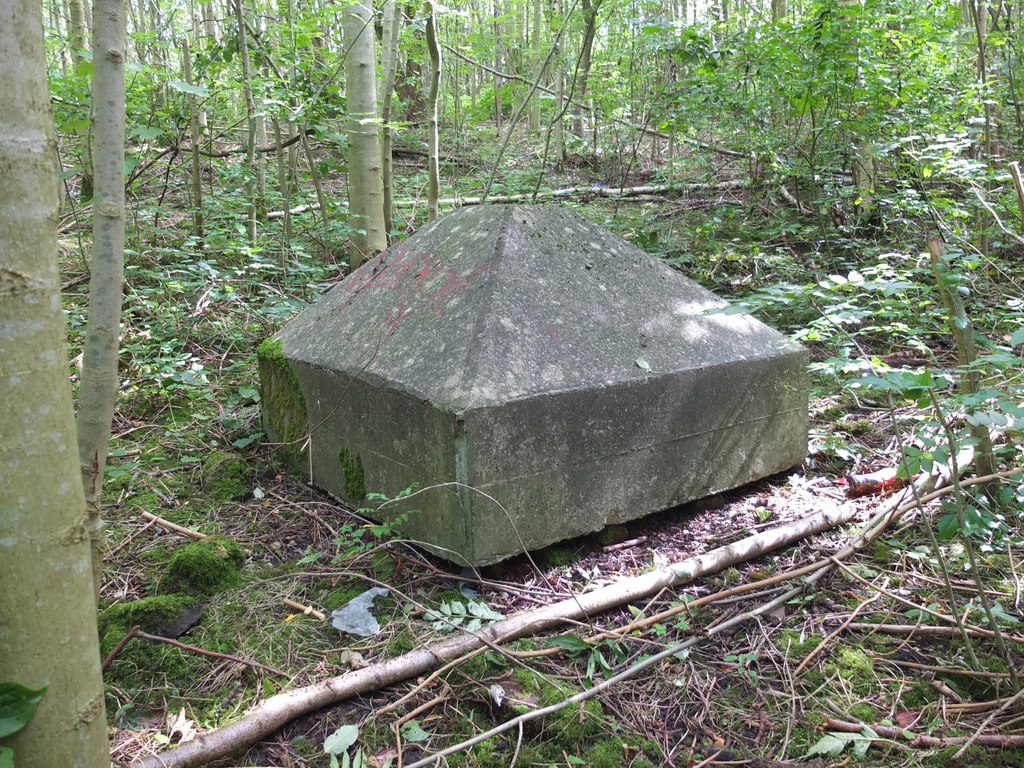
The site lies in open ground between Ravenhead Road and Elm Road in St Helens, crossed by footpaths, with a disused shaft still visible and photographed in 2017. A bridge nearby carries a path between the Ravenhead Colliery site and Thatto Heath.
A disused shaft, photographed in 2017, and the footpaths that run past it.
Redevelopment
Unknown. The ground is open and crossed by public paths rather than built on or formally landscaped.
Related mines
- Craven Colliery — The third of the Wyken workings, exhausted by 1919.
- Ravenhead Colliery — Alexandra became Ravenhead's pumping pit after it wound its last coal in 1925; both belonged to the St Helens Colliery Company, and Francis France was certificated manager of both in 1879.
Nearby mines
- Ravenhead Colliery — 1.4 km E
- Sherdley Colliery — 1.8 km E
- Clock Face Colliery — 3.4 km SE
- Bold Colliery — 4.7 km E
- Cronton Colliery — 5.4 km SW
Straight-line distance, within 15 km. Show on the map.
A disused shaft survives on the site. Old shafts are not made safe by looking capped; keep to the footpaths.
What's uncertain
Points where sources disagree or the record could not be settled; both accounts are kept. All open questions in the archive.
- The Princess of Wales visited the colliery during the sinking. (disputed) 1,2
- The colliery was named after the Princess of Wales because she visited the Ravenhead glassworks nearby in 1865. (disputed) 3
- The cage fell four hundred yards to the bottom of the shaft. (disputed) 5
Recorded claims
Individual factual claims, each attached to the source(s) that support it below. Where sources disagree, both are kept.
- Pilkington Brothers sank the colliery in 1867 and named it in honour of Alexandra, Princess of Wales. 1,2
- The Princess of Wales visited the colliery during the sinking. (disputed) 1,2
- The colliery was named after the Princess of Wales because she visited the Ravenhead glassworks nearby in 1865. (disputed) 3
- Three men died in November 1868 after the chain holding the ventilating furnace halfway down a shaft broke and the live coals set fire to the coal at the shaft bottom: John Campbell the underground manager, William Naylor the underlooker and William Foster, a wagoner, who went in to warn the workmen, got them out and did not return. 1,2
- Seven men were killed on 22 October 1879 when the engineman Joseph Naylor neglected to put his reversing lever in the proper position before turning on the steam, and the cage was overwound into the headgear, breaking the rope and falling the depth of the shaft. 4,5
- The jury on the 1879 accident found that had the pit brow been lighted and the catches in use the accident would not have occurred, and recommended unanimously that safety or detaching hooks be supplied to the pit. 4
- The Inspector told the 1879 inquest that forty-five people had lost their lives in overwinding accidents in the coal and ironstone mines of Great Britain up to December 1878, one fatal accident for nine and a half million windings, and advocated the use of detaching hooks. 4,2
- The shaft was 325 yards deep, the figure the underlooker Thomas Schofield gave at the 1879 inquest. 1,4
- The cage fell four hundred yards to the bottom of the shaft. (disputed) 5
- Only safety lamps were used at the colliery, and a man was prosecuted in July 1868 on evidence that he had been smoking in the stables with the top off his lamp. 2
- Richard Heathcote was imprisoned for two months in April 1870 for presenting a tally worth £1 10s 2d belonging to another man; the colliery agent found two men of that name in the books and Heathcote with access to the keys that secured the tallies. 2
- Francis France was the certificated manager in 1879 and 1882, managing the Ravenhead and Deep pits as well; by 1894 William Arnold held the certificate with William Pendlebury as under-manager. 2
- Alexandra wound its last coal in 1925 and then became a pumping pit for Ravenhead. 1
- Alexandra was one of eight collieries left inside the boundaries of the former Sutton township by 1920, out of thirty-six in St Helens in 1850 and a dozen by then. 3
- A disused shaft survives on the site between Ravenhead Road and Elm Road, photographed in August 2017. 6
Photographs & further reading
The colliery page: the 1867 sinking and the naming, the earlier working of the 1840s, the 1868 furnace fire that killed three, the 1879 overwind with the winding engine's dimensions and the Inspector's figures, and the change to a pumping pit for Ravenhead in 1925.
View sourceIan Winstanley's compilation from the St Helens and Wigan papers, the Mines Inspectors' reports and other sources. Its first seven pages are Alexandra: the street corner it stood on, Roger Whyte's prospecting diary of 1833, the police-court cases about lamps, tallies and riding the cage, the deaths year by year, the 1879 inquest in full, and the certificated managers.
View sourceThe next morning's newspaper account of the overwind, with the widows' and children's entitlements from the Lancashire and Cheshire Miners' Permanent Relief Society, and a list of the dead that does not match the one the inquest produced.
View sourceA local history of mining in the Sutton township, with Alexandra among the eight pits left by 1920, an alternative account of how the colliery got its name, and a dated list of the other Sutton collieries.
View sourceSources
- (secondary) St Helens, Alexandra Colliery (1867-1925) — Northern Mine Research Society
- (secondary) Colliery Scrap Book 1: Accidents and Incidents in St Helens Collieries — Ian Winstanley, Coal Mining History Resource Centre
- (secondary) Coal Mining in Sutton, St Helens — Sutton Beauty and Heritage
- (secondary) Alexandra Colliery Shaft Accident, St Helens, 1879 — Northern Mine Research Society
- (primary) Seven men killed at St Helens colliery, Liverpool Mercury, 23 October 1879 — Old Mersey Times
- (observational) Disused Shaft at Alexandra Colliery — Gary Rogers, via Geograph
Record created: 23 September 2026 · Last researched: 25 September 2026