 MineArchive
Moorfield Colliery explosion, 1883
| Date | 7 November 1883 |
|---|---|
| Mine | Moorfield Colliery |
| Region | Lancashire |
| Primary type | Explosion |
| Associated types | Rescue |
| Fatalities | 68 (The dead ranged from ten-year-olds James Atherton and Aaron Riding to the manager Thomas Macintosh, who died leading men to investigate the gas. Several families lost more than one member.) |
| Injuries | Thirty-nine seriously injured. |
| Context | During active mining (The Wednesday day shift at the Moorfield pit of the Altham Colliery Company, sunk only two and a half years before; about 111 men and boys were below.) |
At 8.50 a.m. on Wednesday 7 November 1883 a sudden outburst of firedamp exploded in the Moorfield pit between Accrington and Clayton-le-Moors, killing sixty-eight men and boys, the youngest ten, and seriously injuring thirty-nine. Men who had seen gas burning in their lamps had run to the shaft and were waiting for the cage when the blast reached them. The jury could not say how the gas was fired; the Inspector recommended abandoning the Davy lamp.
Cause
A sudden outburst of firedamp from a roof fall near a small fault in the No. 2 level, ignited by means the jury could not establish; it was thought the gas may have passed through the gauze of a Davy lamp.
Contributing factors
A collier had driven across the fault the evening before and noticed the place making gas. When the alarm was raised, the hooker-on at the shaft bottom refused to let alarmed men ride with a part-loaded cage, and a quarter of an hour passed before it was sent off. Davy lamps were known to pass flame in strong currents.
What happened
Moorfield had been sunk to 293 yards to a seam 24 to 26 inches thick, with one shaft and drifts to the east and north. That morning the boy William Smales saw gas flaming in a drawer's lamp and then in his own; the collier Tim Yates ran through the No. 2 level telling men to get out, and the assistant fireman T. Macintosh stayed to test for gas and warn others and was killed. The manager Thomas Macintosh and the fireman John Rushton went in towards the gas and neither came back. At 8.50 the explosion swept down the jig-brow and into the crowd waiting at the shaft bottom, jammed a cage in the shaft and forced up the landing plates at the surface, where workers emptying wagons into canal boats were fortunately a short distance away.
Rescue & recovery
With the Moorfield shaft blocked, rescuers came through the 1,200-yard engine brow from the Whinney Hill pit, where the assistant manager James Macintosh and head fireman William Hope adjusted the ventilation, reached the shaft bottom and sent the survivors out. By 1 a.m. on the Thursday 21 bodies had been brought out at Moorfield and 18 at Whinney Hill. The blower kept driving gas into the workings and fired at the explorers' lamps; the engineer J. F. Seddon was killed when thrown from a conveyance. The last bodies were reached on the Sunday, the fourth morning.
Investigation & inquiry
The inquest was held by Henry Robinson, coroner for Lancashire, over several sittings, with H.M. Inspectors Morton and Joseph Dickinson. The jury found the explosion caused by a sudden outburst of gas, without sufficient evidence to show how it exploded; Dickinson agreed, having seen the blower himself.
Changes to practice & legislation
Dickinson recommended discontinuing the Davy lamp in favour of the Marsaut type, more cut-throughs to reduce bratticing, and a ventilating fan in place of the furnace. A local relief fund passed £5,000.
Memorials & commemoration
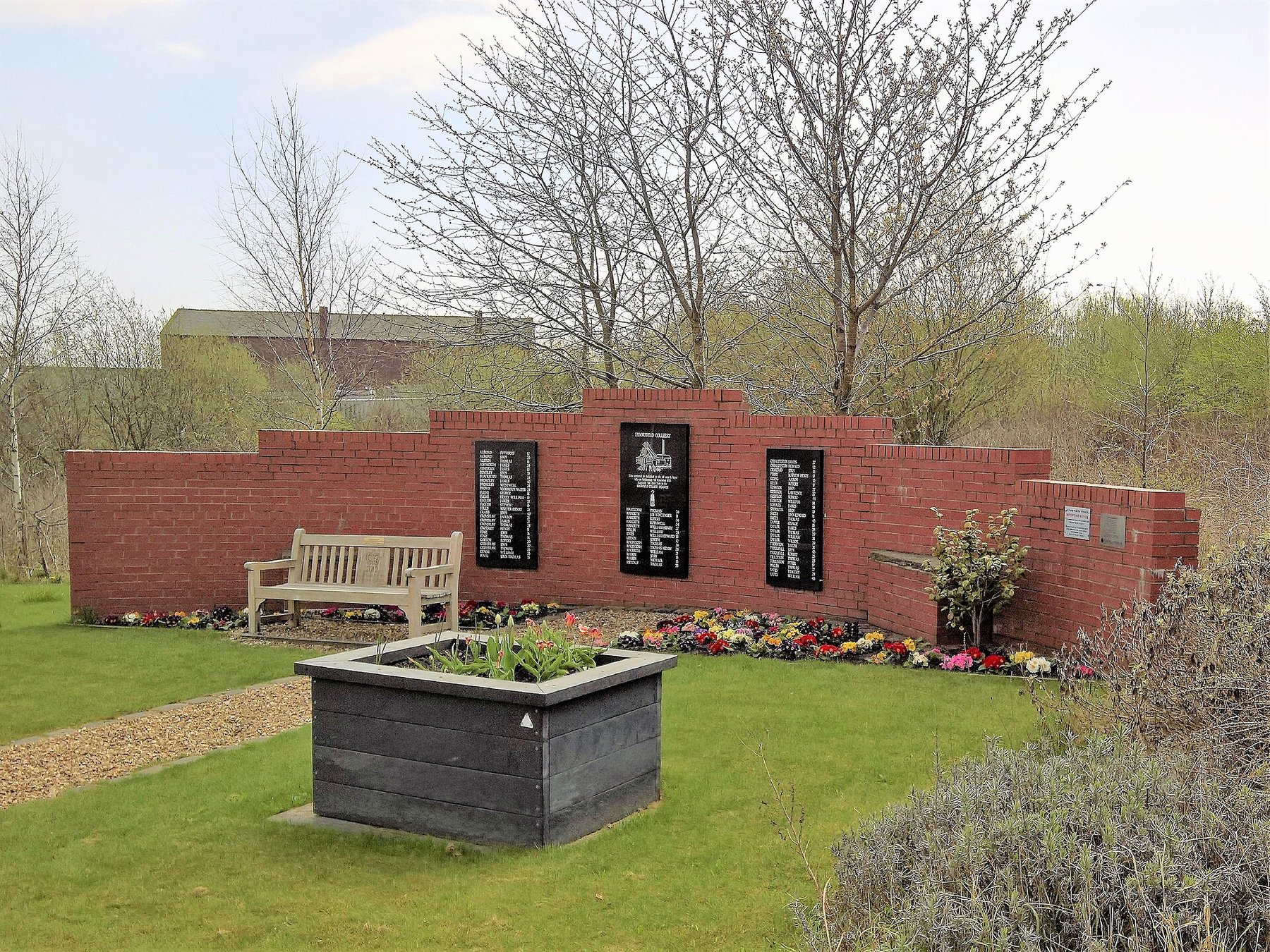
A memorial listing the dead stands on the A678 at Altham, in front of the original colliery.
Recorded claims
Individual factual claims, each attached to the source(s) that support it below. Where sources disagree, both are kept.
- The explosion occurred at 8.50 a.m. on Wednesday 7 November 1883 and killed sixty-eight men and boys, seriously injuring thirty-nine; the youngest victim was ten years old. 1
- The inquest jury found the explosion was caused by a sudden outburst of gas, but that there was not sufficient evidence to show how it exploded. 1
- When men and boys fled to the shaft after seeing gas flame in their lamps, the hooker-on would not send them up with a part-loaded cage of tubs; thirty-three were waiting at the bottom when the blast came up the jig-brow. 2
- The main source of gas was found near a small fault in the No. 2 level where the roof had fallen; the blower could be heard for five weeks and fell silent only after two months. 2
- The jury found 43 burned and gassed, six burned, 18 suffocated and one drowned in the sump. 2
- Joseph Dickinson recommended replacing Davy lamps with the Marsaut type, reducing bratticing by more cut-throughs and replacing the furnace with a fan. 2
- A memorial listing those who died stands on the A678 at Altham in front of the original colliery. 1
Related terminology
Mining terms this disaster is structurally linked to, with the nature of the relationship.
- Blower (direct cause)
A blower near a fault supplied the gas. - Brattice (contextual relationship)
The Inspector recommended less bratticing. - Cage (contributing factor)
Men were refused a ride in the part-loaded cage. - Firedamp (direct cause)
A sudden outburst of gas fired. - Fireman (contextual relationship)
The assistant fireman stayed to warn others and was killed. - Safety Lamp (contributing factor)
Gas may have passed through a Davy lamp gauze.
Sources
- (secondary) Altham history: the Moorfield Colliery explosion — Altham Parish Council
- (secondary) Moorfield Colliery Explosion - Accrington - 1883 — Northern Mine Research Society (information supplied by Ian Winstanley and the Coal Mining History Resource Centre)
Record created: 9 September 2026 · Last researched: 13 September 2026