 MineArchive
Brereton Colliery Explosion
Seven men and boys were killed by an explosion of firedamp in one of the shafts of the Brereton collieries near Rugeley on 6 February 1861. A fault had been struck, water had flooded the lower seams and had risen far enough, a few days earlier, to cut the connection between the two shafts and so end the ventilation of the sump. The managers knew it and did nothing. Gas gathered under the scaffold covering the sump, escaped as dirt was cleared from it and fired at a workman's candle. Two men were found in the sump and five more, suffocated by afterdamp, in the workings near the shaft. The colliery had no artificial ventilation of any kind.
| Date | 6 February 1861 |
|---|---|
| Mine | Brereton Colliery |
| Region | Staffordshire |
| Primary type | Explosion |
| Associated types | Gas / Asphyxiation |
| Fatalities | 7 (The seven killed were the colliers John Burgess, 36, T. Burgess, 32, Daniel Clarke, 54, John Gough, 54, J. Gough, 15, Thomas Kent, 48, and Edward Kent, 12. The repeated surnames suggest the pit took fathers and sons together, though the sources do not state the relationships. Only one body showed signs of burning, that of the man working on the scaffold; the other five found in the headways had been suffocated by afterdamp.) |
| Context | During active mining |
Cause
An accumulation of firedamp beneath the stage or scaffold covering the sump, in a shaft whose ventilation had been cut off by rising water. The gas escaped through the scaffold as dirt was being cleared from it and was fired at the workman's candle. The Inspector's explanation was assented to by everyone connected with the mine.
Contributing factors
A fault had been struck and water had inundated the lower seams and was known to be rising. A few days before the explosion it had cut off all communication between the shaft where the accident happened and the adjoining shaft, by which the sump had previously been ventilated. The managers were all aware that ventilation had been interrupted and took no steps to restore it. No safety lamps were used even to examine the workings, as special rule 17 required. The manager with general oversight of this and other pits had said, when the water rose and cut the connection, that gas might accumulate underneath the scaffold covering the sump and that it would be necessary to be careful. The underground manager of the pit told the inquest that he had never used a safety lamp and did not understand its use. No artificial means of ventilation whatever had been provided.
What happened
The explosion happened shortly after the underground manager had visited the workings. The scaffold over the sump was blown completely out and shattered to pieces. Two bodies were found in the sump itself and the others in the workings near the shaft. Of the seven, only the man employed on the scaffold showed any sign of having been burnt; the five found in the headways had been suffocated by the afterdamp that followed the explosion.
In the national picture the accident was disproportionate. Explosions caused thirteen deaths across the country in 1861, slightly below the average of the previous six years, and seven of those thirteen died at Brereton.
Investigation & inquiry
The inquest was held by H.M. Inspector of Mines James P. Baker, who strongly condemned what he called the too prevalent practice of depending on natural ventilation alone, which in his judgment was inadequate and not to be relied upon in this case and in many others. At the close of the inquiry he urged the general adoption of furnace or other artificial ventilation. His account was published in the 1861 Mines Inspectors Report.
Legal & regulatory aftermath
The jury returned a verdict of accidental death, adding that the deceased met their deaths through an explosion of firedamp occasioned by an accumulation of gas under the stage or scaffold, which would have been prevented by having the pits properly ventilated. The general mine agent and the underground manager were afterwards summoned before the magistrates and fined: the agent £10 for violating the first general rule, and the underground manager £20 and one shilling for infringing special rules 3 and 17, with costs in each case. On the direction of the Home Secretary, Sir George Cornewall Lewis, the fines were distributed among the families of the men who had died.
Memorials & commemoration
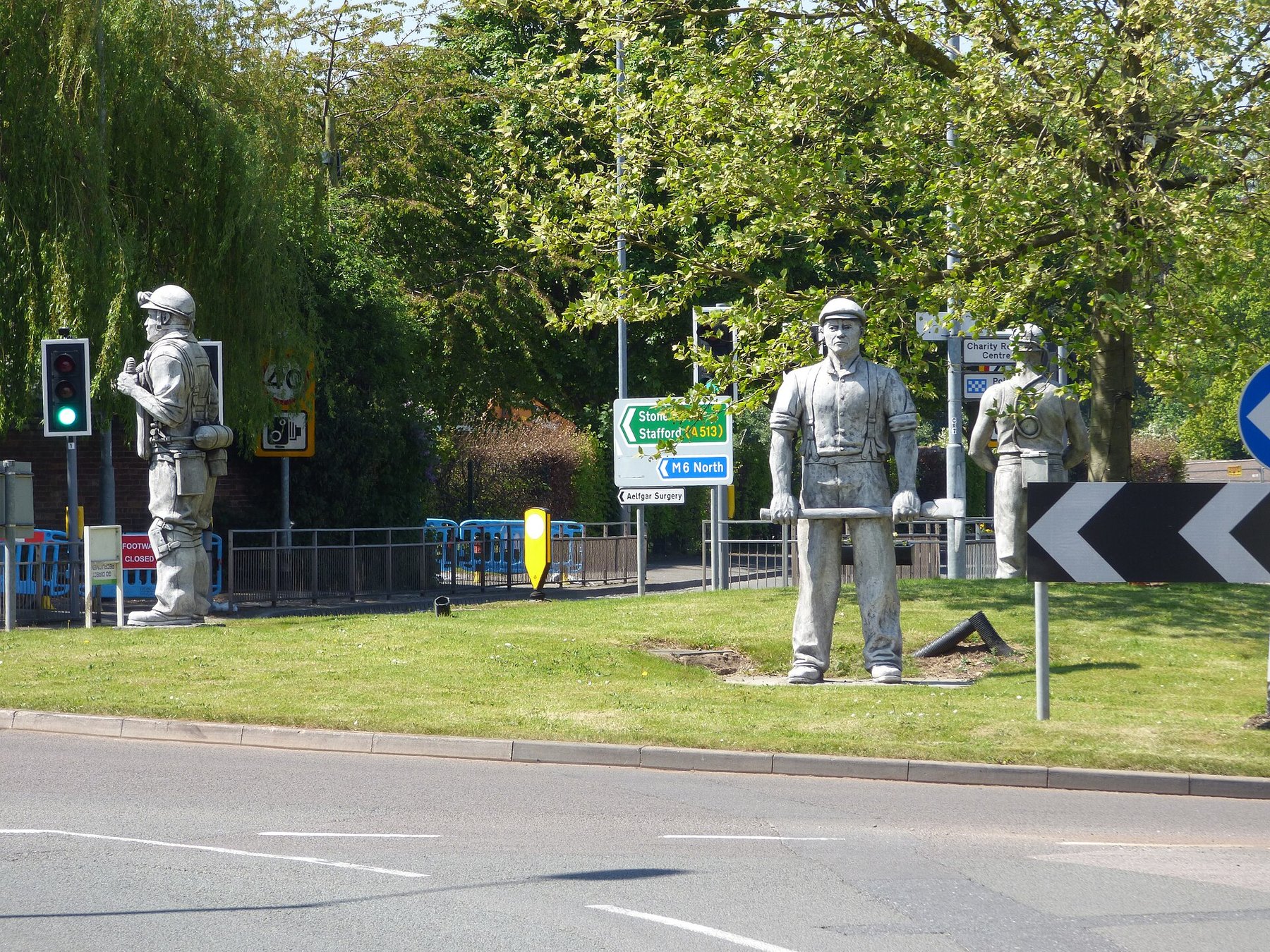
No memorial to the seven is known. A memorial to the miners of the district, sculptures commemorating the Brereton and Lea Hall collieries, was erected in 2015 on Globe Island in Rugeley; it commemorates the town's mining generally rather than this accident.
Recorded claims
Individual factual claims, each attached to the source(s) that support it below. Where sources disagree, both are kept.
- Explosive gas accumulated underneath the scaffold covering the sump, escaped through it as dirt was being removed, and fired at a workman's candle. The Inspector recorded that this explanation was assented to by all connected with the mine. 1
- A few days before the explosion, rising water had cut off all communication between the two shafts, ending the ventilation of the sump. The managers knew and did nothing to restore it, and no artificial means of ventilation whatever had been provided. 1
- No safety lamps were used even to examine the workings, as special rule 17 required, and the underground manager told the inquest that he had never used one and did not understand its use. 1
- Two bodies were found in the sump and five in the workings near the shaft. Only the man employed on the scaffold showed signs of burning; the other five had been suffocated by afterdamp. 1
- The jury returned accidental death with a rider that proper ventilation would have prevented the accumulation of gas. The general mine agent was fined £10 and the underground manager £20 and one shilling, with costs, and the fines were distributed among the bereaved families by direction of the Home Secretary. 1
- The seven killed were John Burgess, 36, T. Burgess, 32, Daniel Clarke, 54, John Gough, 54, J. Gough, 15, Thomas Kent, 48, and Edward Kent, 12, all recorded as colliers. 2
Related terminology
Mining terms this disaster is structurally linked to, with the nature of the relationship.
- Afterdamp (contextual relationship)
Named twice in this record, first in the summary: “…candle. Two men were found in the sump and five more, suffocated by afterdamp, in the workings near the shaft. The colliery had no artificial…” - Fault (contextual relationship)
Named twice in this record, first in the summary: “…shafts of the Brereton collieries near Rugeley on 6 February 1861. A fault had been struck, water had flooded the lower seams and had risen far…” - Firedamp (contextual relationship)
Named 3 times in this record, first in the summary: “Seven men and boys were killed by an explosion of firedamp in one of the shafts of the Brereton collieries near Rugeley on 6…” - HM Chief Inspector of Mines (contextual relationship)
Named in this record’s investigation: “The inquest was held by H.M. Inspector of Mines James P. Baker, who strongly condemned what he called the too…” - Sump (contextual relationship)
Named 8 times in this record, first in the summary: “…connection between the two shafts and so end the ventilation of the sump. The managers knew it and did nothing. Gas gathered under the…”
Photographs & further reading
This page doesn't try to reproduce everything — these are the best original sources found for this disaster.
The colliery's own page, carrying the names and ages of the seven killed in 1861 alongside the rest of its fatality roll, its owners and its output and employment figures by List of Mines year.
View sourceThe Inspector of Mines' own account of the explosion, transcribed from the 1861 Mines Inspectors Report: the flooded lower seams, the severed ventilation, the gas under the scaffold, the inquest verdict and rider, and the fines imposed on the agent and the underground manager.
View sourceSources
- (primary) Brereton Colliery Disaster, 6 February 1861: account from the 1861 Mines Inspectors Report by James P. Baker, H.M. Inspector of Mines, p. 88 — Durham Mining Museum, transcribing the Inspector of Mines report
- (primary) Brereton Colliery — Durham Mining Museum
- (primary) Rugeley: Manors and economic history, Victoria County History of Staffordshire, vol. 5 — British History Online, University of London
Record created: 10 September 2026 · Last researched: 10 September 2026