 MineArchive
The Big Hewer
| Category | Music |
|---|---|
| Dates | Spring and summer 1961: recording in the Durham, Northumberland, South Wales and Nottinghamshire coalfields. 18 August 1961: first broadcast, BBC Home Service. 24 January 1962: repeat. 1967: Argo LP RG 538. |
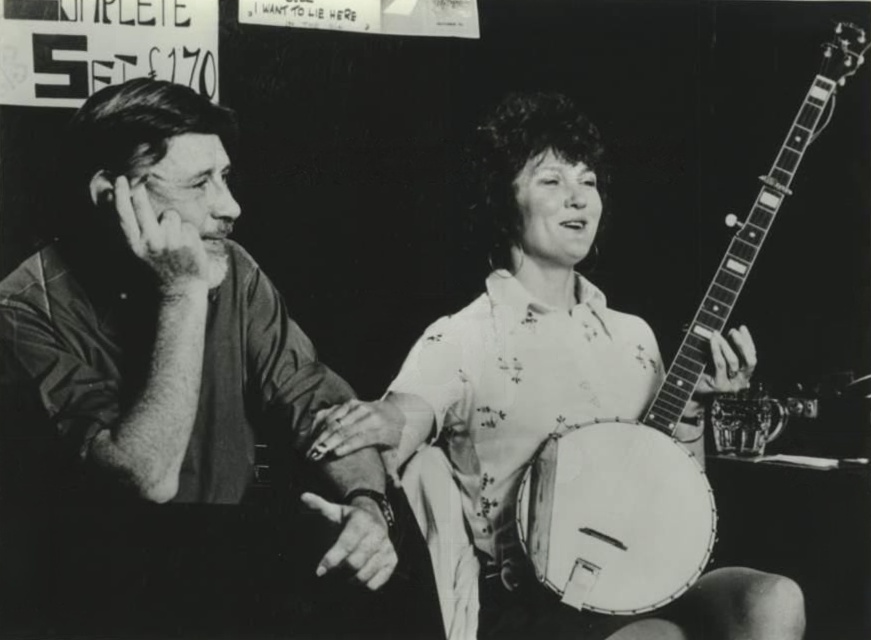
The fourth of the BBC Radio Ballads, broadcast on the Home Service on 18 August 1961: Charles Parker, Ewan MacColl and Peggy Seeger built an hour of songs and recorded speech from the miners of Durham, Northumberland, South Wales and the Midlands, named for the legendary hewer of prodigious strength whom every coalfield knew by a different name.
The mining history in this record
The radio ballad was a form Parker, MacColl and Seeger devised in 1958 with The Ballad of John Axon: songs, instrumental music, sound effects and, above all, the recorded voices of the people the programme was about, in place of actors and scripts. In the spring of 1961 they turned to coal, recording miners like John Williams and going underground themselves: into the Adventure pit at Houghton-le-Spring in County Durham, an old drift mine where they crawled through black water to reach the workings, and under the Theresa shaft at Dawdon Colliery, where the high-speed haulage ropes cracked like whips. They drew on three coalfields, Durham and Northumberland, the anthracite district of the Vale of Neath, where Ben Davies of Onllwyn described the mechanised coal face, and the new pits of Nottinghamshire, with recordings from Staffordshire as well.
Wherever they went they heard stories, some ninety miners' tales, and in them a figure kept recurring: the Big Hewer, the ace collier of the hand-hewing days who had passed with mechanisation into myth. In the North East he was Towers, Temple, Tempest or Torr. George Earl of Newcastle told of his appetite, a stone of potatoes and a dozen eggs for breakfast; Jack and Reece Elliott of Birtley, who had hewed together for most of their working lives at Harraton Colliery, the Cotia, told of Bob Towers, the County of Durham Big Hewer, eighteen stone and no fat, who started at their pit and could not be paid his first week's wages because there was not enough money in the office. Jack Elliott, who remembered his father speaking of Temple when he was a small boy, became one of the programme's main informants, and the brothers' conversation and a song, The Celebrated Working Man, went into it. That July and August MacColl and Seeger came back to record the whole family in Em and Jack's kitchen for the Folkways album The Elliotts of Birtley.
The programme went out on the BBC Home Service on 18 August 1961 and was repeated on 24 January 1962. The singers were MacColl, A. L. Lloyd, Isla Cameron, Lou Killen, Ian Campbell and Joe Higgins, with Seeger on autoharp, guitar, mandolin and banjo, Alf Edwards on concertina, harmonica and clarinet, Dave Swarbrick, Alfie Kahn, Bryan Daley and Jim Bray; the recorded voices included Ben Davies, John Williams, Dafydd Thomas, Evan Williams, Philip Weekes, Dick Beamish, George Newman, Ernest Black, Jack and Reece Elliott, Johnny Pandrich and George Earl. The talk ranges over coal seams and machine cutters, water and tunnels, the unemployment of the 1920s and 1930s, drink, humour, pride, militancy, health, mechanisation, and death.
People
Charles Parker, producer; Ewan MacColl and Peggy Seeger, writers and musical direction. Jack Elliott (1907-1966) and Reece Elliott (1894-1980) of Birtley, hewers at Harraton Colliery and the programme's main Durham informants. Ben Davies of Onllwyn; George Earl of Newcastle. Singers A. L. Lloyd, Isla Cameron, Lou Killen, Ian Campbell and Joe Higgins.
Legacy today
Argo issued the programme on LP in 1967, and Parker's sleeve notes were already an elegy: the Adventure pit silent, Onllwyn a ghost town with its colliery closed, and Jack Elliott dead in 1966, like his father a victim of the dust. Topic Records later reissued the eight radio ballads on CD. Parker's tapes are kept at the University of Leeds, the Charles Parker Archive in Birmingham holds his papers, and the South Wales Coalfield Collection at Swansea University includes a study of the Big Hewer legend.
The Elliotts went on to found the Birtley Folk Club in 1962, run as a singaround as MacColl had suggested, and it is still meeting; Jack's children carried the family's pit songs to festivals and clubs as The Elliotts of Birtley. The closing of Harraton Colliery has a song of its own, Farewell to the Cotia.
Mining language in this record
Words and phrases in this record that are genuine mining terminology, occupations, methods or economic practice — not scenery or ordinary regional language that merely appears in a mining-adjacent work.
| Expression | Meaning | MineArchive connection |
|---|---|---|
| Big Hewer | The legendary collier of prodigious output and appetite whom every coalfield remembered under its own name; in the North East Towers, Temple, Tempest or Torr. A figure of pit lore, not a job. (North East England) | Hewer — No equivalent term; the legend is built on the hewer's job, linked here for the job itself. |
| hewer | The man who cut the coal at the face by hand; the programme's miners and the Elliotts' own trade. (Durham and Northumberland) | Hewer — Same concept: the archive's Hewer term. |
| marras | Workmates paired at the face; Jack and Reece Elliott worked as marras for most of their working lives. (Durham and Northumberland) | No UK-wide equivalent in the archive; the Durham word for a hewing partner. |
| pitmatic | The underground language of the Durham collier, spelt pitmatick in the Folkways notes; to talk it marked a real Durham pitman. (County Durham) | A dialect, not a technique; explained on its own terms. |
| Gallowa' | A pit pony; the Big Hewer of the Elliotts' tale kept a Gallowa' and trap to drive to work. (County Durham) | Pit Pony — Same animal under the Durham name; linked to the Pit Pony term where the archive has one. |
Recorded claims
Individual factual claims, each tagged with how solidly it's grounded and attached to the source(s) that support it. Where sources disagree, both are kept.
- The Big Hewer, the fourth of eight BBC radio ballads, was produced by Charles Parker, written by Ewan MacColl and Peggy Seeger, and broadcast on the Home Service on 18 August 1961. (documented fact) 1,2
- The programme drew on miners recorded in the coalfields of Northumberland, Durham, Staffordshire, Nottinghamshire and South Wales. (documented fact) 1
- The title refers to the legendary prodigious hewer of the hand-hewing days, known in the North East as Towers, Temple, Tempest or Torr. (contemporary account) 2,3
- Jack and Reece Elliott of Birtley were among the recorded voices, and Jack Elliott was one of the programme's main informants. (documented fact) 1,2,4
- Reece Elliott had retired from Harraton Colliery after fifty-two years there by 1962, and the brothers' tale of Bob Towers, the County of Durham Big Hewer, has him starting at that pit. (contemporary account) 4
- Parker, MacColl and Seeger went underground at the Adventure pit at Houghton-le-Spring and recorded the haulage at the Theresa shaft of Dawdon Colliery. (contemporary account) 2
- Ben Davies of the Vale of Neath anthracite district described the mechanised coal face, and Onllwyn was among the mining villages recorded. (contemporary account) 2
- Argo issued the programme on LP in 1967 as RG 538, and the series was later reissued on CD by Topic Records. (documented fact) 2,5
Mines
- Dawdon Colliery — County Durham
The sound of the high-speed haulage under the Theresa shaft at Dawdon was recorded for the programme in 1961. - Harraton Colliery — Tyne and Wear
Jack and Reece Elliott of Birtley, hewers at Harraton Colliery (the Cotia) for most of their working lives, were the programme's main Durham informants; their tale of Bob Towers, the County of Durham Big Hewer, has him starting at this pit. - Onllwyn Colliery — Neath Port Talbot
Onllwyn was among the Vale of Neath anthracite villages recorded in 1961, where Ben Davies described the mechanised coal face; Parker's 1967 sleeve notes record the colliery closed and the village a ghost town.
Regions
Real-world mining concepts used here
Anthracite, Colliery, Drift, Haulage, Hewer
Sources
- (primary) The Big Hewer: sound recordings, Northumberland, Durham, Staffordshire, Nottinghamshire and South Wales (LAVC/SRE) — University of Leeds Special Collections
- (primary) The Big Hewer, Argo RG 538 (1967): sleeve notes by Charles Parker — The Balladeers
- (secondary) Radio Ballads — Charles Parker Archive Trust
- (primary) The Elliotts of Birtley: a musical portrait of a Durham mining family (Folkways FG 3565, 1962), liner notes — Smithsonian Folkways
- (secondary) Radio ballad — Wikipedia
- (secondary) The Elliotts of Birtley by Pete Wood (review) — Musical Traditions
Record created: 10 October 2026 · Last researched: 10 October 2026