 MineArchive
Gossan
| Category | Prospecting & Exploration |
|---|
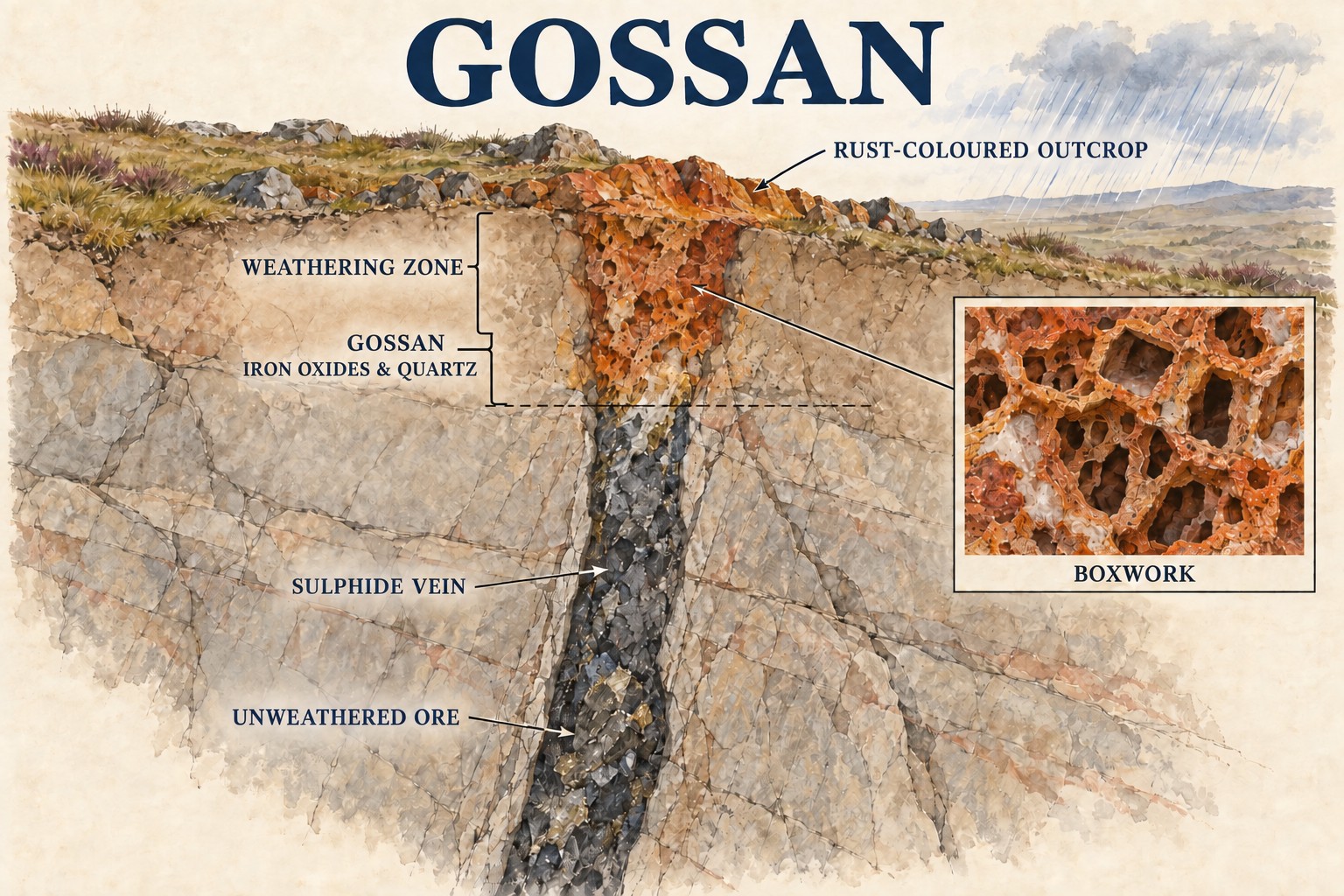
A rust-coloured, intensely weathered rock outcrop, formed where sulphide minerals in a mineral vein are broken down by air and water — long used by prospectors as a visible surface clue to buried ore.
Historical usage
Gossans were a standard prospecting guide wherever mineral veins reached the surface, read by experienced prospectors as a sign of sulphide mineralisation underneath — sometimes called 'the lighthouses of prospectors' for exactly this reason.
How it worked
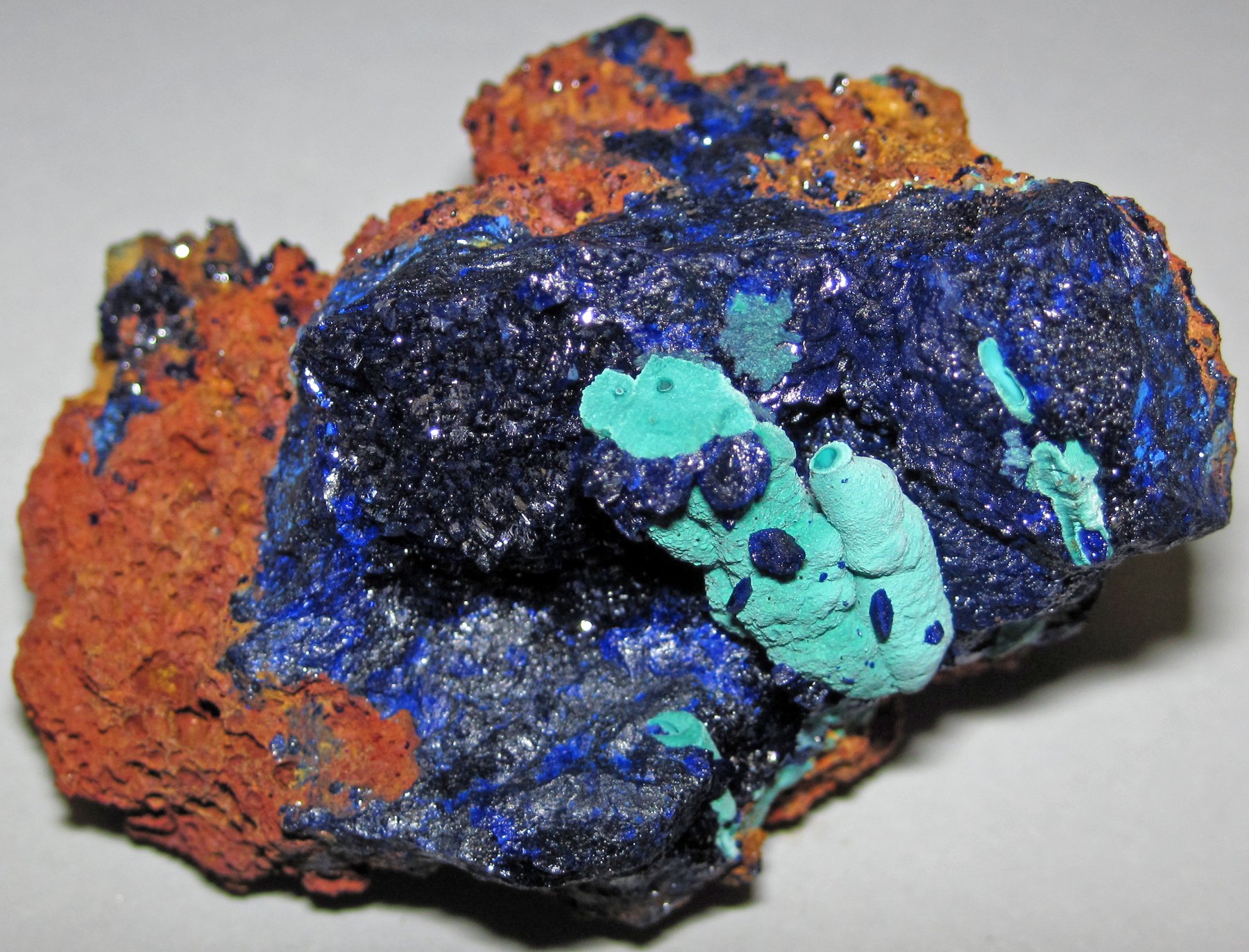
Where a sulphide-bearing vein is exposed to air and rainwater, the sulphides oxidise, releasing sulphuric acid that dissolves and carries away the metal content, leaving behind only iron oxides (haematite and goethite) and quartz. The result is a rust-red, orange, yellow or sometimes black capping rock, often riddled with 'boxworks' — small quartz-lined cavities left where the original sulphide crystals have dissolved away entirely.
Why it was used
A gossan's colour, texture and the shape of its boxwork cavities could tell an experienced prospector a good deal about what kind of mineralisation lay beneath, before any digging began — the same basic surface-reading skill costeaning (see this site's own term page) was used to test more directly.
Risks & limitations
A gossan only marks where a sulphide vein has been exposed and weathered at surface; it says nothing about how rich, wide or persistent the ore might be at depth, so a promising gossan still had to be followed up with real underground work — or, more recently, drilling — before a deposit's true worth was known.
Regional variation
The term and the phenomenon are universal to hard-rock mineral exploration worldwide, not specific to Britain, and gossans remain a genuine tool in modern mineral exploration alongside satellite and geochemical surveying.
Related terminology
Mines associated with this term
Included only where MineArchive's own research gives a reasonable evidential basis — not every mine where this might plausibly apply.
- Castell Carn Dochan Mine — Gwynedd (well documented example)
Named in this record’s history: “…later enlarged to twenty heads. As working went deeper below the gossan the lode's increasing sulphide content began 'sickening' the mercury…” - Wheal Gorland — Cornwall (well documented example)
Named in this record’s history: “…of black tin and arsenic; gold was also reported in the mine's gossan (oxidised surface) deposits. Control passed in 1852 to the St Day…”
Sources
- (secondary) Gossan — Wikipedia
- (secondary) Gossans: Critical Indicators for Successful Mineral Exploration — Discovery Alert
- (secondary) Gossans: Rusty Clues to Hidden Ore Beneath the Surface — OzGeology
Record created: 21 August 2026 · Last researched: 21 August 2026