 MineArchive
Canary
| Category | Ventilation & Mine Gases |
|---|
A caged canary carried underground as a simple, living early-warning system for carbon monoxide and other toxic gases — the bird's collapse gave miners a warning of dangerous gas well before it would affect a person.
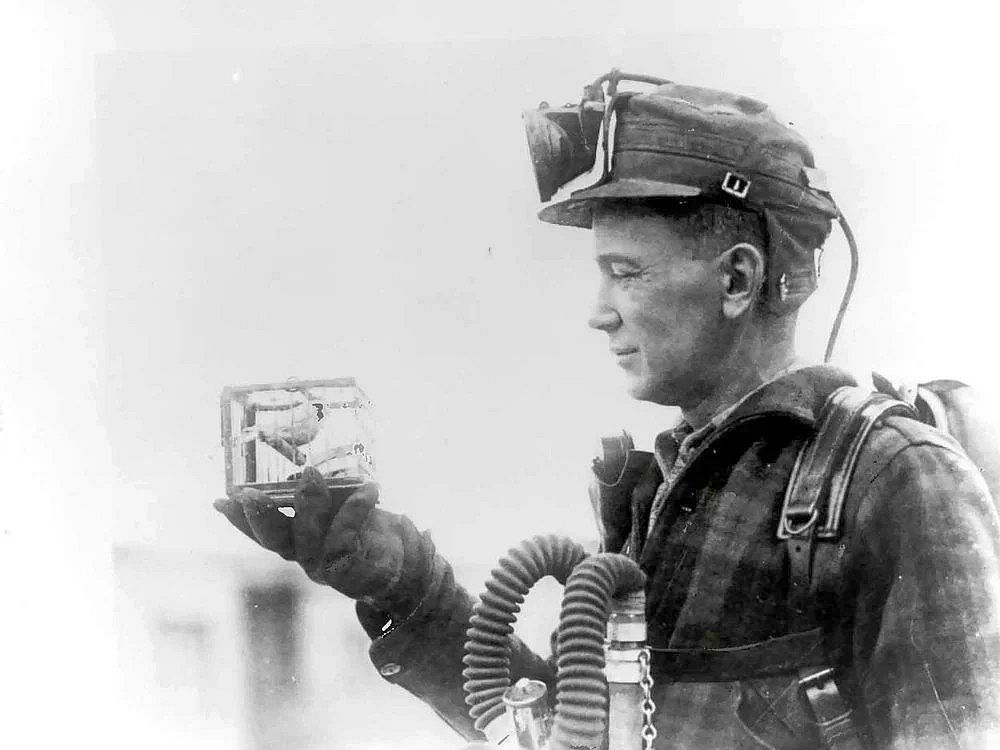
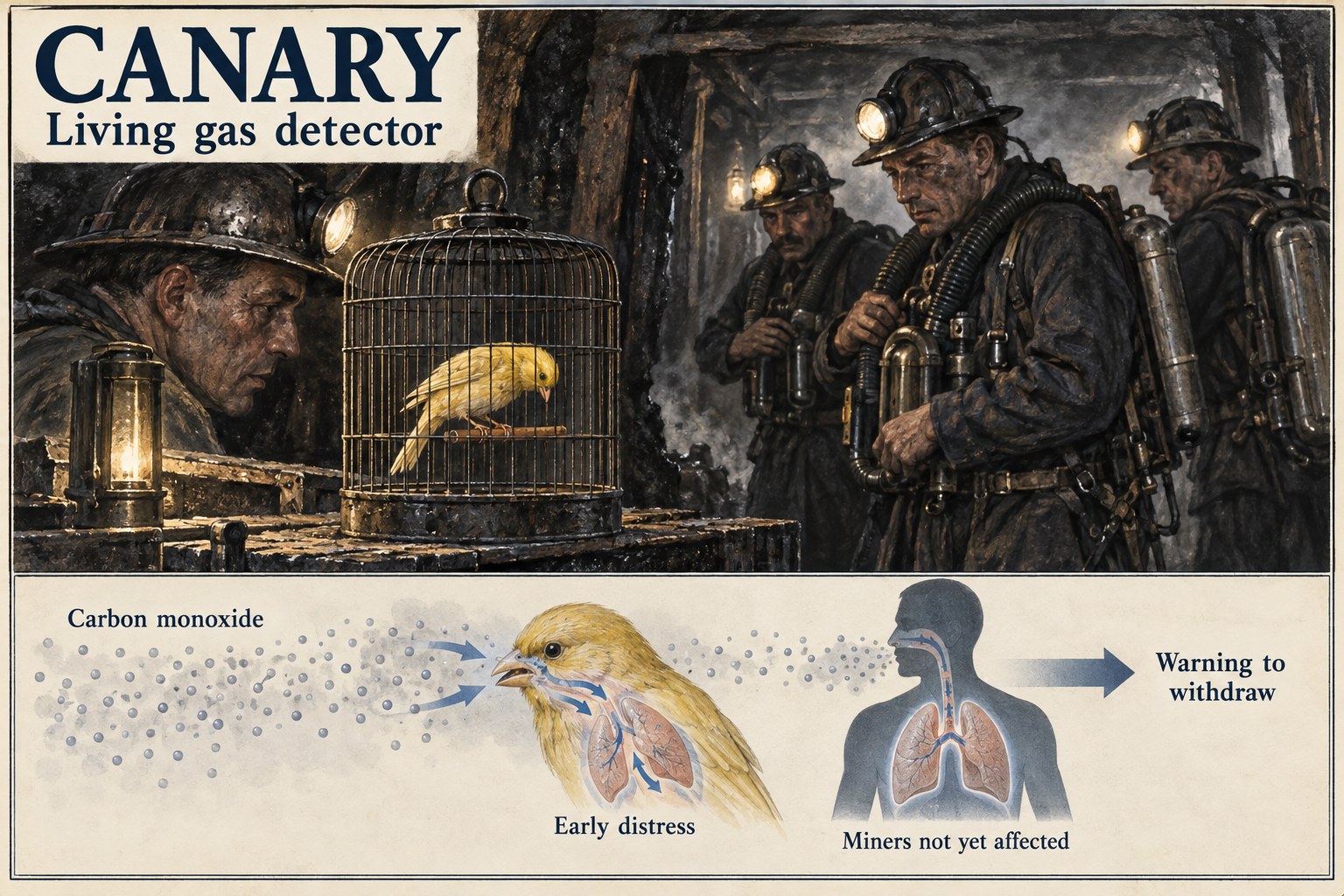
Historical usage
The use of canaries in coal mines was proposed by the physiologist John Scott Haldane in 1895 and adopted in British collieries from around 1911, following the Coal Mines Act of that year. The practice continued for three-quarters of a century: British legislation finally required canaries to be replaced by electronic carbon monoxide detectors from 30 December 1986, by which point only around 200 birds remained in use across the country's collieries, and miners were given roughly a year to complete the changeover.
How it worked
Canaries and other small birds have a much faster respiratory rate and metabolism than humans, making them far more sensitive to carbon monoxide poisoning. A caged bird carried into a suspect area would show visible distress or collapse well before gas concentrations became dangerous to the miners themselves, giving a clear and immediate warning to evacuate or don breathing apparatus.
Why it was used
A canary was cheap, required no calibration or maintenance, and for most of the 20th century was more reliably sensitive than the chemical or flame-based gas detection methods then available — a living instrument that needed nothing but food, water and watching. The canary was one instance of a general principle rather than a mining eccentricity. An animal that is more susceptible to a hazard than a person, or more exposed to it, can be watched as an advance warning; biology calls such an animal a sentinel species, and the miner's canary is the example the phrase is usually built on.
Risks & limitations
A canary provided only a warning, not protection: once distress was observed, miners still had to rely on their own escape or breathing apparatus. It also depended entirely on someone actually watching the bird's behaviour, and became obsolete once affordable, consistent electronic gas detectors were developed in the later 20th century.
Related terminology
Mines associated with this term
Included only where MineArchive's own research gives a reasonable evidential basis — not every mine where this might plausibly apply.
- Oakwood Colliery — Bridgend (well documented example)
Named twice in this record, first in the summary: “…later sent its coal to Elder Dempster's coaling stations in the Canaries and West Africa; it closed around 1928-30.”
Disasters associated with this term
5 examples chosen from 7 linked records, most direct relationship first.
- Cefn Parc Arlais Colliery explosion, 1964 (contextual relationship)
Named in this record’s investigation: “…Mines Inspector John David Tankard went into the workings carrying a canary and located the deputy's flame lamp, finding its gauze rusted and…” - Derwent Colliery explosion, 1947 (contextual relationship)
Named in this record’s narrative: “…on the roads, and worked in relays with breathing apparatus and canaries for six and a half hours before they put out the fire and reached…” - Dinas Main Colliery explosion, 1907 (contextual relationship)
Named in this record’s rescue and recovery: “…volunteers cut through falls in the main level through the night; a canary was used to test the air. The five survivors, guided by David…” - Hill of Beath Colliery fire, 1901 (contextual relationship)
Named twice in this record, first in the rescue and recovery: “…manager of the Fife Coal Company's West section, went down with two canaries in cages and, after consulting Mr Riddell, manager of the company's…” - Ingham Colliery explosion, 1947 (contextual relationship)
Named in this record’s rescue and recovery: “…several men of one exploring party to retire even though their canary was unaffected.”
Sources
- (secondary) Sentinel species — Wikipedia
- (secondary) The Canary In The Coal Mine Isn't Ancient History — Forbes
- (secondary) What Happened to the Canary in the Coal Mine? The Story of How the Real-Life Animal Helper Became Just a Metaphor — Smithsonian Magazine
Record created: 23 August 2026 · Last researched: 9 September 2026