 MineArchive
Barytocalcite
| Category | Commodities |
|---|---|
| Commodity page | Barytocalcite → |
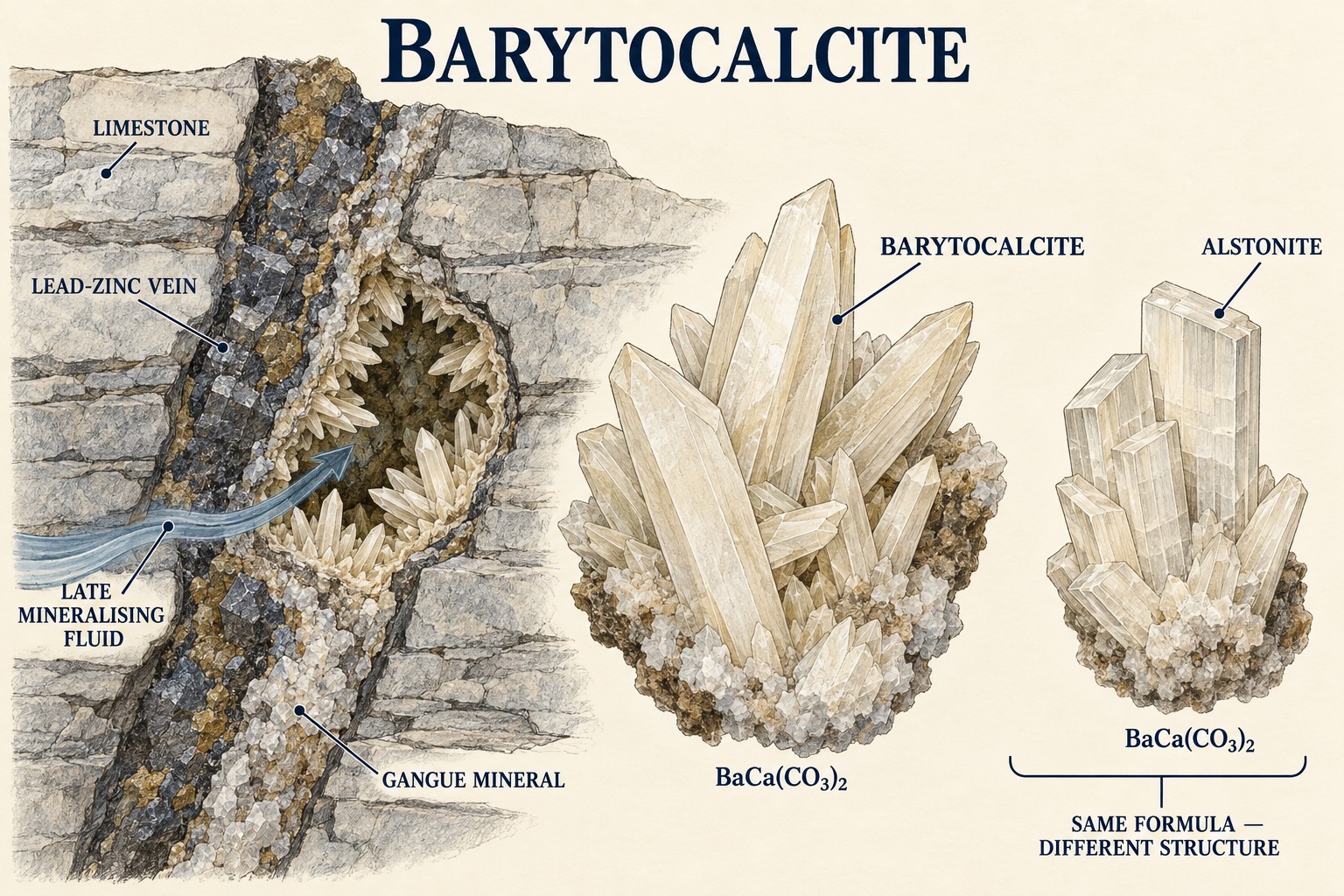
A barium-calcium carbonate mineral, BaCa(CO3)2, found as a gangue mineral alongside lead-zinc ore in the North Pennine orefield -- a heavy, pale grey, cream or white mineral with a resinous to greasy lustre, its high density (specific gravity around 3.7) coming from the weight of barium in its structure.
Historical usage
First identified as a distinct mineral from the North Pennine orefield, barytocalcite has been recorded from around 22 localities across the Alston Moor district alone -- among them Blagill Mine, already researched on this site. It shares its exact chemical formula with the rarer mineral alstonite, first identified nearby at Brownley Hill Mine in 1834 and named for the district; the two are polymorphs, chemically identical but crystallising in different structures.
How it worked
Barytocalcite forms in vugs and cavities within limestone wall-rock, where late-stage mineralising fluids reacted with the surrounding limestone -- the barium carried in solution combining with calcium from the limestone itself to precipitate the mineral as slender monoclinic crystals, often lining open cavities alongside other gangue minerals.
Why it was used
Barytocalcite was never itself a target of mining -- it is a gangue mineral, found alongside the lead and zinc ores the North Pennine mines were actually working, and its interest today is almost entirely to mineral collectors and mineralogists rather than to any industrial use.
Related terminology
Mines associated with this term
Included only where MineArchive's own research gives a reasonable evidential basis — not every mine where this might plausibly apply.
- Blagill Mine — Cumbria (well documented example)
Barytocalcite is specifically documented from Blagill Mine (mindat), a genuine evidence-based match.
See every mine that worked barytocalcite →
Sources
- (secondary) Barytocalcite — Wikipedia
- (secondary) Barytocalcite from Blagill Mine, Alston Moor — mindat.org
Record created: 1 September 2026 · Last researched: 1 September 2026