 MineArchive
St. Helen's Colliery
| Also known as | St. Helen's Auckland Colliery |
|---|---|
| Location | St Helen Auckland, County Durham — 54.6382, -1.6971 (approximate) |
| Commodity | Coal |
| Type | Coal |
| Worked | 1830 (sinking)–31 December 1926 |
| Maximum depth | 489 feet (81 fathoms 2 ft, 149 m) to the Brockwell, Engine Pit, 1894 |
| Operators | Joseph Pease & Partners (1830–1926) |
Overview
Joseph Pease's colliery at St Helen Auckland, sunk from 1830 because the Stockton and Darlington Railway made the coal worth working; with 65 coke ovens and a peak of 705 men in 1924, it closed at the end of 1926.
History
Borings on Sir P. Musgrave's estate near St Helen Auckland proved the Main Coal, or Brockwell, in 1828. The colliery owed its existence to the Stockton and Darlington Railway, opened through St Helen Auckland in 1825: Joseph Pease and his partners began sinking in February 1830, starting the Engine Pit on 24 March. A three-foot-nine seam was reached in January 1831 and the Main Coal, five and a half to six feet thick, in March 1833; the Engine Pit was 80 fathoms deep with a 100-horsepower engine. The Emma Pit was sunk to the Harvey in October 1831 and the Catherine Pit from 26 March 1835.
The colliery belonged to the Peases throughout, as Joseph Pease, Joseph Whitwell Pease and Joseph Pease and Co. in the 1850s and Joseph Pease and Partners from the 1860s. In 1894 its Engine Pit worked the Brockwell, six feet thick at 81 fathoms, and the Tindale Pit the Harvey at 40 fathoms, for 120,000 tons a year, with 65 coke ovens and 352 men. Coke went out with the coal along the railway, and St Helen's colliery junction grew with the trade. The colliery's tramway ran from the foot of the Brusselton incline and was later carried on to Woodhouse Colliery, a short way to the north-east; once the Tunnel Branch through Shildon opened in 1856 the incline was redundant, and the colliery's coal went out behind locomotives. By 1897 there were extensive sidings south of the colliery, and an engine shed opened at Tindale Crescent in 1887.
In the early twentieth century the village grew around the colliery, with allotments, a miners' institute and terraces such as Maude Terrace and Louisa Terrace; four cottages near the colliery carry panels commemorating men of the Durham Light Infantry. The colliery employed 696 men in 1914, and the institute's football club, St Helen's Colliery Institute F.C., fielded a side of young colliery workers in 1909-10. Employment reached 705 in 1924, and the colliery closed on 31 December 1926. Industrial units now stand on the old colliery site. The museum's list of those killed holds 44 names; two sinkers were killed when gas exploded as shots were fired in a sinking pit on 21 August 1898 (see Disasters, below).
Geology
Durham coalfield, south-west: the Brockwell or Main Coal (5 ft 6 in to 6 ft at about 80 fathoms, rising 20 in per yard), Harvey or Yard Coal (4 ft 10 in at 40 fathoms), Busty, Hutton and Low Main.
Workings
The Engine Pit (1830), Emma Pit (1831), Catherine Pit (1835) and Tindale Pit, with 65 coke ovens.
Closure
Closed on 31 December 1926.
What remains
Industrial units stand on the old colliery site.
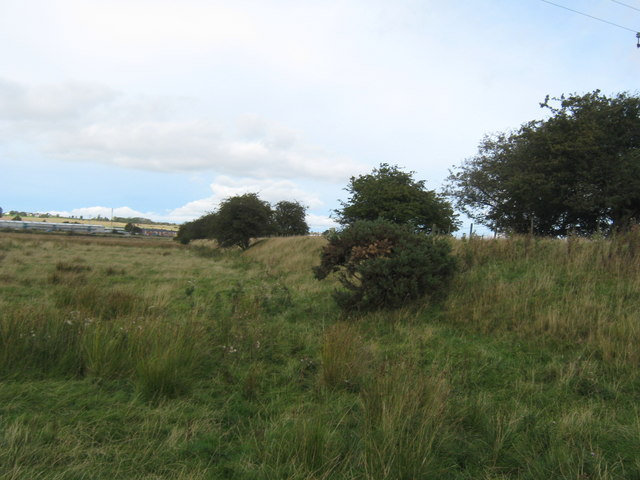
A raised waggonway that linked the colliery to the Brusselton incline survives as an earthwork.
Redevelopment
Industrial units.
Nearby mines
- West Auckland Colliery — 0.8 miles (1.3 km) W
- Woodhouse Close Colliery — 0.8 miles (1.3 km) NE
- Brusselton Colliery — 1.5 miles (2.4 km) SE
- Etherley Dene Colliery — 1.5 miles (2.4 km) N
- Adelaide Colliery — 1.6 miles (2.6 km) E
Straight-line distance, within 9 miles (15 km). Show on the map.
Disasters & major incidents
-
St Helen's Colliery sinking explosion, 1898
21 August 1898 · Explosion · 2 fatalities
Two sinkers were killed at St Helen's Colliery, near Bishop Auckland, on 21 August 1898 when gas lying under the walling scaffold in a shaft being deepened was fired by the sparks of a fuze, as they were drawn up in the kibble after lighting the shots.
What's uncertain
Points where sources disagree or the record could not be settled; both accounts are kept. All open questions in the archive.
- Closed in 1925. (disputed) 2
- Workable coal was found by borings on Sir George Musgrave's estate. (disputed) 3
Recorded claims
Individual factual claims, each attached to the source(s) that support it below. Where sources disagree, both are kept.
- Joseph Pease and partners began sinking in February 1830; the Engine Pit was started on 24 March 1830. 1
- The colliery owed its existence to the Stockton and Darlington Railway. 1,2
- In 1894 it raised 120,000 tons a year with 65 coke ovens and 352 men. 1
- The colliery employed 705 in 1924. 1,2
- Closed on 31 December 1926. 1
- Closed in 1925. (disputed) 2
- The colliery tramway ran from the foot of the Brusselton incline; the Tunnel Branch of 1856 made the incline redundant and locomotives took over. 3
- The colliery employed 696 men in 1914. 3
- Workable coal was found by borings on Sir George Musgrave's estate. (disputed) 3
Photographs & further reading
Pits, owners and employment from 1830 to 1926, with Fordyce's and Whellan's accounts and T. H. Hair's view.
View sourceSources
- (primary) Durham Mining Museum: St. Helen's Colliery — Durham Mining Museum
- (secondary) St. Helen Auckland Settlement Character Study — Durham County Council
- (secondary) St. Helen's Colliery Institute F.C. (The Gaunless Valley in World War 1) — The Fallen Servicemen of South West County Durham
Record created: 6 October 2026 · Last researched: 6 October 2026