 MineArchive
Pibble Mine
| Also known as | Pibble Mine Complex, Creetown Mine |
|---|---|
| Location | Pibble Hill, about three miles north of Creetown, Kirkmabreck parish, Dumfries and Galloway — 54.9170, -4.2980 (exact) |
| Commodities | Copper, Lead, Zinc |
| Type | Metal |
| Worked | 1849–1855 |
| Maximum depth | 200-300 ft (61-91 m), deepest shafts |
| Operators | Creetown Copper and Lead Mining Company (1849–1855) |
Overview
A copper and lead mine high on Pibble Hill above Creetown, worked by the Creetown Copper and Lead Mining Company from 1849 to 1855; its 1852 Cornish engine house is unique in south-west Scotland, and the well-preserved site is a Scheduled Monument.
History
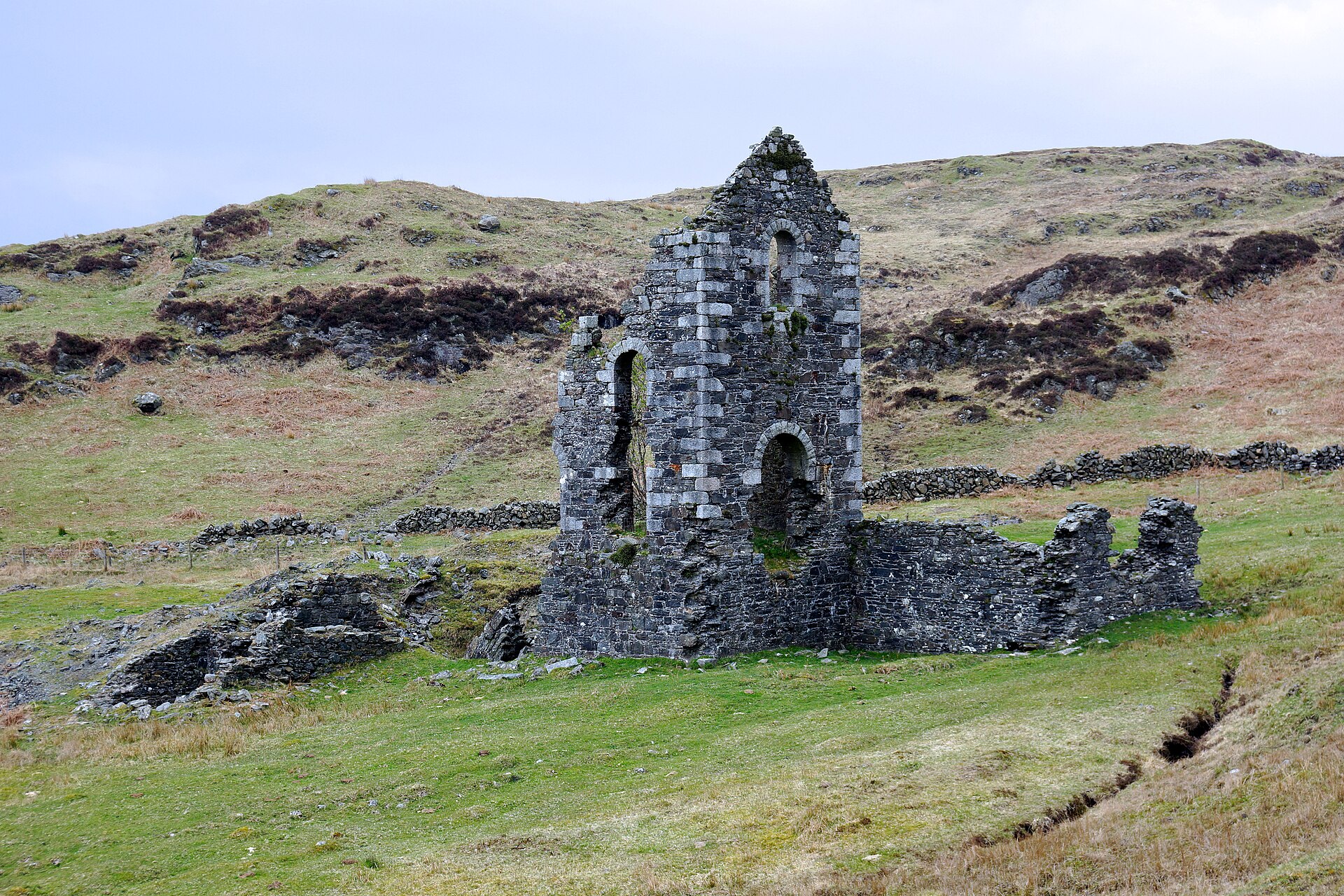
Pibble Mine lies high on the heathery slopes of Pibble Hill, about three miles north of Creetown in the parish of Kirkmabreck. It worked lead, copper and zinc, mainly from one vein running north-west to south-east under the hill, and the workings are almost certainly of several periods, parts perhaps older than the seventeenth century: six worked areas include open adits with spoil heaps, horizontal shafts and vertical shafts, some 200 to 300 feet deep.
Its recorded working was short. The Creetown Copper and Lead Mining Company ran it from 1849 to 1855, with a Cornish mine captain and up to 36 men, women and boys, and raised 214 tons of copper ore, 29 tons of lead and a little silver. In 1852 an engine house was built for a beam pumping engine bought from the St Austell Foundry in Cornwall. The ore was crushed on site by a water-powered mill fed from a reservoir and lades; lead ore probably went from a small harbour at Palnure to Deeside for smelting, and copper ore to Anglesey or Swansea.
Because it is so isolated the mine is unusually well preserved, and it is now a Scheduled Monument. The remains include drainage adits and shafts with their tips, an ore bin and hand-dressing area, the reservoir and dam, the wheel pit of the crushing mill and the engine house, one of only two surviving at Scottish metal mines; its bob wall has fallen, but the rest, with the boiler house, stands complete.
Geology
A north-west to south-east vein carrying lead, copper and zinc ores under Pibble Hill.
Workings
Adits, horizontal and vertical shafts (some 200-300 ft deep), a Cornish beam pumping engine of 1852, a water-powered crushing mill, reservoir, dam and lades.
Closure
Worked by the Creetown Copper and Lead Mining Company until 1855.
What remains
A Scheduled Monument; the engine house stands complete except for its bob wall, with the boiler house, wheel pit, reservoir, adits and tips.
The 1852 engine house and boiler house, crushing-mill wheel pit, ore bin and dressing floor, reservoir and dam, adits, shafts and spoil tips.
Redevelopment
Unknown.
Nearby mines
- Blackcraig Lead Mines — 5.6 miles (9.0 km) NW
- Talnotry Mine — 6.8 miles (11.0 km) NW
Straight-line distance, within 9 miles (15 km). Show on the map.
Recorded claims
Individual factual claims, each attached to the source(s) that support it below. Where sources disagree, both are kept.
- Worked by the Creetown Copper and Lead Mining Company from 1849 to 1855, producing 214 tons of copper, 29 tons of lead and a small amount of silver. 1
- The engine house was built in 1852 for a beam engine bought from the St Austell Foundry, and is one of only two surviving at Scottish metal mines. 1
- A very well preserved, probably multi-period mining landscape, parts possibly before the 17th century, working lead, copper and zinc from one main NW-SE vein; some shafts 200-300 ft deep. 2,3
- A Scheduled mid-19th-century copper/lead mine with drainage adits, shafts, a Cornish engine pumping house and a water-powered crushing mill fed by a reservoir and lades. 1,2,3
Sources
- (secondary) Pibble Mine — Northern Mine Research Society
- (secondary) Pibble Hill (Pibble Mine Complex) — Canmore / trove.scot (HES)
- (secondary) Pibble Mine — Scottish Cave and Mine Database (Grampian Speleological Group)
Record created: 17 October 2026 · Last researched: 17 October 2026