 MineArchive
Percy Main Colliery
| Also known as | Howdon Pans Colliery, Howden Panns Colliery |
|---|---|
| Location | Percy Main, North Shields, on the north bank of the Tyne, Tyne and Wear — 54.9969, -1.4740 (approximate) |
| Commodity | Coal |
| Type | Coal |
| Worked | 1799–1895 |
| Maximum depth | About 160 fathoms (293 m), to the Bensham |
Overview
The colliery at Percy Main, near North Shields, sunk through a flooded quicksand by 1799 with the first cast-iron tubbing used in the coal trade. Its workings ran under the Tyne to the High Main at 120 fathoms and the Bensham at 160; it employed 611 in 1843 and closed in 1895, leaving its name to the village around it.
History
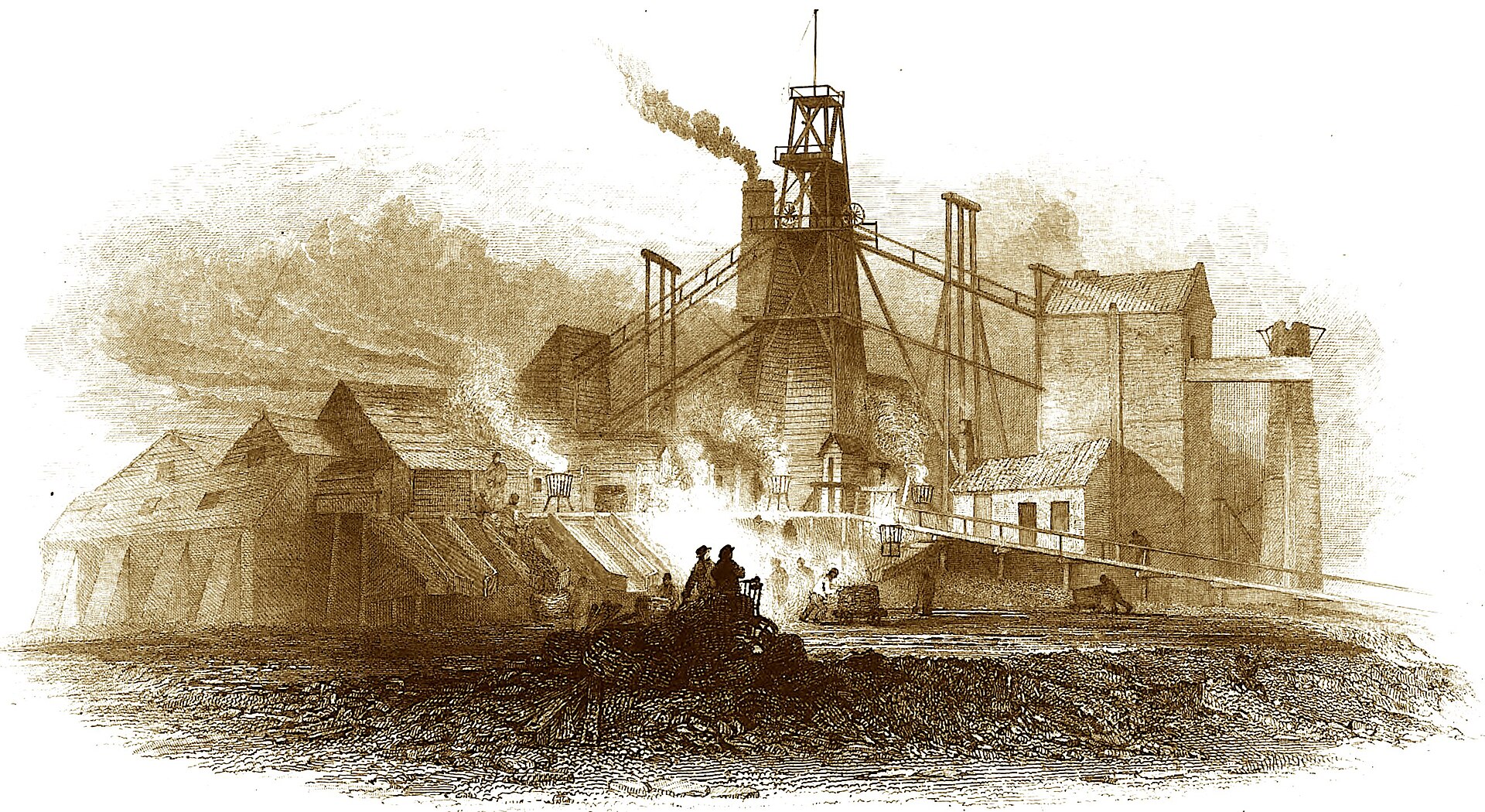
Percy Main Colliery, also called Howdon Pans Colliery, lay about a mile and a half from North Shields, just south of the railway near St John's church; the village of Percy Main grew up around it and took its name. The sinking of the old pit was completed in 1799. A quicksand at 30 fathoms, with a feeder of 1,400 or 1,500 gallons of water a minute, held it up and raised its cost, until the sand was passed and the water dammed back with a cast-iron tub, the first used in the coal trade for sinking through quicksand. On 3 September 1802 the owners, neighbouring gentlemen and the workmen walked in procession with the first wagon of coals from the winning to the staith at Whitehill Point on the Tyne, where it was shot into a waiting ship to a salute of artillery and the band playing 'The Keel Row'. A new winning 135 fathoms deep was opened in 1806-7.
The colliery reached the High Main at 120 fathoms and the Bensham at 160, the deepest seam then worked there, and its workings extended under the bed of the Tyne. In 1807, after a fire had been put out by flooding the workings, gas compressed in the rise workings burst from the mouth of the pit every half hour for twenty-six hours as the water was pumped out. An explosion in its Howdon Pit killed four on 5 April 1814. Its pits included the Percy Pit and the Flatworth Pit, out of use by 1852; Thomas Hair drew the colliery in 1844, and it employed 611 in 1843. On 17 September 1847 Thomas Dobinson and Walter Murray, lowered down the pump shaft by a horse gin to examine the pumps, were killed when the rope caught in the scaffolding as they were drawn up and broke. Its High Main and Bensham workings were abandoned about 1851, and the colliery closed in 1895.
Geology
Northumberland coalfield: the High Main and the Bensham, beneath a water-bearing quicksand at 30 fathoms; the seams rise steeply in places.
Workings
The old pit (1799), a new winning of 1806-7, the Percy Pit, the Howdon Pit and the Flatworth Pit, with workings under the Tyne and a staith at Whitehill Point.
Closure
The High Main and Bensham workings were abandoned about 1851 and the Flatworth Pit was out of use by 1852; the colliery closed in 1895.
What remains
Unknown.
Redevelopment
Unknown.
Related mines
- Burdon Main Colliery — Their High Main workings share an abandonment plan, Burdon Main and Percy Main, of 1841.
Nearby mines
- Jarrow Colliery — 1.0 miles (1.6 km) S
- Burdon Main Colliery — 1.0 miles (1.7 km) E
- Bigge Pit, Willington — 1.6 miles (2.6 km) NW
- St Hilda’s Colliery — 1.6 miles (2.6 km) E
- Wallsend Colliery — 1.8 miles (2.8 km) W
Straight-line distance, within 9 miles (15 km). Show on the map.
What's uncertain
Points where sources disagree or the record could not be settled; both accounts are kept. All open questions in the archive.
- The colliery went to a depth of 247 metres, to the Main seam. (uncertain) 2
Recorded claims
Individual factual claims, each attached to the source(s) that support it below. Where sources disagree, both are kept.
- The sinking of Percy Main's old pit was completed in 1799; a quicksand at 30 fathoms with a feeder of 1,400 or 1,500 gallons a minute was passed and the water dammed back with a cast-iron tub, the first used in the coal trade for sinking through quicksand. 1
- The village of Percy Main is named after the colliery, sunk in 1799, which closed in 1895. 2
- The depth to the High Main was 120 fathoms and to the Bensham 160 fathoms, and the workings extended under the bed of the Tyne. 1
- The colliery went to a depth of 247 metres, to the Main seam. (uncertain) 2
- On 3 September 1802 the owners and workmen of Percy Main walked in procession with the first wagon of coals from the winning to the staith at Whitehill Point. 3
- An explosion in the Howdon Pit of Percy Main Colliery killed four on 5 April 1814. 3
- On 17 September 1847 Thomas Dobinson and Walter Murray were killed in the pump shaft of Percy Main when the gin rope drawing them up caught in the scaffolding and broke. 4,1
- Percy Main had two associated pits, the Flatworth Pit, out of use by 1852, and the Percy Pit, and Thomas Hair drew the colliery in 1844. 5,6
- Percy Main's High Main and Bensham workings were abandoned about 1851. 7
Photographs & further reading
The 1844 account of the sinking, the tubbing and the 1807 gas eruptions, with the men killed at the colliery.
View sourceThe village that grew up around the colliery and took its name.
View sourceSources
- (primary) Percy Main Colliery — Durham Mining Museum
- (secondary) Percy Main — Wikipedia
- (primary) Local Records; or, Historical Register of Remarkable Events, vol. 2 (J. Sykes, 1866 edition) — Internet Archive
- (primary) Local Records; or, Historical Register of Remarkable Events, vol. 3 (T. Fordyce, 1867) — Internet Archive
- (secondary) Percy Main Colliery (Howdon Panns) (HER 2023) — Tyne and Wear HER (Sitelines)
- (secondary) Percy Main Colliery, Flatworth Pit (HER 1174) — Tyne and Wear HER (Sitelines)
- (primary) Percy Main Colliery: catalogue of plans of abandoned mines — Durham Mining Museum
Record created: 5 October 2026 · Last researched: 5 October 2026