 MineArchive
Leven Colliery
| Also known as | Leven Nos. 1 and 2 Pits |
|---|---|
| Location | Kinnarchie Braes, Methil, Fife — 56.1893, -3.0109 (exact) |
| Commodity | Coal |
| Type | Coal |
| Worked | 1877 (sinking)–1931 |
| Maximum depth | 150 fathoms (Chemiss seam); shafts 900 ft and 720 ft |
| Operators | Fife Coal Company (1877–1931) |
Overview
The Fife Coal Company's Leven Nos. 1 and 2 pits, sunk from 1877 on Kinnarchie Braes on the Methil side of the River Leven and christened The Leven Colliery by Charles Carlow when he cut the first sod. The main splint seam was struck in 1880 at 143 fathoms, and the wet pits, kept clear by a Douglas and Grant pumping engine, employed over 900 people by 1908, sending coal down the company's own line to Methil Docks. Closed for reconstruction in 1924 and reopened in 1925, the colliery finally closed in 1931.
History
A new seam was proved by boring west of Leven in 1874, and in 1878 the Fife Coal Company took leases of the Leven and Pirnie coalfields, on the eastern boundary of Wemyss parish and the Durie estate, turning the young company's attention from Kelty to the coast. Charles Carlow, its manager, cut the first sod of the new colliery near Kirklandhill farm in February 1877 and christened it The Leven Colliery before a crowd who adjourned to the Crown Inn at Methil; James Thomson of Halbeath was appointed engineer and general superintendent. The No. 1 pit was sinking in 1878, when a bucket door fell thirty fathoms and killed the sinker John Johnston, and the No. 2 about a year later. The Eight Feet seam was reached in October 1879 at 117 fathoms, with bunting at the pitheads, and the main splint seam in March 1880 at 143 fathoms; the shafts went on to the Chemiss at about 150 fathoms, and underground mines driven across the dipping measures later opened the Barncraig and Coxtool seams. The pits were wet, and their Douglas and Grant pumping engine had a great deal of water to lift. Employment grew from 302 underground in 1882 to 409 in 1890 and 907 in 1908, and the colliery's private mineral line ran east from Muiredge through the pits to Methil Docks. The neighbouring Pirnie pit, bought in 1877, was renamed Leven No. 3, and a No. 4 pit was added; No. 4 and Pirnie were shut down in March 1912, their water left to Nos. 1 and 2. During the lockout of April 1921 the regular men withdrew, Edinburgh students volunteered to keep the pumps going, a crowd led by a piper marched on the colliery to draw the boiler fires, and two pit ponies left below were drowned; over two thousand Wemyss and Leven miners were still idle that August while the flooded workings were recovered. Nos. 1 and 2 closed for a large reconstruction in July 1924 and reopened in November 1925 with surface plant rebuilt in non-inflammable materials. A fifteen-ton flywheel burst in July 1929, wrecking the engine-house gable and the pulleys of the Little Pit without injury. The pits were closed in 1931; their Eight Feet and Chemiss workings were abandoned that February, after the Six Feet in 1929 and the Bowhouse in 1930. At least seventeen men died singly at the colliery between 1878 and 1923, most under falls of coal or in haulage and shunting accidents; in 1909 two miners overcome by gas after a shot in the Wall coal were rescued alive, and their rescuer James Thomson was presented with five pounds by the company.
Geology
The upper coal measures of the east Fife coalfield, dipping seaward on the Methil side of the Leven estuary. The section worked ran through the Eight Feet (a five-foot steam coal under a thin roof coal), the Six Feet, the Chemiss with its three-foot splint household coal and binks, the three-foot Parrot gas coal and, partly worked, the Dysart Main; the Barncraig, Coxtool, Wall, Bowhouse and Den coals were reached by underground mines.
Workings
Two shafts on Kinnarchie Braes: by 1880 a 19 by 10 foot downcast of 900 feet and an upcast of 720 feet, ventilated by a 24-foot Waddle fan, with a pumping engine by Douglas and Grant of Kirkcaldy to keep the wet workings clear. Underground mines driven across the dipping seams opened the Barncraig and Coxtool coals. Coal went out over the company's own line, the Leven Colliery Branch, east from Muiredge through the pits to Methil Docks. The surface plant was rebuilt in non-inflammable materials in the reconstruction of 1924-25.
Closure
Closed in 1931 after fifty-four years. The Six Feet seam was abandoned in October 1929, the Bowhouse in April 1930, the Parrot in April 1930 and the Eight Feet and Chemiss in February 1931.
What remains
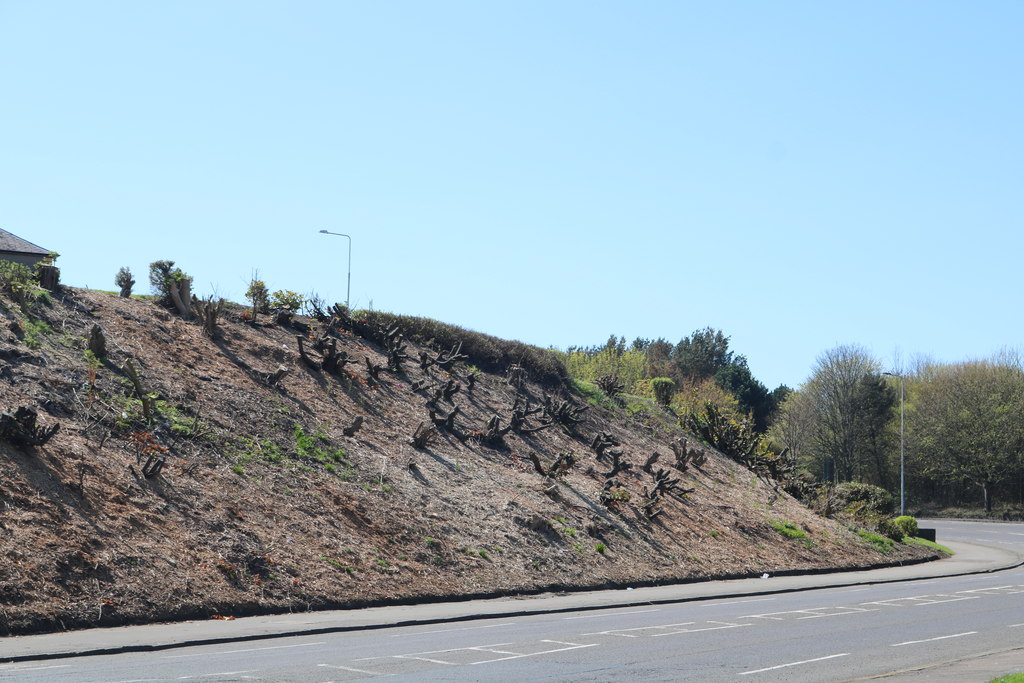
The pits stood on Kinnarchie Braes, a hillside now within the streets of Methil and Leven, and no colliery building is recorded standing. The bridge carrying Wellesley Road over the colliery's mineral line to Methil Docks still stood in 2018.
Related mines
- Durie Colliery — Both were Fife Coal Company pits at Leven under one manager, Dugald Baird, in the 1890s, and the company's 1878 leases opened pits on the Durie estate alongside the Leven sinkings.
- Pirnie Colliery — Pirnie was bought by the Fife Coal Company in 1877 and renamed Leven No. 3, worked with Nos. 1 and 2 under the same lease and managers until it was shut down in 1912.
Nearby mines
- Wellesley Colliery — 0.1 km NW
- Pirnie Colliery — 2.1 km W
- Durie Colliery — 2.4 km NE
- Michael Colliery — 5.5 km SW
- Earlseat Colliery — 6.0 km SW
Straight-line distance, within 15 km. Show on the map.
What's uncertain
Points where sources disagree or the record could not be settled; both accounts are kept. All open questions in the archive.
- The BGS and Mining Remediation Authority catalogue holds an abandonment plan titled 'Leven' for the Parrot seam, dated 1903 (S1067). (uncertain) 8
Recorded claims
Individual factual claims, each attached to the source(s) that support it below. Where sources disagree, both are kept.
- Charles Carlow, manager of the Fife Coal Company, cut the first sod of the new colliery near Kirklandhill farm in February 1877 and christened it The Leven Colliery; James Thomson of Halbeath was appointed engineer and general superintendent the following month. 1
- The No. 1 pit was sinking in 1878 and the No. 2 about a year later, on Kinnarchie Braes on the Methil side of the Leven estuary; the Eight Feet was reached in October 1879 at 117 fathoms and the main splint seam in March 1880 at 143 fathoms, the shafts going to the Chemiss at about 150 fathoms. 1
- In 1878 the Fife Coal Company took leases of the Leven and Pirnie coalfields and opened pits on the eastern boundary of Wemyss parish and on the Durie estate near Leven, working the seams of the upper coal measures there. 2
- The colliery employed 302 underground and 62 above in 1882, 353 and 107 in 1894, 382 and 108 in 1896, 907 and 214 in 1908 and 343 and 121 in 1928. 3,1
- The Leven pits were wet, and their pumping engine by Douglas and Grant of Kirkcaldy had a great amount of water to keep the workings clear. 1
- Nos. 1 and 2 closed for reconstruction in July 1924 and were gradually reopened from November 1925, with all the surface plant rebuilt in non-inflammable material. 1
- The pits closed in 1931; the Six Feet seam was abandoned in October 1929, the Bowhouse and Parrot in April 1930 and the Eight Feet and Chemiss in February 1931. 1
- In April 1921 the regular men withdrew, Edinburgh students kept the pits fairly dry, a crowd led by a piper marched on the colliery, two ponies left below were drowned and a Leven miner was charged with inciting the crowd to draw the boiler fires. 1
- The Fife Coal Company's private Leven Colliery Branch ran east from Muiredge through the colliery to Methil; sinking of Nos. 1 and 2 pits began in 1877, and the Pirnie pit became Leven No. 3 in November 1877. 4,5
- Historic Environment Scotland records the colliery at NO 37362 00093 in Scoonie parish. 6
- John Smith's diary records him starting in No. 2 pit, Leven, in July 1884 after leaving No. 3, and seeing a cage in No. 1 pit taken over the pulley wheels on 18 July 1884. 7
- The BGS and Mining Remediation Authority catalogue holds an abandonment plan titled 'Leven' for the Parrot seam, dated 1903 (S1067). (uncertain) 8
- Mindat records the colliery as opened in 1877 and closed in 1931, owned by the Fife Coal Co. Ltd from 1880 to 1930. 9
Photographs & further reading
The fullest account: managers and employment year by year, the seam section, the abandonment plans and fifty years of newspaper extracts on the pits.
View sourceThe company's own 1922 history, with the 1878 leases at Leven and Pirnie and the colliery in its list of works.
View sourceThe company's private line from Muiredge through the colliery to Methil Docks, with photographs of the surviving Wellesley Road bridge.
View sourceSources
- (secondary) Pit-L-1. Leven Nos. 1, 2 Pits — Fife Pits (Colin Martin and Chris Sparling)
- (secondary) The Fife Coal Company: a short history (1922) — Scottish Mining Website
- (primary) Durham Mining Museum: Fife Coal Co., Ltd. — Durham Mining Museum
- (secondary) Leven Colliery Branch (Fife Coal Company) — Railscot
- (secondary) Wemyss Private Railway — Wikipedia
- (primary) Leven Colliery (Canmore 306194) — Historic Environment Scotland
- (secondary) The Life and Times of an Old Miner (John Smith's diary) — Methil Heritage Centre
- (primary) BGS / Mining Remediation Authority mine plans: LEVEN, Parrot seam (S1067) — British Geological Survey / Mining Remediation Authority
- (secondary) Leven Colliery, Fife, Scotland — Mindat
Record created: 23 September 2026 · Last researched: 24 September 2026