 MineArchive
Kilvington Quarry
| Location | Kilvington, in the Vale of Belvoir south of Newark, Nottinghamshire — 52.9771, -0.8130 (approximate) |
|---|---|
| Commodity | Gypsum |
| Type | Quarry |
| Worked | Late 20th century–c. 2004 |
| Maximum depth | Unknown. |
| Operators | British Gypsum |
Overview
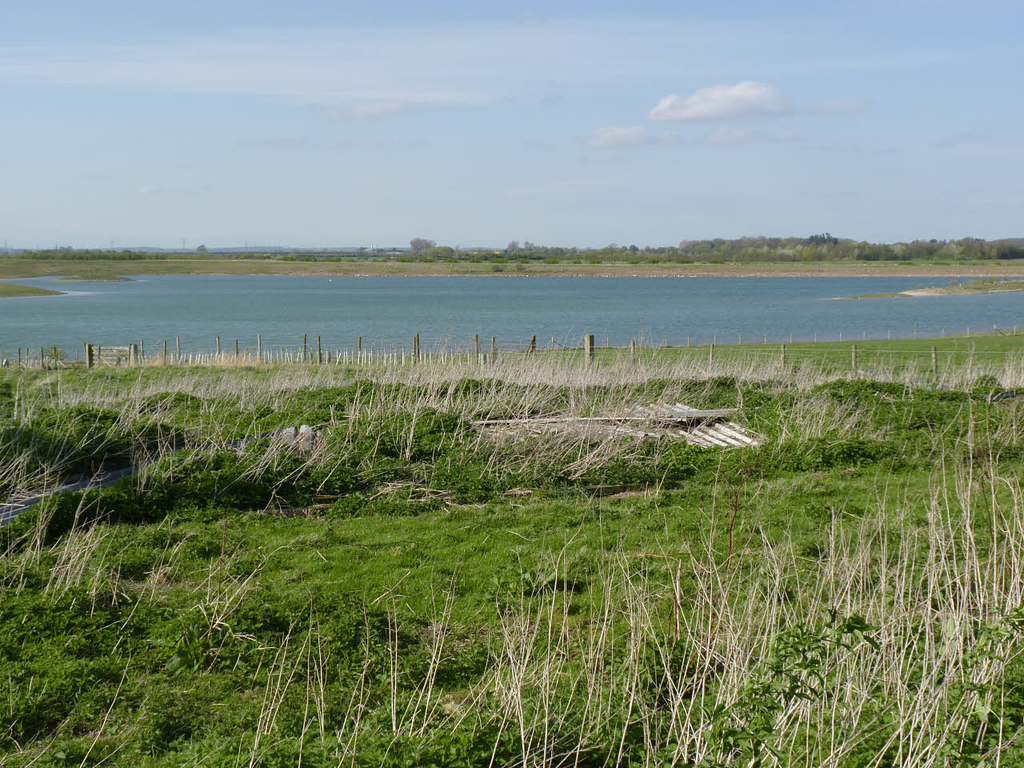
An opencast gypsum quarry in the Vale of Belvoir south of Newark, worked out by about 2004, when British Gypsum's production moved to Bantycock. It took the Newark gypsum, the high-purity stone that runs in a narrow outcrop from Newark to Cropwell Bishop in as many as seven seams, none more than a metre thick, which can only be won from the surface. The pits have filled with water: three lakes now lie on the Kilvington ground, a birdwatching site where 180 species have been logged.
History
Gypsum was taken here from the surface, in the narrow outcrop of high-purity stone that runs south-west from Newark. The Nottinghamshire Minerals Local Plan, adopted in December 2005, recorded the county's two gypsum workings of the day as the Marblaegis mine at East Leake and the opencast at Kilvington, and expected Kilvington to be exhausted by about 2004 with production transferring to Bantycock. An archaeological watching brief on what the report calls Kilvington Opencast Mine, following a desk-top study and evaluation of December 1999, excavated a number of small features and recovered worked flints from one pit, possibly Neolithic or Bronze Age, with stratified and unstratified pottery of possible Bronze Age date: the quarry was cutting through ground that had been used four thousand years earlier. Extraction is finished and the site restored. Three lakes have been made on the Kilvington side of the ground, where 180 species of birds have been logged, the old workings are managed as a wildlife area and one 24-acre pit is let as a carp fishery. The line of the former Great Northern Railway runs along the edge of the lagoons.
Geology
The quarry worked the Newark gypsum, one of the two commercial gypsum resources in the upper forty metres of the Mercia Mudstone in Nottinghamshire. It outcrops in a band rarely more than two kilometres wide, running from Newark to Cropwell Bishop by way of Kilvington and Orston, and is the source of the county's high-purity gypsum. Up to seven commercially viable seams are present, none of them more than a metre thick, which is why opencast working is the only feasible method; the seams dip south-eastwards beneath younger cover rocks, where working stays possible only while the ratio of overburden to mineral remains within economic limits.
Geological setting: Evaporite Deposits (well documented example)
Workings
Opencast, in the manner the county describes for the Newark gypsum: an initial cut large enough to develop and work a face, its overburden and inter-seam mudstones stored for the life of the quarry, after which each later cut returned its overburden directly into the void behind the advancing face, so the quarry filled itself in as it went and the material from the first cut went into the final void. Successive seams were exposed as benches.
Closure
The Nottinghamshire Minerals Local Plan expected the quarry to be exhausted by about 2004, when production transferred to Bantycock. Extraction is complete and the site has been fully restored.
What remains
Restored and flooded. The old workings are now Kilvington Lakes, a wildlife area and one of the county's better-known birdwatching sites, designated a Site of Importance for Nature Conservation; 180 species of birds have been logged on the three lakes. One 24-acre pit is run as a carp fishery.
The lagoons that fill the old workings, the line of the former Great Northern Railway alongside them, and a derelict barn on the edge of the ground.
Redevelopment
The workings have become Kilvington Lakes: a wildlife area with public footpaths, used by birdwatchers, with one lake let for coarse fishing.
Related mines
- Bantycock Quarry — British Gypsum's production moved from Kilvington to Bantycock as Kilvington was worked out, and three of the restoration lakes lie on the Kilvington side of the Bantycock ground.
- Marblaegis Mine — The two were Nottinghamshire's only gypsum workings when the county's minerals plan was adopted in 2005 — Kilvington taking the Newark gypsum from the surface, Marblaegis the Tutbury seam underground — both British Gypsum's.
Nearby mines
- Bantycock Quarry — 6.8 km N
Straight-line distance, within 15 km. Show on the map.
Recorded claims
Individual factual claims, each attached to the source(s) that support it below. Where sources disagree, both are kept.
- Worked opencast for the Newark gypsum, the county's high-purity stone. 1
- Expected to be exhausted by about 2004, when production transferred to Bantycock. 1
- One of the county's two gypsum workings in 2005, with the Marblaegis mine at East Leake. 1
- An archaeological watching brief at Kilvington Opencast Mine recovered worked flints of possible Neolithic or Bronze Age date and possible Bronze Age pottery. 2
- Extraction is complete and the ground restored as three lakes, where 180 species of birds have been logged. 3,4
- The lagoons are the result of gypsum extraction in the late 20th century and are developing as a wildlife area. 5
Photographs & further reading
What the restored quarry is now: the three lakes, the access and the birds recorded there.
View sourceThe Newark and Tutbury gypsum deposits, how each is worked, and Kilvington's place among the county's workings.
View sourceSources
- (secondary) Nottinghamshire Minerals Local Plan, chapter 10: Gypsum — Nottinghamshire County Council
- (primary) L11599: Neolithic and Bronze Age pit and artefacts, Kilvington Quarry — Nottinghamshire Historic Environment Record
- (secondary) Behind the scenes at quarry with plans to expand — Newark Advertiser, 10 March 2018
- (observational) Site 22: Kilvington Lakes — Nottinghamshire Birdwatchers
- (observational) Kilvington lagoons (photograph, 2014) — Geograph Britain and Ireland
Record created: 24 September 2026 · Last researched: 24 September 2026