 MineArchive
Kilroot Salt Mine
| Location | Kilroot, near Carrickfergus, County Antrim — 54.7326, -5.7501 (approximate) |
|---|---|
| Commodity | Salt |
| Type | Mineral |
| Worked | 1965–Still active |
| Maximum depth | Workings more than 400 m below ground |
| Operators | Irish Salt Mining & Exploration Company Ltd (1965–?) |
Overview
The only rock salt mine on the island of Ireland, working a Triassic evaporite bed beneath the shore of Belfast Lough since 1965 and now producing around half a million tonnes of de-icing salt a year.
History
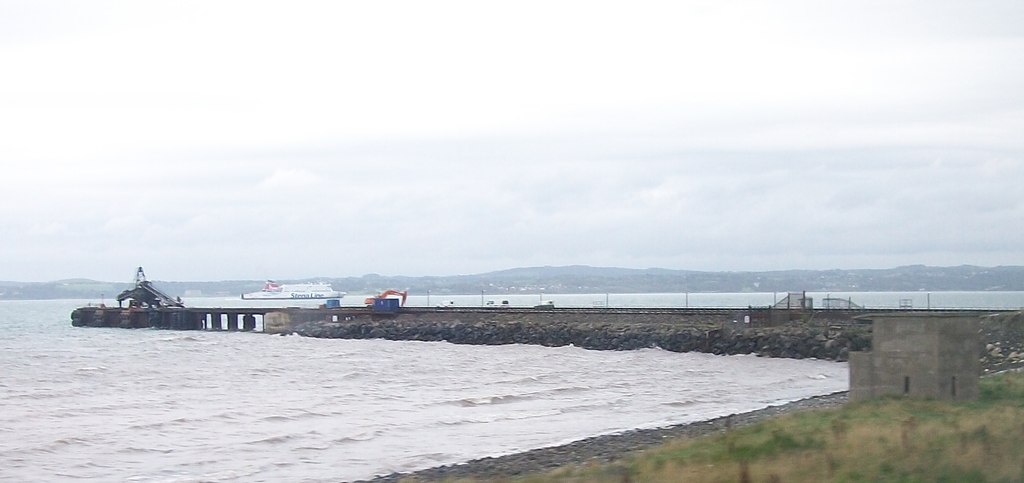
Rock salt had been worked in the wider Carrickfergus area since the Marquis of Downshire discovered a bed at Duncrue, about two miles away, in 1852; the Belfast Mining Company's mine there was producing over 20,000 tons a year by 1857, but the last of those older mines closed in 1958, leaving Carrickfergus without a working salt mine until Kilroot opened. Kilroot itself opened in 1965 under the newly formed Irish Salt Mining and Exploration Company, producing 14,500 tonnes in its first year. The surface site occupies the ground of the Kilroot coastal artillery battery, decommissioned in 1956, and the company worked for years out of the fort's converted buildings before a purpose-built operations building was put up.
Geology
The salt bed formed during the Triassic period, when the area now covered by the mine lay beneath a shallow sea that periodically evaporated, leaving thick beds of rock salt behind, later buried under later sediment.
Geological setting: Evaporite Deposits (well documented example)
Workings
Salt is worked by room-and-pillar mining, undercutting, drilling and blasting the bed, with a rotary drill carrying out roof-scaling afterward; pillars of unmined rock salt are left in place for support, with an extraction ratio of between 40 and 60 per cent of the reserve. The workings now extend across more than 350 hectares at over 400 m below ground, and all processing is carried out on the surface site.
Closure
The older Carrickfergus salt mines closed in 1958, leaving the modern mine as the district's only working.
What remains
Still in production, and the largest source of de-icing rock salt in Ireland — around half a million tonnes a year, roughly 30,000 tonnes a week, sold across Ireland and Great Britain and exported as far as the United States.
Nearby mines
- Magheramorne Quarry — 6.1 miles (9.8 km) N
Straight-line distance, within 9 miles (15 km). Show on the map.
What's uncertain
Points where sources disagree or the record could not be settled; both accounts are kept. All open questions in the archive.
- The workings extend over more than 350 hectares at over 400 m below ground. (uncertain) 4
- The surface site occupies the former Kilroot coastal artillery battery, decommissioned in 1956; the company operated from the fort's converted buildings before a purpose-built operations building was constructed. (uncertain) 4
Recorded claims
Individual factual claims, each attached to the source(s) that support it below. Where sources disagree, both are kept.
- The nearby Duncrue mine, discovered in 1852, was producing over 20,000 tons of salt a year by 1857 but closed in 1958, seven years before Kilroot opened. 1
- Salt is worked by room-and-pillar mining with an extraction ratio of between 40 and 60 per cent, leaving unmined pillars for support. 2
- The mine produces around half a million tonnes of de-icing rock salt annually. 2,3
- The workings extend over more than 350 hectares at over 400 m below ground. (uncertain) 4
- The surface site occupies the former Kilroot coastal artillery battery, decommissioned in 1956; the company operated from the fort's converted buildings before a purpose-built operations building was constructed. (uncertain) 4
Photographs & further reading
Describes the scale and depth of the workings and the surface site on the former artillery battery.
View sourceSources
- (secondary) Carrickfergus and the discovery of Irish rock salt — The Archaeology of Salt Production in Ireland
- (secondary) Exploration — Irish Salt Mining & Exploration Company Ltd
- (secondary) Pure Grit: The Carrickfergus mine from the Triassic period — BBC News Northern Ireland
- (secondary) Irish Saltmines & Exploration (ISME), Kilroot — Knox Clayton Architects
- (secondary) Kilroot Mine — Mindat
Record created: 25 August 2026 · Last researched: 25 August 2026