 MineArchive
Kibblesworth Colliery
| Location | Kibblesworth, five miles south of Newcastle, County Durham — 54.8997, -1.6211 (exact) |
|---|---|
| Commodities | Coal, Fireclay |
| Type | Coal |
| Worked | 1842–4 October 1974 |
| Maximum depth | Unknown. |
| Operators | John Bowes & Partners Ltd (1851–1947), Marley Hill Coal Company (1860–1880), National Coal Board (1947–1974) |
Overview
A Team Valley colliery at Kibblesworth, opened in 1842 and worked through two shafts, the Glamis and the Robert pits. It belonged for most of its life to John Bowes and Partners — the company built around the Marley Hill collieries and the Bowes Railway — and its coal went down that rope-worked line to be shipped at Jarrow. It passed to the National Coal Board in 1947 and closed on 4 October 1974, having outlasted almost all its neighbours.
History
Coal had been worked at Kibblesworth since at least 1717, when a colliery was opened here by Cotesworth, James Clavering, Henry Liddell and John Hedworth. The colliery that appears on the Ordnance Survey first edition, and which this record describes, opened in 1842. By the 1850s it was in the hands of John Bowes and Co. — the partnership of Bowes, Hutt, Wood and Charles Mark Palmer, the Jarrow shipbuilder, who had acquired the colliery and its railway in 1851. It passed through the Marley Hill Coal Company in the 1860s and back to John Bowes and Partners Ltd from the 1880s, and to the National Coal Board at nationalisation in 1947. In 1894 the colliery was raising 530 tons a day with 280 men and boys, and its coal was shipped at Jarrow by way of the Bowes Railway. The output was gas and household coal for most of the colliery’s life, with fireclay returned in 1900. After nationalisation the two pits were worked for different markets — the Glamis for coking coal, 146,600 tons in 1947, and the Robert for gas coal, 70,000 tons — and a third entrance, the Shield Row Drift, appears in the 1950 returns. The village’s fortunes followed the pit’s, through the strikes of 1921 and 1926 and the depression of the 1930s to the boom of the 1950s and 1960s.
Geology
The Coal Measures of the Durham coalfield on the west side of the Team valley, worked here for gas and household coals and, at least in 1900, for the fireclay beneath one of the seams.
Workings
Two shafts, the Glamis Pit and the Robert Pit, the latter at NZ241562 a little west of the former. A third entrance, the Shield Row Drift, is returned alongside them in 1950. The coal left the site not by main-line railway but by the Bowes Railway, the rope-worked colliery line built to carry the partnership’s coal from the Team valley collieries down to the staiths at Jarrow on the Tyne.
Closure
The colliery closed on 4 October 1974, twenty-seven years into National Coal Board ownership and long after most of the pits around it. No reason for the closure is recorded.
What remains
Kibblesworth is now a village on the western side of the Team valley with no colliery working. The Bowes Railway, which carried its coal, survives in part as a scheduled monument and working preserved railway further along the line at Springwell.
No colliery structure is known to survive at Kibblesworth itself.
Related mines
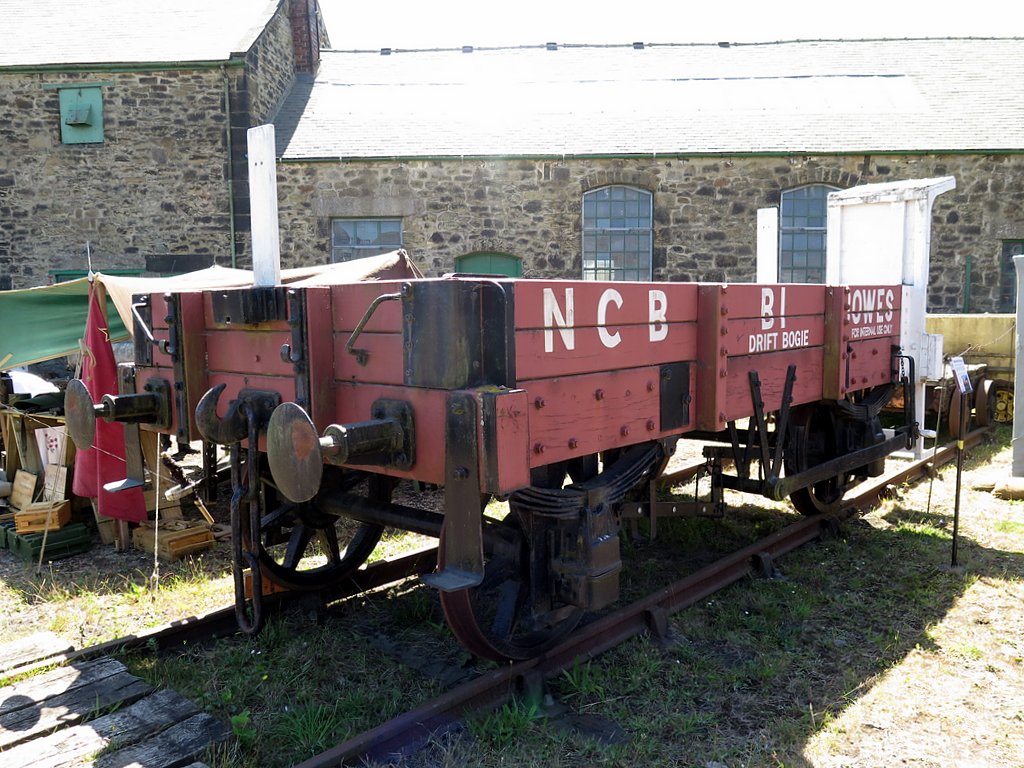
- Springwell Colliery — Both were served by the Bowes Railway, the rope-worked private line built by Lord Ravensworth’s partnership to carry Team valley coal to the Tyne: Springwell was on that line too and Kibblesworth’s coal ran down it to be shipped at Jarrow. Springwell also holds the surviving preserved section of the line, where a Kibblesworth drift bogie is now in the museum collection.
Nearby mines
- Bewicke Main Colliery — 0.6 miles (1.0 km) E, Tyne and Wear
- Urpeth Colliery — 1.1 miles (1.7 km) S
- Ouston Colliery — 1.6 miles (2.6 km) SE
- Ravensworth Park Drift — 1.7 miles (2.7 km) N, Tyne and Wear
- Team Colliery — 1.7 miles (2.8 km) NE, Tyne and Wear
Straight-line distance, within 9 miles (15 km). Show on the map.
Recorded claims
Individual factual claims, each attached to the source(s) that support it below. Where sources disagree, both are kept.
- The colliery shown on the Ordnance Survey first edition opened in 1842 and closed on 4 October 1974. An earlier colliery had been opened at Kibblesworth in 1717 by Cotesworth, James Clavering, Henry Liddell and John Hedworth. 1,2
- The colliery was worked through two shafts, the Glamis Pit and the Robert Pit, the latter at NZ241562. 1
- The owners were John Bowes and Co. — Messrs Bowes, Hutt, Wood and Charles M. Palmer — in the 1850s, the Marley Hill Coal Company in the 1860s, John Bowes and Partners Ltd from the 1880s, and the National Coal Board from 1947. Palmer acquired the colliery and its railway in 1851. 1,2
- In 1894 the daily output was 530 tons and 280 men and boys were employed. The coal was shipped at Jarrow by way of the Bowes Railway. 2
- In 1947 the Glamis pit returned 146,600 tons of coking coal and the Robert pit 70,000 tons of gas coal. A third entrance, the Shield Row Drift, appears in the 1950 returns. 1
Photographs & further reading
The colliery record: opening and closure dates, the Glamis and Robert pits, the ownership chain from John Bowes and Co. to the National Coal Board, and the year-by-year output and employment returns.
View sourceThe county archaeological record for the site, giving the 1717 and 1842 beginnings, the 1894 output and workforce, and the colliery’s place in the life of the village.
View sourceSources
- (primary) Kibblesworth Colliery — Durham Mining Museum
- (primary) Kibblesworth Colliery (Tyne and Wear HER 3770) — Tyne and Wear Historic Environment Record
- (primary) John Bowes and Partners Ltd. — Durham Mining Museum
Record created: 8 September 2026 · Last researched: 8 September 2026