 MineArchive
Hunwick Colliery
| Location | Hunwick, near Bishop Auckland, County Durham — 54.6894, -1.6920 (approximate) |
|---|---|
| Commodity | Coal |
| Type | Coal |
| Worked | By 1846–20 August 1921 |
| Maximum depth | 170 ft 6 in (52 m) in the Gibson Pit section, through the Brockwell or Main Coal at 159 ft 6 in. |
| Operators | Bolckow, Vaughan and Company (?–1921), Robson and Jackson, R. W. Jackson, West Hartlepool Harbour and Railway Company, Hunwick Coal Company |
Overview
A coal and fireclay colliery at Hunwick, near Bishop Auckland, working by 1846 and owned from the 1870s by Bolckow, Vaughan and Co.; it employed 419 people in 1883 and was abandoned on 20 August 1921.
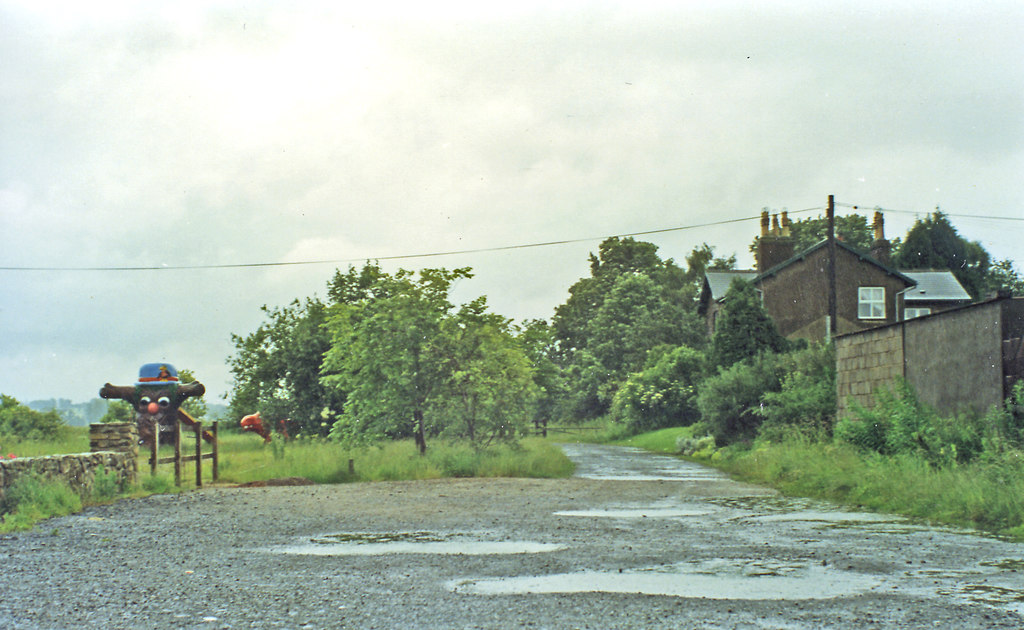
History
Hunwick Colliery lay at Hunwick, near Bishop Auckland, beside the railway from Durham to Bishop Auckland and next to West Hunwick Colliery. It was working by 1846, when a man was struck on the head by a descending cage. Its owners in the 1850s were Robson and Jackson and R. W. Jackson; in the 1860s the West Hartlepool Harbour and Railway Company and then the Hunwick Coal Company held it, and from the 1870s it belonged to Bolckow, Vaughan and Co., as one of the collieries supplying that firm.
It was a substantial complex, with an internal tramway to large waste heaps and a single-track waggonway across the Wear to Newfield Colliery. At its largest, in 1883, it employed 419 people. From the 1890s it raised coking and manufacturing coal and fireclay, employing 138 to 223 people in most years to 1910, working the Beaumont, Busty and Harvey seams and later the Brockwell, Five Quarter and Victoria from the Gibson Pit. Its managers included Mark Hall in the 1880s, T. Mitchell in the 1890s and George Cook in the 1900s.
The pit stood idle in 1915 and was abandoned on 20 August 1921, its plans covering the Busty, Ballarat, Harvey, Beaumont, Five Quarter, Main and Victoria seams.
Geology
The Gibson Pit passed through 62 feet of clay, sand and gravelly clay, then sandstone (freestone) and the thin Five Quarter coal at 72 feet, and blue stone and grey post to the Brockwell or Main Coal, 4 feet 8 inches thick, at 159 feet 6 inches. The colliery worked the Brockwell, Busty, Five Quarter, Harvey, Beaumont and Victoria seams, and fireclay with the coal.
Workings
The Gibson Pit, with an internal tramway to the waste heaps and a single-track waggonway across the River Wear to Newfield Colliery; the abandonment plans name the Birtley, Bridge of Hunwick and Gibson workings.
Closure
Standing in 1915 and abandoned on 20 August 1921.
What remains
Unknown.
Related mines
- Byers Green Colliery — Owned in turn by the same firms: Robson and Jackson, the West Hartlepool Harbour and Railway Company and Bolckow, Vaughan and Co.
Nearby mines
- West Hunwick Colliery — 0.4 miles (0.6 km) NW
- Rough Lea Colliery — 0.7 miles (1.1 km) NW
- Willington Colliery — 1.0 miles (1.6 km) N
- Toronto Colliery — 1.2 miles (1.9 km) S
- Byers Green Colliery — 1.5 miles (2.5 km) E
Straight-line distance, within 9 miles (15 km). Show on the map.
Recorded claims
Individual factual claims, each attached to the source(s) that support it below. Where sources disagree, both are kept.
- Hunwick Colliery was owned in the 1850s by Robson and Jackson, in the 1860s by the West Hartlepool Harbour and Railway Company and the Hunwick Coal Company, and from the 1870s by Bolckow, Vaughan and Co. 1
- In 1903 Hunwick Colliery belonged to Bolckow, Vaughan and Co. Ltd. 2
- Hunwick Colliery employed 419 people in 1883, its largest workforce. 1,3
- A single-track waggonway ran from Hunwick Colliery across the Wear to Newfield Colliery. 3
- Hunwick Colliery was abandoned on 20 August 1921. 1,4
- The Gibson Pit section reaches 170 feet 6 inches, through the Brockwell or Main Coal at 159 feet 6 inches. 5
- Hunwick's managers included Mark Hall (1882-84), T. Mitchell (1894-96) and George Cook (1905-10). 6
Photographs & further reading
Coals Archive record: the colliery's layout, tramway and waggonway to Newfield, and its place in Bolckow Vaughan's supply.
View sourceSources
- (primary) Hunwick Colliery — Durham Mining Museum
- (secondary) NMRS deaths and accidents database: Thomas Clarkson, Hunwick, 1903 — Northern Mine Research Society
- (secondary) Hunwick Colliery — North East Heritage Library (Coals Archive)
- (primary) Hunwick Colliery: catalogue of plans of abandoned mines — Durham Mining Museum
- (primary) Hunwick Colliery: Gibson Pit shaft section — Durham Mining Museum
- (primary) Hunwick Colliery: colliery management — Durham Mining Museum
Record created: 22 October 2026 · Last researched: 22 October 2026