 MineArchive
Gwaun Cae Gurwen Colliery
| Also known as | Gwaun-cae-Gurwen Colliery |
|---|---|
| Location | Gwaun-cae-Gurwen, at the head of the Amman valley, Neath Port Talbot — 51.7906, -3.8706 (approximate) |
| Commodity | Coal |
| Type | Coal |
| Worked | 1837–1962 (East Pit) |
| Maximum depth | 355 yards (East Pit, to the Peacock seam); Steer Pit 354 yards |
| Operators | Gwaun-cae-Gurwen Colliery Company (1874–1928), Amalgamated Anthracite Collieries Ltd (1928–1947), National Coal Board (1947–1962) |
Overview
The anthracite pits of Gwaun-cae-Gurwen at the head of the Amman valley, begun with the Old Pit in 1837 and built up by a company of Rotherham men from 1874 through the Maerdy (1886), East (1910) and Steer (1922-24) pits until they employed two thousand. Six colliers died when the winding chain broke in 1847. Under the National Coal Board the pits became notorious for unofficial stoppages, 238 of them by 1956; Steer closed in 1959 and East in 1962, and the East Pit site was later worked opencast.
History
The first pit at Gwaun-cae-Gurwen, known as the Old Pit, was sunk in 1837, to 175 yards by Welsh Coal Mines' account; the Northern Mine Research Society describes an elliptical shaft 16 feet by 8, sunk to 160.95 metres, with a second shaft in 1847 to the Big Vein. The sinker is named as Richard Hopkin, Roger Hopkin or Charles Morgan. In September 1847, when the pit was Mr Townsend Kirkhouse Wood's, the winding chain broke as six colliers were being raised and all were killed (see Disasters, below). The Morgan family held the pit until 1874, when it was bought by the Gwaun-cae-Gurwen Colliery Company, a group of Rotherham businessmen named Cleeves, Hargreaves, Sails, Bartholomew and Sellers, who set about expanding it. Winding at the Old Pit was by a beam engine and flat-rope drums until 1886, when the company opened the Maerdy or New Pit to the Big Vein at about 240 yards, with a horizontal winding engine and a 15-foot Capell fan. In 1896 the Old Pit employed 440 and the New Pit 615, both raising anthracite under the manager Joseph Hargreaves. The East Pit was begun in 1910 and finally reached the Peacock seam at 355 yards, the Old Pit's shaft serving as upcast for East and Maerdy, and in July 1914 a strike at Maerdy over non-unionism and double shifts drew in 1,600 men. Lord Rhondda gained a controlling interest in 1916; the company, which advertised its 'celebrated G.C.G. machine-made cobbles and nuts', passed through the Llewellyn and Buckland group to Amalgamated Anthracite Collieries in 1928. The Steer Pit was sunk between 1922 and 1924 to the Lower Vein at 354 yards, and the workforce peaked at 2,098 in 1933. At nationalisation the pits went to the National Coal Board's No. 1 (Swansea) Area, and a battle with the men began almost at once: in 1948 the Maerdy Pit was closed and East and Steer shut for a time over alleged restrictive practices, Steer was idle for eighteen months in 1949-50, and after an unofficial strike on 24 April 1956 over sackings, joined by eight other anthracite pits, the Board gave notice on 11 May that it would close both remaining pits, citing 238 unofficial stoppages since 1947. The pits reopened on the Board's terms, but output per collier had fallen to four tons a week and losses had risen to £3.05 a ton. The Steer Pit closed in 1959 and the East Pit in October 1962. The site also held a coal washery, central workshops and the Area laboratory, and the East Pit became an opencast site expected to yield 3.75 million tons between 1988 and 2001.
Geology
Anthracite seams of the western South Wales Coalfield: the Big Vein and Peacock at the Old and New Pits, the Red Vein at Brook Drift, and later the Middle, Lower, Black and Brynlloi seams at East, Maerdy and Steer.
Geological setting: Sedimentary Beds and Seams (well documented example)
Workings
A group of shafts and levels: the Old Pit (1837, with a second shaft of 1847), the Maerdy or New Pit (1886, 13 feet in diameter, about 240 yards), Brook Drift (Red Vein, abandoned by 1915), the East Pit (1910-13, 355 yards) and the Steer Pit (1922-24, 354 yards). The Old Pit wound by beam engine and flat ropes until 1886 and later served as the upcast for East and Maerdy. The New Pit had a twin horizontal-cylinder winding engine and a 15-foot Capell fan producing 125,000 cubic feet of air a minute, and the main underground haulage engines stood on the surface, their ropes carried down the shaft in wooden casings or iron pipes.
Closure
After years of dispute with the National Coal Board, which closed Maerdy in 1948 and threatened to close the rest in 1956 over unofficial stoppages and mounting losses, the Steer Pit closed in 1959 and the East Pit in October 1962 (Welsh Coal Mines: 1962/3). The NMRS Maerdy Pit page gives January 1958 for Maerdy's closure.
What remains
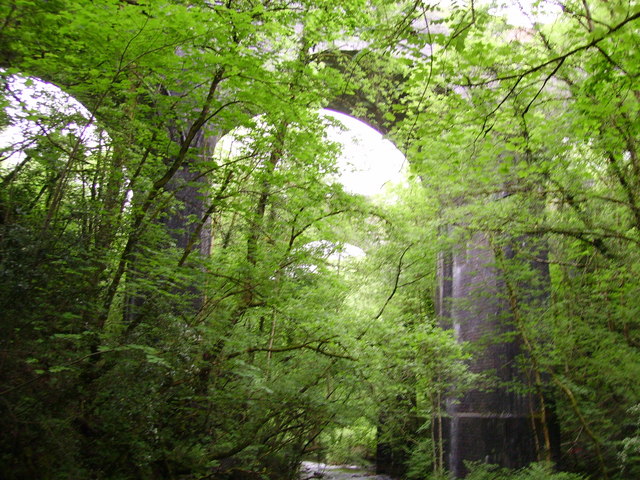
The pit sites lie within some 585 hectares of opencast land: the East Pit Extension, permitted in 1986, was followed by the East Pit East Revised site, consented in 2004 and still being worked in 2015, when Neath Port Talbot council reported coaling continuing without valid planning permission and a restoration scheme with a lake proposed. The Gwaun Cae Gurwen washery closed in 1998, and the rail pad of the Steer Pit and washery was re-used to send the opencast coal away by rail. Two viaducts that carried coal from the Gwaun-cae-Gurwen and Tairgwaith mines stood among trees in 2008. No report of surviving colliery buildings has been found.
Redevelopment
The East Pit site was worked opencast: the NCB was authorised to work it after 1980, West Glamorgan County Council permitted the East Pit Extension in 1986, and the Welsh Ministers consented East Pit East Revised in 2004, operated by Celtic Energy. A 2012 application proposed completing the coaling and restoring the land with a lake, leisure development and a country park.
Related mines
- Cwmgorse Colliery — Worked by Amalgamated Anthracite and then the NCB alongside the Gwaun-cae-Gurwen pits; Welsh Coal Mines counts Cwmgorse slant in their 1945 workforce and NMRS places both in the NCB's No. 4 Group in 1961.
Nearby mines
- Cwmgorse Colliery — 1.1 km SW
- Garnant Colliery — 2.8 km W, Carmarthenshire
- Gellyceidrim Colliery — 3.2 km W, Carmarthenshire
- Brynhenllys Colliery — 5.4 km E, Powys
- Pwllbach Colliery — 6.5 km SE
Straight-line distance, within 15 km. Show on the map.
Disasters & major incidents
-
Gwaun Cae Gurwen Colliery shaft accident, 1847
1 September 1847 · Winding / Shaft Accident · 6 fatalities
Six colliers who had gone down the pit at Gwaun-cae-Gurwen at six on the Tuesday evening signalled with the horn to be raised at three the next morning. The engineman, Morgan Davies, alone at the top, saw the flash of their candles as the carriage neared the surface and then heard it crash back down: a link of the chain with a small flaw had broken, and the men fell nearly ninety fathoms. All six were killed.
Recorded claims
Individual factual claims, each attached to the source(s) that support it below. Where sources disagree, both are kept.
- Richard Hopkin sank the first pit, the Old Pit, in 1837, to 175 yards. (disputed) 1
- The first pit, elliptical and 16 feet by 8, was sunk to 160.95 metres in 1837 by Roger Hopkin, with a second shaft in 1847. (disputed) 2
- The Old Pit was sunk in 1837 by Charles Morgan, a local landowner. (disputed) 3,4
- In 1874 the pit was bought by the Gwaun-cae-Gurwen Colliery Company, a group of Rotherham men, who opened Maerdy in 1886, East in 1910 and Steer in 1922-24. 1,2
- Maerdy was sunk to the Big Vein at 240 yards, East to the Peacock at 355 yards and Steer to the Lower Vein at 354 yards; the NMRS gives the New Pit as 235 yards. 1,2,3,4
- The Old Pit employed 440 and the New Pit 615 in 1896; the pits employed 2,098 in 1933 and, with Cwmgorse slant, 2,035 in 1945. 1,2,5
- After an unofficial strike on 24 April 1956, joined by eight other anthracite pits, the NCB gave notice on 11 May to close the East and Steer pits, citing 238 unofficial stoppages since 1947. 2,3
- The Maerdy Pit was closed by the NCB in 1948. (disputed) 1,2
- The Maerdy Pit was closed in January 1958. (disputed) 4
- The Steer Pit closed in 1959 and the East Pit in 1962 (October 1962 by NMRS; 1962/3 by Welsh Coal Mines). 1,2,3
- The East Pit Extension opencast site was expected to extract 3.75 million tons between 1988 and 2001. 3
- Opencast working began nearby in 1948; the NCB was authorised to work the 'East Pit site' after 1980, the East Pit Extension was permitted in 1986 with coaling to end by 2001, and East Pit East Revised was consented in 2004. 6
- The Gwaun Cae Gurwen washery closed in 1998, and the rail pad of the Steer Pit and washery was re-used to dispatch opencast coal. 6
- The council's 2015 report gives Maerdy's closure as 1948, Steer 1959 and East Pit 1962. 6
Photographs & further reading
Company history, 1915 profits, manpower statistics and a list of fatalities at the pits.
View sourceShort history of the Old, Maerdy, East and Steer pits, with the Cambrian's 1847 report of the chain breaking.
View sourceOfficial returns of output, employment and seams worked by pit, 1894-1940.
View sourceSources
- (secondary) Gwaun Cae Gurwen Colliery — Welsh Coal Mines
- (secondary) Gwaun-Cae-Gurwen Colliery — Northern Mine Research Society (information supplied by Ray Lawrence)
- (secondary) Gwaun-cae-Gurwen East Pit — Northern Mine Research Society (information supplied by Ray Lawrence)
- (secondary) Gwaun-cae-Gurwen Maerdy Pit — Northern Mine Research Society (information supplied by Ray Lawrence)
- (secondary) Durham Mining Museum - Gwaun Cae Gurwen Colliery — Durham Mining Museum
- (primary) East Pit East Revised OCCS, Gwaun-cae-Gurwen: planning application P2012/1073, Planning and Development Control Committee report (28 April 2015) — Neath Port Talbot County Borough Council
Record created: 13 September 2026 · Last researched: 13 September 2026