 MineArchive
Corby Ironstone Quarries
| Also known as | Corby ironworks quarries |
|---|---|
| Location | Corby and the surrounding district, Northamptonshire — 52.4929, -0.6947 (approximate) |
| Commodity | Iron |
| Type | Ironstone |
| Worked | From 1881–1970s-80s |
| Maximum depth | Typically worked to about 60 ft (18 m) |
| Operators | Stewarts & Lloyds (1903–1980) |
Overview
Not one quarry but a whole district of them, opened to feed a single giant steelworks — and the proving ground for what was, briefly, the largest walking dragline excavator in the world.
History
Samuel Lloyd founded the Lloyds Ironstone Company in 1879 to work the ironstone of Northamptonshire directly rather than merely trade in iron, and the company began extracting ore on an industrial scale from 1881. In 1903 Lloyds merged with the Scottish firm of A. & J. Stewart and Menzies to form Stewarts & Lloyds, which opened a blast furnace ironworks at Corby in 1910. The company was an early mechanical innovator, buying a steam-powered Wilson navvy shovel for its Corby quarries in 1895 — the first such machine used anywhere in the iron industry — though topsoil was still commonly stripped by hand labour well into the 1930s. The decision to build a vastly larger integrated steelworks, rolling mill and tube plant at Corby in 1932-34 drove a huge expansion of the surrounding ironstone quarries to feed it. To keep pace with demand, Stewarts & Lloyds commissioned the W1400, a walking dragline excavator built with Ransomes & Rapier of Ipswich and completed in 1951 — at 1,600 tons and with its jib standing 175 feet above the ground, five feet higher than Nelson's Column, it was at the time the largest walking dragline in the world. Quarrying continued across a shifting patchwork of individual named pits — among them Wakerley, Weldon, Stanion Lodge and Barn Close — around Corby into the 1970s and 80s as the steelworks' iron and steel making finally moved to imported ore.
Geology
The district worked the Northampton Sand Ironstone and associated Jurassic ironstone beds of the Midlands ironstone field, a shallow, laterally extensive deposit that allowed the ore to be worked by opencast quarrying rather than deep mining across a very large area.
Geological setting: Sedimentary Ironstones (well documented example)
Workings
Almost entirely opencast, following the ironstone bed across successive quarries as each was worked out and a new one opened nearby. Early quarries stripped overburden by hand; from 1895 steam navvy shovels were used, and by the mid-20th century enormous walking draglines such as the W1400 stripped overburden and cast it aside in a single pass, letting the ironstone beneath be dug and loaded for the Corby ironworks by rail.
Closure
Ironstone quarrying around Corby wound down through the 1970s and 80s as the steelworks switched to imported iron ore, following the pattern of most of the English ironstone field; the Corby steelworks itself closed its iron and steel making in 1980.
What remains
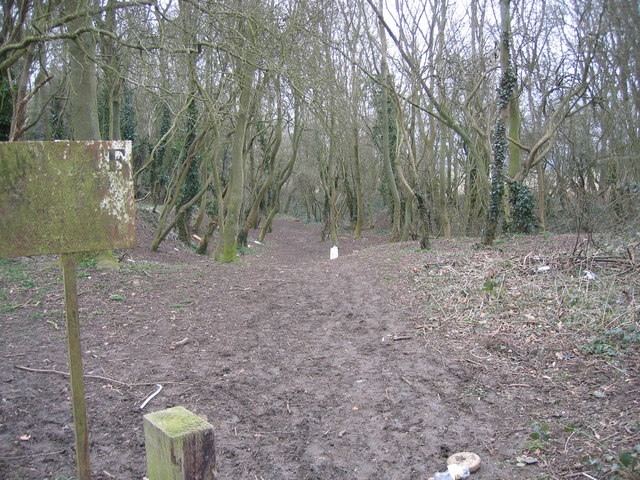
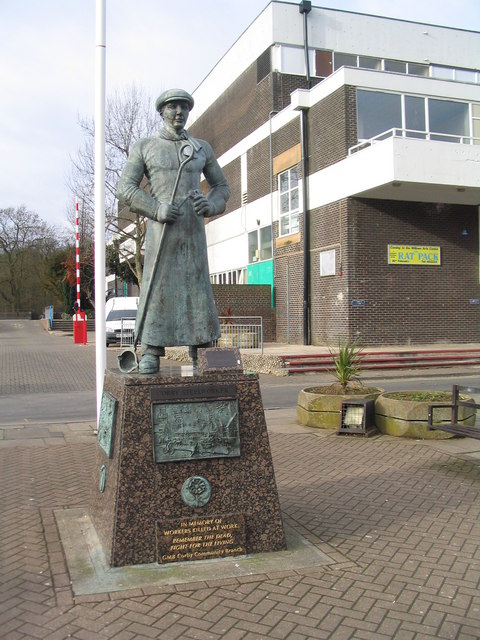
Individual former quarries survive across the district in very different states: some, like those at Wakerley, are flooded and left as nature reserves; others have been infilled and returned to farmland or built over. A memorial to Corby's steelworkers stands in the town, and one dragline, restored, survives on display; most of the fleet was scrapped.
Scattered former quarry pits across the district, some flooded, some reclaimed; a steelworkers' memorial in Corby; a small number of preserved mining locomotives and, exceptionally, one preserved dragline.
Redevelopment
Former quarries have variously become nature reserves, farmland or housing; the Corby steelworks site itself was substantially redeveloped after its 1980 closure.
Nearby mines
- Weldon Stone Quarries — 2.3 miles (3.7 km) E
- Glendon Ironstone Quarries — 5.4 miles (8.7 km) SW
- Desborough Ironstone Quarries — 6.0 miles (9.7 km) SW
- Newbridge Ironstone Quarry — 7.9 miles (12.7 km) SE
- Islip Ironstone Quarry — 9.2 miles (14.8 km) S
Straight-line distance, within 9 miles (15 km). Show on the map.
Recorded claims
Individual factual claims, each attached to the source(s) that support it below. Where sources disagree, both are kept.
- Samuel Lloyd founded the Lloyds Ironstone Company in 1879 and began extracting ore on an industrial scale from 1881; the 1903 merger with A. & J. Stewart and Menzies created Stewarts & Lloyds, which opened a blast furnace ironworks at Corby in 1910. 1
- Lloyds bought a steam-powered Wilson navvy shovel for its Corby quarries in 1895, the first such machine used anywhere in the iron industry, though hand labour still commonly stripped overburden into the 1930s. 2
- The 1932-34 decision to build a much larger integrated steelworks at Corby drove major expansion of the surrounding quarries; to meet demand Stewarts & Lloyds commissioned the W1400 walking dragline, completed with Ransomes & Rapier in 1951 at 1,600 tons with its jib 175 ft above ground — briefly the largest walking dragline excavator in the world. 1,2
- Ironstone quarrying wound down through the 1970s and 80s as the steelworks switched to imported ore, with iron and steel making at Corby itself ending in 1980. 1
Sources
- (secondary) A Brief History of Corby, Northamptonshire — Seatons Solicitors
- (primary) Corby Ironstone Quarry Memories: The Giant Walking Draglines — Rocks by Rail (Rutland Railway Museum)
Record created: 24 August 2026 · Last researched: 24 August 2026