 MineArchive
Coombefield Quarry
| Location | Southwell, Isle of Portland, Dorset — 50.5340, -2.4382 (exact) |
|---|---|
| Commodity | Freestone |
| Type | Quarry |
| Worked | 1890s–By 2006 |
| Operators | Portland Stone Firms Ltd |
Overview
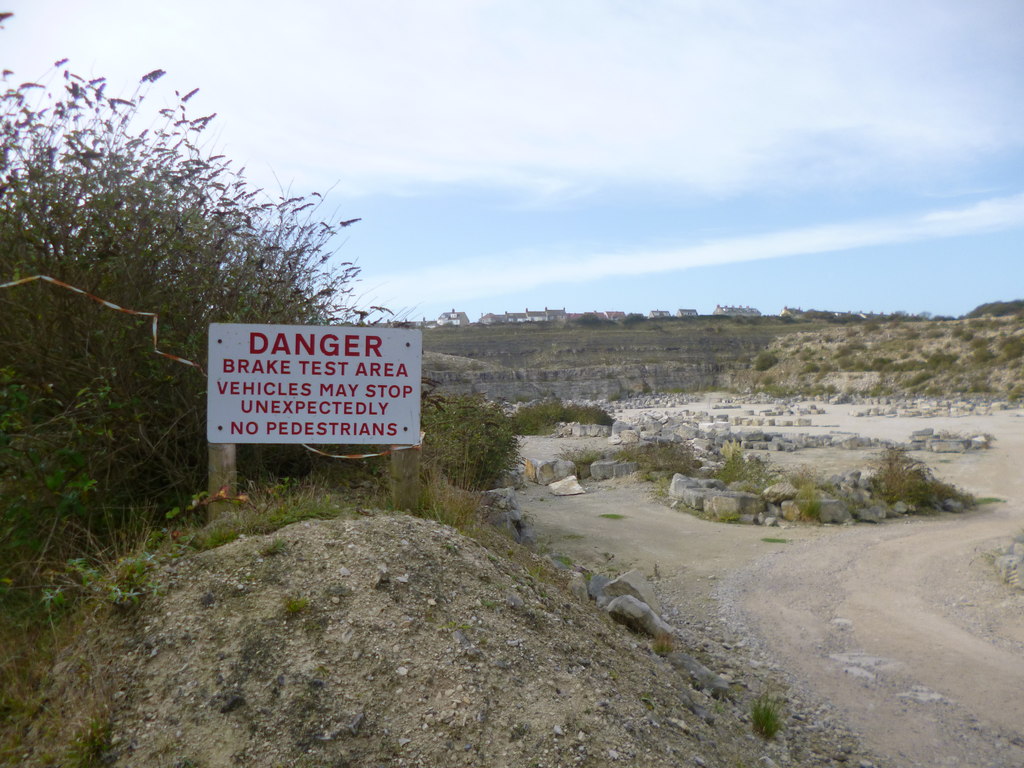
Coombefield, on the southern tip of the Isle of Portland, quarried the freestone that built much of Georgian and Victorian London — one of a cluster of Portland quarries whose open-cast workings, run continuously for over a century, only fell quiet as the island approached the end of its long quarrying era in the 2000s.
History
Coombefield Quarry began operation in the 1890s and was worked by open-cast methods for the following 80 years, extracting fine sections of Portland Freestone, prized as a building stone since the 17th century, when architects including Inigo Jones and Christopher Wren established its reputation; the huge quantities needed to rebuild London after the Great Fire of 1666, above all for St Paul's Cathedral, first drove large-scale quarrying on the island. Coombefield itself came to be owned by Portland Stone Firms Ltd, alongside the neighbouring Broadcroft and Perryfield quarries, making the company the island's largest landholder. The quarry extracted three named varieties of stone — Coombefield Shelly Whitbed, standard Whitbed, and XE — and continued expanding into adjacent fields into the early 21st century, even as demand for new 'greenfield' quarrying elsewhere on Portland became increasingly hard to secure. The quarry's working life drew to a close by 2006, and in 2012 its operators proposed converting the site into a holiday park and leisure complex. In 2002, quarrying at Coombefield had exposed a 135-million-year-old fossilised dinosaur footprint, which was later stolen from the site in 2009.
Geology
The quarry worked the Portland Freestone, a Jurassic oolitic limestone laid down around 145 million years ago in a shallow tropical sea, prized for its fine, even grain and pale colour.
Geological setting: Sedimentary Beds and Seams (well documented example)
Workings
Stone was worked by open-cast methods across two main voids, Coombefield North and Coombefield South, extracting the Coombefield Shelly Whitbed, standard Whitbed and XE stone varieties.
Closure
The quarry's working life came to an end by 2006; a 2012 proposal sought to redevelop the site as a holiday park and leisure complex.
What remains
The former quarry has been the subject of redevelopment proposals since 2012, including a holiday park and leisure complex; Portland Stone Firms Ltd also operates a stone recycling facility on part of the site.
The quarry voids of Coombefield North and Coombefield South survive on the site.
Related mines
- Broadcroft Quarry — Both owned by Portland Stone Firms Ltd under the 1951 planning consent.
- Perryfield Quarry — Both held by Portland Stone Firms Ltd under the 1951 planning consent.
- Portland Stone Quarries — Coombefield is one of the Isle of Portland's freestone quarries covered by the Portland stone quarries record.
- Yeolands Quarry — Both worked by Portland Stone Firms Ltd.
Nearby mines
- Perryfield Quarry — 0.4 miles (0.6 km) NE
- Portland Stone Quarries — 0.9 miles (1.5 km) NW
- Broadcroft Quarry — 1.0 miles (1.6 km) NE
- Jordans Mine — 1.0 miles (1.6 km) N
- Yeolands Quarry — 1.1 miles (1.7 km) NE
Straight-line distance, within 9 miles (15 km). Show on the map.
Recorded claims
Individual factual claims, each attached to the source(s) that support it below. Where sources disagree, both are kept.
- The quarry extracted three named varieties of stone — Coombefield Shelly Whitbed, standard Whitbed, and XE — from two main voids, Coombefield North and Coombefield South. 1
- A 135-million-year-old fossilised dinosaur footprint, uncovered by quarrying in 2002, was stolen from the site in 2009. 1
- The Portland Cherty Series, little quarried in the past because it was of no use for building, is now taken for crushed stone in the large excavations such as Coombefield. 2
- Stromatolites occur in the Soft Cockle Member of the Purbeck Group in the northern part of Coombefield North Quarry, where a relatively thick succession of Lower Purbeck strata is exposed. 2
- Located at about 50.534 N, 2.438 W. 1
Photographs & further reading
Ian West's field guide to the Portland quarries, with the Coombefield sections, the dinosaur-footprint bed and the stromatolites.
View sourceSources
- (secondary) Coombefield Quarry — Wikipedia
- (secondary) Isle of Portland Quarries — Geology by Ian West (University of Southampton)
Record created: 24 August 2026 · Last researched: 24 September 2026