 MineArchive
Cononley Mine
| Location | Cononley, North Yorkshire — 53.9112, -2.0327 (exact) |
|---|---|
| Commodities | Lead, Barite |
| Type | Metal |
| Worked | 1842–1881 (baryte recovery to 1958) |
| Maximum depth | Unknown. Both were sunk to intersect the vein at the level of the Deep Adit. |
| Operators | Duke of Devonshire (1842–1881), Stephen Eddy (1842–?) |
Overview
Cononley Mine was a lead mine in the North Yorkshire village of Cononley, worked on a small scale from medieval times before being consolidated into a single larger operation by the Duke of Devonshire from about 1842. It produced up to 804 tons of lead ore a year at its 1850 peak, closed as a lead producer in 1881, and was briefly reworked from 1919 for baryte recovered from its waste tips.
History
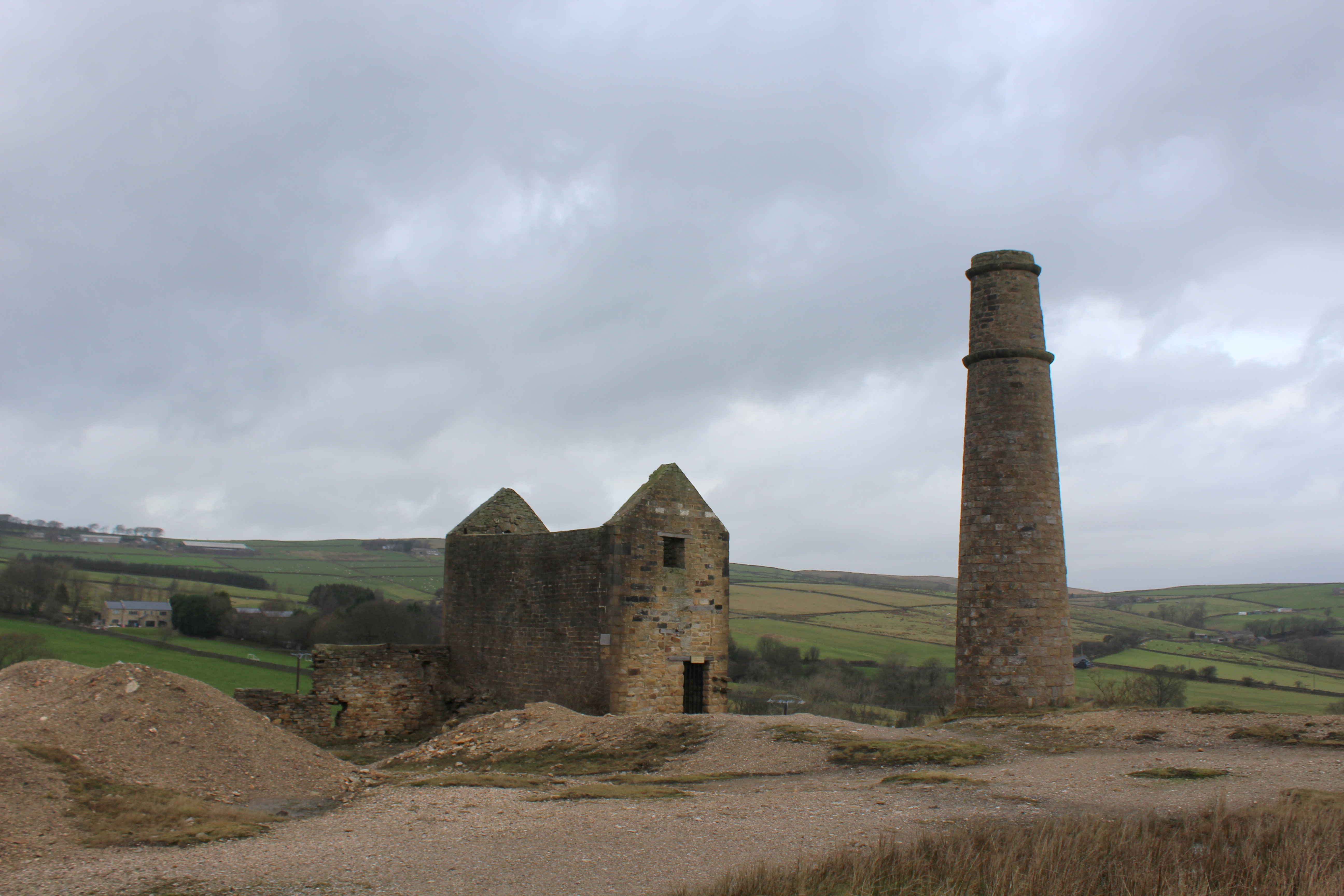
Lead mining at Cononley dates back to at least the medieval period on a small scale: the earliest documentary record is from July 1532, when Christopher Aske leased 'all the mines on the wastes and moors of the Manor of Cononley' for twenty years, with a clause requiring him to set men to work as soon as he 'proves the ground'. The scattered small workings were consolidated into a single larger mine from about 1842, when the area was leased by the Duke of Devonshire and developed under his agent Stephen Eddy, who resumed driving the Deep Adit in 1838 and sank the Engine and Taylor's Shafts to intersect the vein at adit level. A group of mine buildings, including the engine house and its chimney, was erected between 1842 and 1847, and in 1848-49 an inclined plane was built to allow steam-powered haulage of ore and waste. Production peaked at 804 tons of lead ore in 1850, and the mine produced an average of around 470 tons a year through the 1840s, 50s and 60s. Output fell sharply after 1870 as the accessible ore was worked out and new reserves failed to materialise; the mine closed briefly in the 1872 slump, reopened with a much reduced workforce, and finally closed as a lead producer in 1881. It reopened in 1919, this time to recover baryte from the old waste tips rather than fresh lead ore, with the last recorded work in 1958. A 1982 proposal to reopen the mine was abandoned once inspection found the underground workings in worse condition than expected, and a 1985 proposal to remove remaining waste material was dropped after local opposition.
Geology
Lead of the Craven district, with baryte in the same veins — the baryte was recovered from the mine's waste tips when the ground was reworked from 1919.
Workings
Ore was reached via the Deep Adit and worked from the Engine and Taylor's shafts, which were sunk specifically to cut the vein at adit level. An inclined plane, built 1848-49, allowed steam-powered haulage of ore and waste to the surface plant.
Closure
Closed as a lead producer in 1881, after an earlier brief closure in the 1872 slump. Reopened in 1919 to recover baryte from waste tips rather than fresh lead ore, with the last recorded work in 1958.
What remains
The engine house, its detached chimney, a magazine building, a forge, the engine shaft portal and the inclined plane portal all survive and are Grade II listed, though the engine house itself is roofless. Underground, the workings were found to be in poor condition on inspection in 1982.
Engine house (roofless, stone with brick patching), a freestanding stone chimney around 15 metres tall, a magazine building, a forge, and stone-lined portals for the engine shaft and the inclined plane -- all Grade II listed.
Redevelopment
A 1982 proposal to reopen the mine was abandoned once the underground workings were found to be in worse condition than expected; a 1985 proposal to remove waste material from the site was dropped following local opposition.
Recorded claims
Individual factual claims, each attached to the source(s) that support it below. Where sources disagree, both are kept.
- Production peaked at 804 tons of lead ore in 1850, averaging around 470 tons a year through the mine's main working decades before falling sharply after 1870. 1
- The engine house, chimney, magazine building, forge, and the engine shaft and inclined plane portals all survive and are individually Grade II listed. 1
- The BGS/Mining Remediation Authority mine plans catalogue holds a plan of Cononley's underground workings, recorded as inactive from 1959, custodied by the Coal Authority. 2
- A September 2017 observational report found fresh timber shuttering and pit props not present on an earlier visit, plus survey markings, suggesting the accessible upper adit level is still periodically managed or monitored; a floor collapse blocks further progress beyond it. 3
Photographs & further reading
The official listing description for the surviving engine house, one of several Grade II listed structures on the site.
View sourceSources
- (secondary) Cononley Mine — Wikipedia
- (primary) BGS/Mining Remediation Authority mine plans catalogue: Cononley — Mining Remediation Authority / The Coal Authority
- (observational) Cononley Lead Mine - 03/09/17 — 28DaysLater.co.uk
Record created: 1 September 2026 · Last researched: 1 September 2026