 MineArchive
Cononish Mine
| Location | near Tyndrum, Stirling — 56.4186, -4.7716 (approximate) |
|---|---|
| Commodities | Gold, Silver |
| Type | Metal |
| Worked | 1988–September 2023 |
| Operators | Scotgold Resources Ltd (2007–?) |
Overview
Cononish, on the edge of the Loch Lomond and the Trossachs National Park, is Scotland's only currently operating gold mine — and, unusually for this site, a working concern rather than a historical ruin. Alluvial gold panning in the area goes back centuries, but the underground deposit that's mined today wasn't discovered until the 1980s.
History
Alluvial gold has been recorded in the streams around Tyndrum since at least the 16th century, and the district was historically worked mainly for lead. The in-situ gold mineralisation at Cononish itself wasn't discovered until the mid-1980s, and underground prospecting began in autumn 1988, driving a level toward a promising structure under Beinn Chuirn. A 1,280 m exploration adit was completed between 1989 and 1991 by a succession of prospective operators, before Scotgold Resources Ltd acquired the project in May 2007, inheriting drilling cores, reports and equipment from the previous owner, Fynegold Exploration. Planning permission for full mine development followed in 2011, and after a lengthy development period the mine poured its first gold in August 2016 following an ore-processing trial, before ramping toward fuller production through the following years.
Geology
The deposit is a narrow, steeply-dipping quartz-carbonate vein hosted in metamorphic rock, carrying pyrite-rich, galena-bearing ore graded at around 9.4 grams per tonne of gold and 53 grams per tonne of silver — high grade for a UK deposit, if narrow.
Geological setting: Placer Deposits (well documented example)
Workings
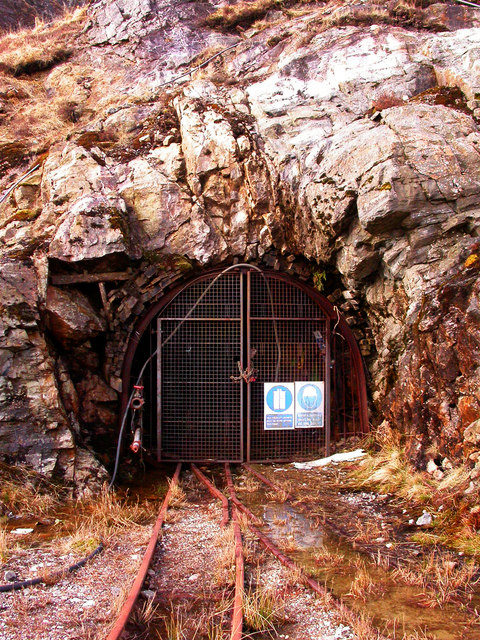
Ore is worked underground via the exploration adit driven in 1989–91 and subsequent development. As of the most recent information available, production continues on a modest scale, characteristic of a small, high-grade vein deposit rather than a bulk mining operation.
Closure
Mining stopped at the end of September 2023 when staff were laid off, and the site went onto care and maintenance.
What remains
The mine is not currently in production. Mining stopped at the end of September 2023 when staff were laid off, Scotgold Resources went into administration on 24 November 2023, and the site was placed on care and maintenance with a core team retained for environmental monitoring. The operating subsidiary SGZ Cononish was not itself in administration and was saleable as an asset; reporting in March 2025 said a South African group had bought the mine intending to recapitalise it and restart production.
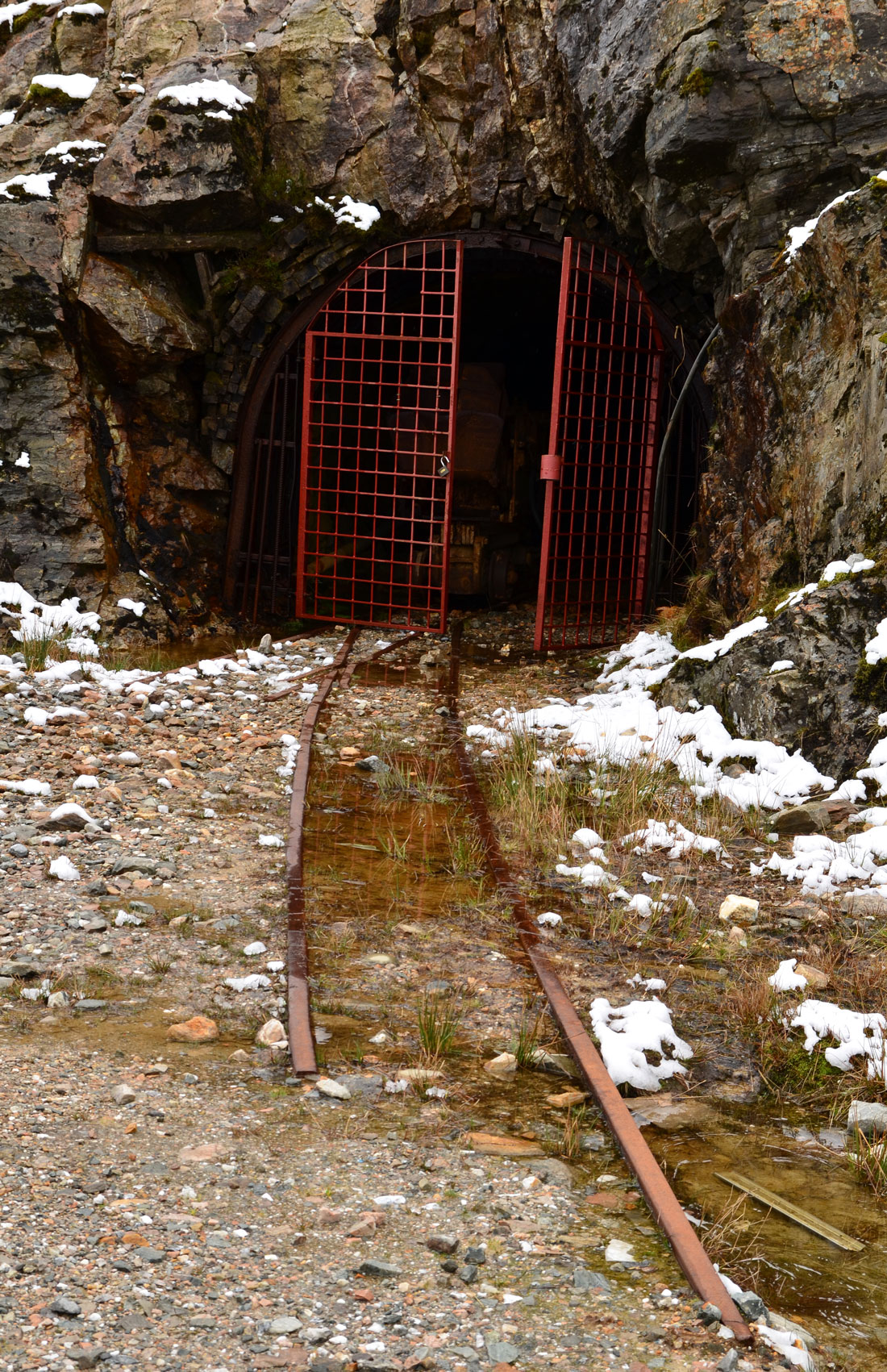
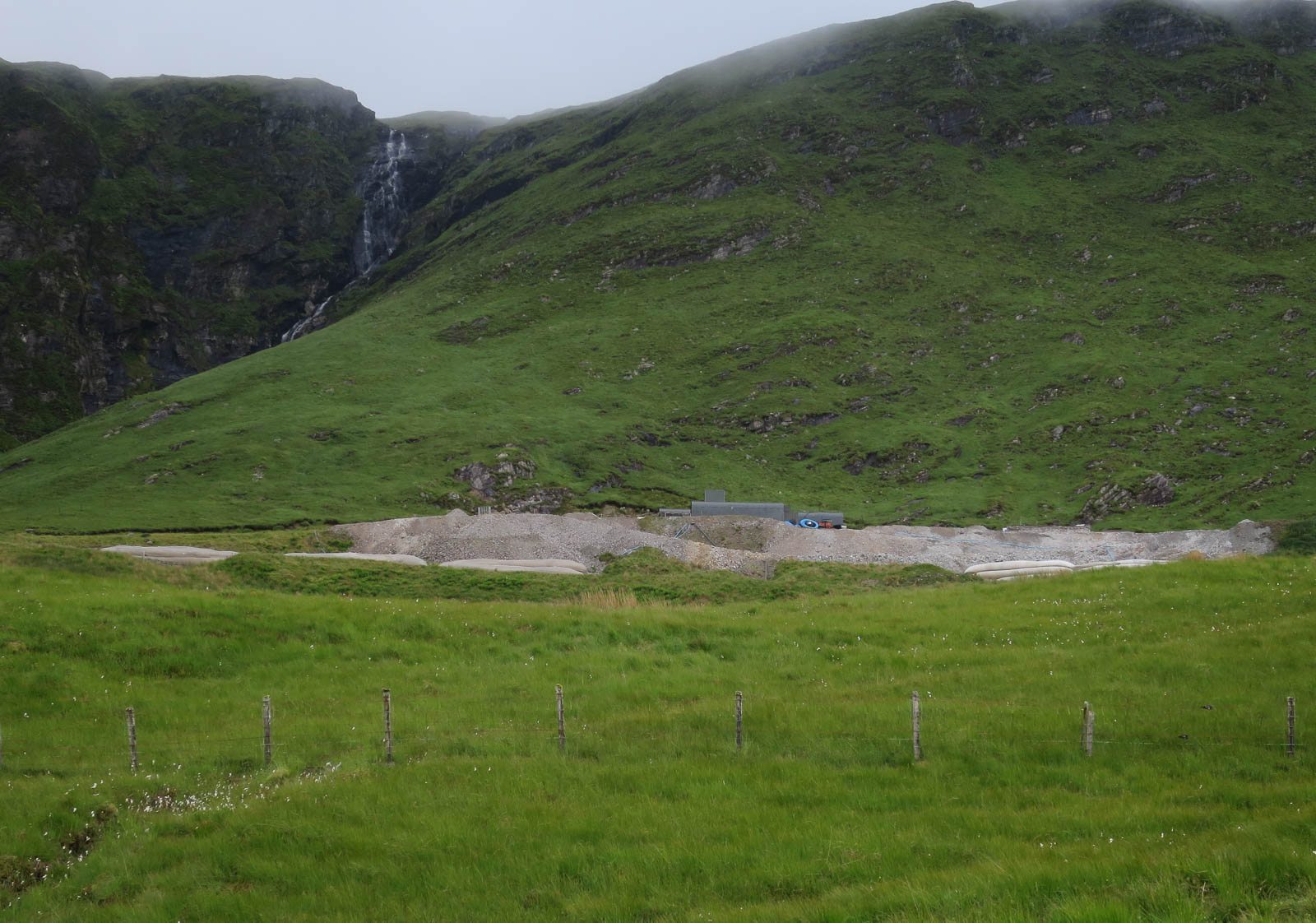
The site consists of modern mining and processing infrastructure rather than historic remains — the adit, processing plant, tailings management area and settlement pond built for the 2010s development, now held under care and maintenance.
Redevelopment
Not a historic site awaiting redevelopment: the question at Cononish is whether production restarts or the site is decommissioned. A restoration bond was in place but, according to Parkswatch Scotland, had not been paid in full by summer 2023, raising the question of whether it would cover decommissioning if no operator remained.
Nearby mines
- Tyndrum Mines — 2.1 miles (3.4 km) NE
Straight-line distance, within 9 miles (15 km). Show on the map.
What's uncertain
Points where sources disagree or the record could not be settled; both accounts are kept. All open questions in the archive.
- A January 2009 report, made before large-scale operations resumed at Cononish, describes mining equipment including tipper trucks and an excavator still standing underground, along with visible gold in the rock and a narrow older adit that leads out behind a waterfall. (uncertain) 3
- Mining at Cononish effectively stopped at the end of September 2023 when staff were laid off, and the site went onto care and maintenance with a core team retained for environmental monitoring. Reporting in March 2025 said a South African group had bought the mine and intended to recapitalise it and restart production. MineArchive has not confirmed whether production has in fact resumed. (uncertain) 4
- A monitoring report of June 2023 rated eight of the mine's planning conditions red and five amber. Among them was the settlement pond, still unrepaired after fifteen months of promised work, which Parkswatch Scotland reports had leaked polluted water into the River Cononish from the start. (uncertain) 4
Recorded claims
Individual factual claims, each attached to the source(s) that support it below. Where sources disagree, both are kept.
- The Cononish deposit is graded at approximately 9.4 grams per tonne of gold and 53 grams per tonne of silver. 1
- In-situ gold mineralisation at Cononish was not discovered until the mid-1980s, despite alluvial gold panning in the wider Tyndrum area being recorded since at least the 16th century. 2
- A January 2009 report, made before large-scale operations resumed at Cononish, describes mining equipment including tipper trucks and an excavator still standing underground, along with visible gold in the rock and a narrow older adit that leads out behind a waterfall. (uncertain) 3
- Scotgold Resources went into administration on 24 November 2023, with Daniel Bredenkamp and Christopher Pattinson of Pitcher Partners appointed under Australian company law. The operating subsidiary SGZ Cononish and its sister company SGZ Grampian were not themselves placed in administration; they remained assets of the parent that could be sold to meet its debts. 4
- Mining at Cononish effectively stopped at the end of September 2023 when staff were laid off, and the site went onto care and maintenance with a core team retained for environmental monitoring. Reporting in March 2025 said a South African group had bought the mine and intended to recapitalise it and restart production. MineArchive has not confirmed whether production has in fact resumed. (uncertain) 4
- A monitoring report of June 2023 rated eight of the mine's planning conditions red and five amber. Among them was the settlement pond, still unrepaired after fifteen months of promised work, which Parkswatch Scotland reports had leaked polluted water into the River Cononish from the start. (uncertain) 4
Photographs & further reading
Further freely-licensed photographs of the mine site near Tyndrum.
View sourceA January 2009 report exploring both the 1980s adit and an older, narrower adit reached by a rope-assisted climb, describing mining equipment left in place and visible gold in the rock.
View sourceSources
- (secondary) Cononish Mine — Northern Mine Research Society
- (secondary) Cononish Gold mine, Tyndrum, Stirling, Scotland, UK — Mindat
- (observational) Cononish Gold Mine — January 2009 — 28DaysLater
- (secondary) Scotgold in administration — the implications for the Cononish goldmine — Parkswatch Scotland
Record created: 19 August 2026 · Last researched: 28 August 2026