 MineArchive
Box Colliery
| Location | Box, Llanelli, Carmarthenshire — 51.6849, -4.1468 (exact) |
|---|---|
| Commodity | Coal |
| Type | Coal |
| Worked | from Late 18th century |
| Maximum depth | 140 yards (Four Feet vein, 1813) |
| Operators | Alexander Raby (1797–?), George Warde (1813–1829), R. J. Nevill and Co. (1829–?), Charles Gwyn, Nevill, Druce and Company |
Overview
A Llanelli colliery opened in the late 1700s, worked by Alexander Raby and deepened by General Warde in 1813 to the Box and Four Feet veins, later a Nevill concern; its site became Box Cemetery.
History
Box Colliery was at Llanelli. It was opened in the late 1700s by Charles Gwyn on land leased from Sir Sewin Mansel, but the venture failed, and in 1797 the English ironmaster Alexander Raby, a wealthy London merchant who sold his Surrey estate and moved to Llanelli to open coal mines and ironworks, took over the lease.
The colliery later passed to General Warde, who deepened it in 1813 to reach the Box vein at 64 yards and the Four Feet vein at 140 yards. Warde owned several other collieries in the district, among them Cwmfelin, Genwen, Bryn and Erw Fawr, and raised coal at several of them by steam engine. In 1829 all of Warde's collieries were bought by R. J. Nevill and Co., copper and lead smelters at Llanelli.
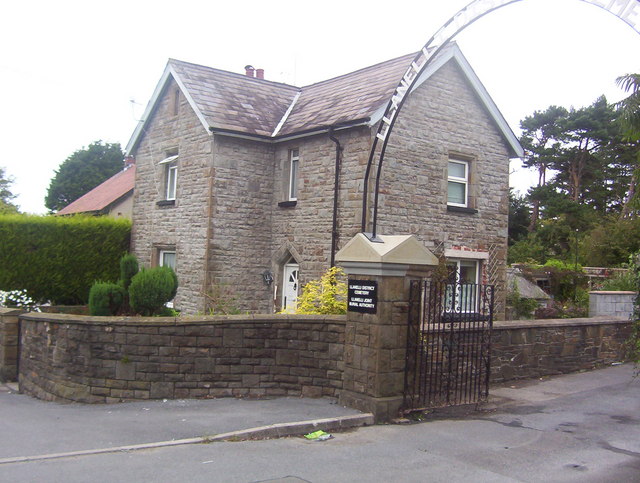
In 1869 the owners were listed as Sims, Williams, Nevill and Co., and later Nevill, Druce and Co. In 1868 Sarah Evans, a chaff-cutter of 53, was killed at the colliery when she was caught in the fly-wheel of the cutting machine. The site of the colliery later became the Llanelli District Cemetery, still known as Box Cemetery.
Geology
The Box vein at 64 yards and the Four Feet vein at 140 yards; BGS plans also record the Nine Foot seam.
Workings
A shaft deepened in 1813 to the Box vein at 64 yards and the Four Feet vein at 140 yards.
Closure
Unknown.
What remains
The site is occupied by Llanelli District Cemetery.
Redevelopment
Llanelli District Cemetery, known locally as Box Cemetery after the colliery, was laid out on the site.
Related mines
- Old Castle Colliery — Both were General Warde's collieries, sold together to R. J. Nevill and Co. in 1829.
Nearby mines
- Bres Colliery — 0.6 miles (1.0 km) SW
- Old Castle Colliery — 1.0 miles (1.6 km) W
- Castle Colliery, Llanelli — 1.1 miles (1.7 km) W
- Glanmwrwg Colliery — 1.4 miles (2.3 km) E
- St David's Colliery — 1.5 miles (2.4 km) E
Straight-line distance, within 9 miles (15 km). Show on the map.
Recorded claims
Individual factual claims, each attached to the source(s) that support it below. Where sources disagree, both are kept.
- Box Colliery was opened in the late 1700s by Charles Gwyn on land leased from Sir Sewin Mansel. 1
- Alexander Raby took over the lease in 1797. 1
- General Warde deepened it in 1813 to the Box vein at 64 yards and the Four Feet vein at 140 yards. 1,2
- In 1829 Warde's collieries were bought by R. J. Nevill and Co. 1
- The site became Llanelli District Cemetery, known as Box Cemetery. 3
- BGS holds plans of the Box workings in the Four Feet and Nine Foot seams. 2,4
Photographs & further reading
Owners from Charles Gwyn to Nevill, Druce and Co., the 1813 deepening and a c.1820 painting of the colliery.
View sourceSources
- (secondary) Welsh Coal Mines: Box colliery Llanelli (Achddu Colliery section) — Welsh Coal Mines
- (primary) BGS / Mining Remediation Authority mine plan: BOX, Four Feet seam — British Geological Survey
- (observational) Geograph 314055: The Lodge at Llanelli District Cemetery (Ronald John Saunders) — Geograph
- (primary) BGS / Mining Remediation Authority mine plan: BOX, Nine Foot seam — British Geological Survey
Record created: 10 October 2026 · Last researched: 10 October 2026