 MineArchive
Boscastle Slate Quarries
| Also known as | California Quarry, Swanser Quarry, Grower Quarry, Growa Quarry, Welltown Quarry |
|---|---|
| Location | Between Willapark and Trevalga, Cornwall — 50.6860, -4.7050 (exact) |
| Commodity | Slate |
| Type | Slate |
| Maximum depth | Not applicable: cliff quarries worked from sea level upwards. |
Overview
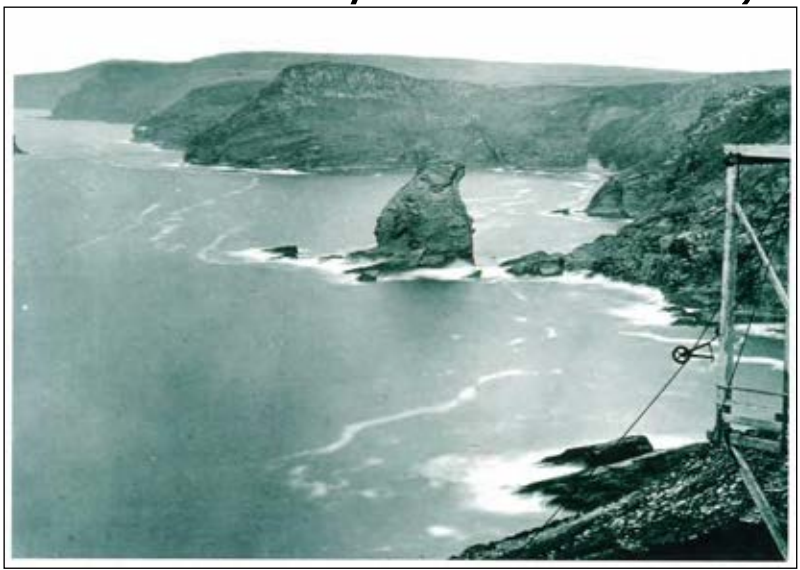
Four coastal slate quarries cut straight into the cliffs between Willapark and Trevalga on the north Cornish coast, where men were lowered on cables to work the face and blocks were hoisted to the cliff top by horse whim. The best slate, blue and green, lay at the foot of the cliffs; if storm or frost stopped work, nobody was paid.
History
Four quarries make up the group. California Quarry, also called Swanser, is cut into the cliffs just south of Willapark. Welltown Quarry cuts a right angle into the cliffs just north of the inlet called Grower Gut. Grower Quarry — also Growa — hacks the deep notch that makes the Gut itself, and takes its name from Grower Rock just offshore. Boscastle Quarry cuts into the cliffs just north of Trevalga.
Getting the rock out was hazardous work. The men were lowered down the cliffs on a system of cables, and their worst enemy was the weather: if stormy or frosty weather stopped them working, they were not paid.
California Quarry can still be picked out by the stone strongpoint overhanging the cliff, which carried a wooden platform supporting a horse-operated whim that hoisted the blocks to the top. Ruined buildings stand on the cliff top above it — shelters, and splitting sheds where the thin roofing slates were made. Old photographs show a small railway there with iron wagons, long since gone. Above Boscastle Quarry a stone horse whim survives in good order, visible from the South West Coast Path.
Geology
At Boscastle the Lower Carboniferous slates sit on top of the Upper Devonian, the boundary between them running through Gower Quarry, and the rock forms part of what is called the Barras Nose formation. The most valuable slate — blue and green — was found at the base of the cliffs, which is why the quarries were driven in at sea level rather than worked down from above. California Quarry proved rich in fossils when it was studied in 1961: two species of trilobite were found in the quarry itself, Cyrtosymbole cf. drewerensis and a Cyrtosymbole of the subgenus Waribole, and a third, Cyrtosymbole verneuill, in fallen blocks on the foreshore below.
Geological setting: Slate and Regional Metamorphism (well documented example)
Workings
Cliff quarries worked from the sea upwards rather than from the land down. The men went down on cables; the slate was split on site, in shelters and splitting sheds on the cliff top at California; and the blocks were raised by horse whims mounted on platforms at the cliff edge. A small railway with iron wagons ran on the cliff top at California and has disappeared.
Closure
All four quarries are disused. No closure date for any of them is recorded.
What remains
Disused and scarred into the cliffs, and much of the apparatus still legible: the stone strongpoint and ruined cliff-top buildings at California, and a well-preserved stone horse whim above Boscastle Quarry which can be seen from the South West Coast Path running along the top.
The stone strongpoint that carried California's whim platform, ruined shelters and splitting sheds on the cliff top there, and the stone horse whim above Boscastle Quarry.
Redevelopment
None; the cliffs are open coast crossed by the South West Coast Path.
Nearby mines
- Long Grass Quarry — 2.8 miles (4.4 km) SW
- Gillow Slate Quarry — 2.9 miles (4.6 km) SW
- Lanterdan Quarry — 3.1 miles (5.0 km) SW
- Prince of Wales Quarry, Trebarwith — 3.1 miles (5.0 km) S
- Bowithick Quarry — 3.2 miles (5.1 km) SW
Straight-line distance, within 9 miles (15 km). Show on the map.
Recorded claims
Individual factual claims, each attached to the source(s) that support it below. Where sources disagree, both are kept.
- The group comprises California Quarry, also called Swanser, cut into the cliffs just south of Willapark; Welltown Quarry, cutting a right angle into the cliffs just north of Grower Gut; Grower or Growa Quarry, which makes the Gut itself and is named from Grower Rock offshore; and Boscastle Quarry, just north of Trevalga. 1
- Removing rock from the quarries was hazardous: the men were lowered down the cliffs on a system of cables, and if stormy or frosty weather stopped them working they were not paid. 1
- Lower Carboniferous slates sit on top of the Upper Devonian at Boscastle, the boundary running through Gower Quarry; the most valuable slates were blue and green and were found at the base of the cliffs, and the stone forms part of the Barras Nose formation. 1
- California Quarry was researched extensively in 1961 and found rich in fossils, including two trilobite species in the quarry — Cyrtosymbole cf. drewerensis and a Cyrtosymbole of the subgenus Waribole — and a third, Cyrtosymbole verneuill, in fallen blocks on the foreshore below. 1
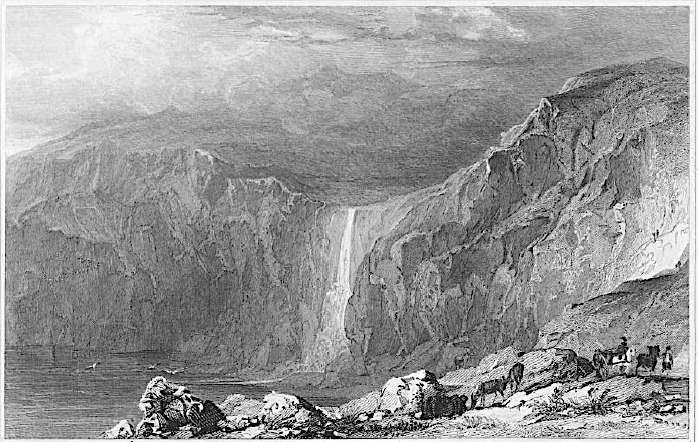
- Thomas Allom's view of the waterfall and stone quarry near Boscastle appeared in Fisher's Drawing Room Scrap Book for 1833, accompanied by a poetical illustration by Letitia Elizabeth Landon. 1
- The Comprehensive Gazetteer of England and Wales for 1894-5, describing the parish of Trevalga, records that 'the Growa slate quarries are in this parish' — placing them as a notable feature of the parish in the mid-1890s and using the Growa spelling. 2
Photographs & further reading
The four quarries and where each cuts the cliff, the horse whims and splitting sheds, the cable work and the weather, the geology and the trilobites of California Quarry.
View sourceSources
- (secondary) Boscastle Slate Quarries — Wikipedia
- (primary) Trevalga, from The Comprehensive Gazetteer of England and Wales, 1894-5 — Comprehensive Gazetteer of England and Wales, via UK Genealogy Archives
Record created: 9 September 2026 · Last researched: 9 September 2026