 MineArchive
Beer Quarry Caves
| Location | One mile west of Beer, Devon — 50.6989, -3.1128 (exact) |
|---|---|
| Commodity | Freestone |
| Type | Stone |
| Worked | 1st century AD–1920s |
| Maximum depth | Unknown. |
| Operators | Beer Quarry Caves Ltd |
Overview
Beer Quarry Caves, cut into the hillside a mile west of the Devon village of Beer, is Britain's oldest continuously worked industrial site — some 2,000 years of quarrying for prized Beer stone, used in cathedrals across England, before extraction moved to a neighbouring quarry in the 1920s.
History
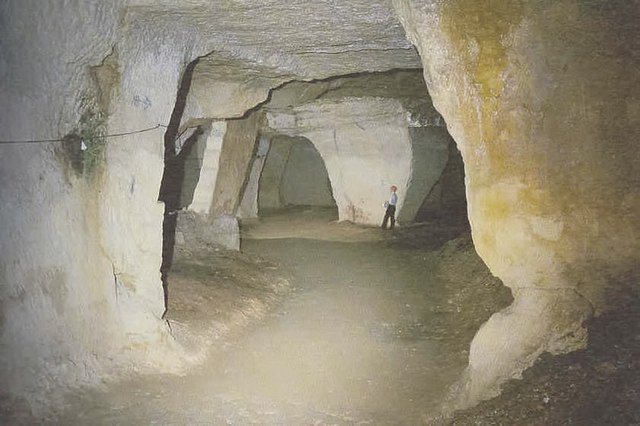
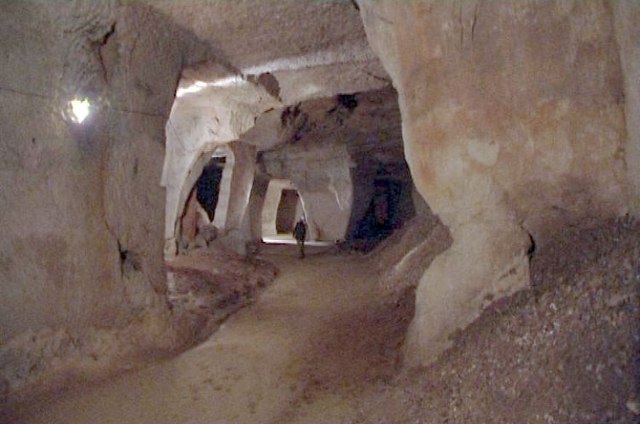
Quarrying at Beer began under the Romans, working open pits before moving into the hillside; the earliest underground workings, cut with picks and wooden wedges, are marked by large supporting arches, and Beer stone from this period was used at the nearby Honeyditches Roman villa in Seaton. Norman-era workings pushed deeper into the hill, with large rectangular supporting columns and smaller side galleries. Extraction peaked in the medieval period, when quarrymen worked long hours by candlelight with picks and saws — child labour among them — cutting blocks that skilled masons finished before the stone hardened; blocks were raised by hand-operated cranes fitted with Lewis lifting devices, loaded onto horse wagons, and shipped out by barge from Beer Beach. After 1540 the stone's use was restricted to secular building only. In later centuries the quarry's remoteness found other uses: the caves are said to have sheltered a secret Catholic church after the Reformation, and in the 19th century they were used to store contraband by the smuggler Jack Rattenbury. Quarrying finally ceased around 1920, when a new open quarry across the road took over extraction; the old workings were then used to grow mushrooms and, during the Second World War, as a store for ammunition.
Geology
Beer stone is a creamy-grey, fine-textured limestone of Middle Cretaceous age; its best layer is around 30 feet thick. As a ‘freestone’ it can be cut in any direction and is soft and easy to work fresh from the ground, but hardens on exposure to air until it is nearly as hard as Portland stone.
Workings
Roman workings are marked by large supporting arches; Norman-era galleries used rectangular supporting columns. Blocks were raised with hand-operated cranes fitted with Lewis lifting devices, loaded onto horse wagons and shipped from Beer Beach.
Closure
Underground quarrying ceased around 1920, when a new open quarry across the road took over the extraction.
What remains
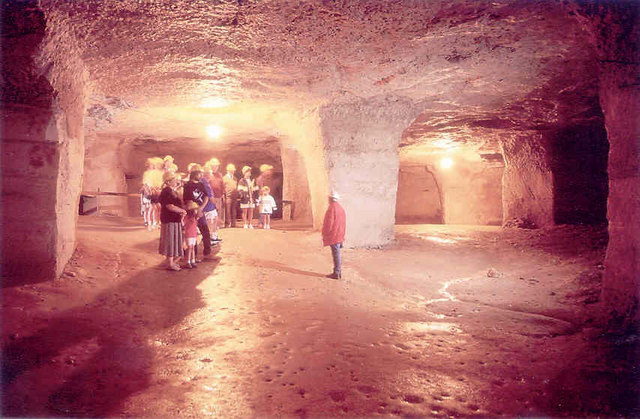
The caves are open to the public under their own management, with guided tours running daily through the season from 10:00 to the end of October, tours starting on the half hour from 10:30 and extra tours added at busy times; booking is advised and numbers on each tour are limited. A tour lasts about 75 minutes and the caves are cold year-round. They remain a haven for hibernating bats, including the rare Bechstein's bat and both greater and lesser horseshoe bats. The newer quarry opened opposite around 1885 continued producing crushed rock, agricultural lime and building stone until it too closed, in 2003.
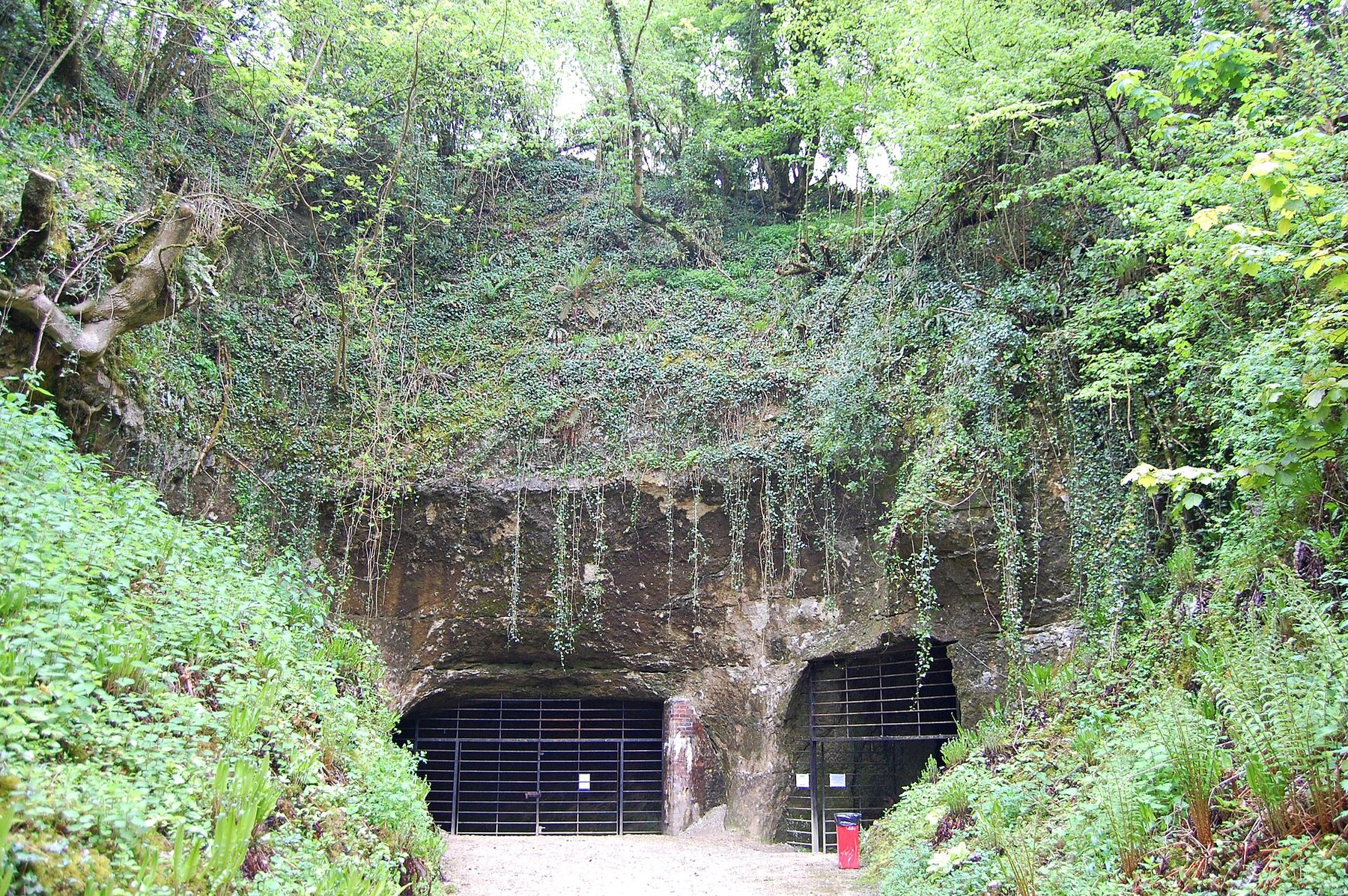
The quarry entrance and its associated buildings stand at the head of the site, with the spoil and working floors of the later opencast quarry opposite. Almost all of the significant fabric is underground: the caverns themselves, the pillars left standing to support the roof, and the tool marks and inscriptions left by successive generations of quarrymen from the Roman period onwards.
What's uncertain
Points where sources disagree or the record could not be settled; both accounts are kept. All open questions in the archive.
- A 2018 report on the neighbouring Hanson Aggregates quarry — a separate, later working opposite the historic show caves — describes an extensive underground tunnel network and notes that illegal raves around 2009-10 led the operator to install motion-sensor alarms. (uncertain) 2
Recorded claims
Individual factual claims, each attached to the source(s) that support it below. Where sources disagree, both are kept.
- Beer stone quarried from this site was used in the construction of Exeter Cathedral, Westminster Abbey, St Paul's Cathedral, Windsor Castle, Winchester Cathedral, London Bridge and Rochester Castle, among many other buildings. 1
- Medieval quarrymen worked by candlelight with hand tools, raising finished stone blocks with hand-operated cranes fitted with Lewis lifting devices before loading them onto horse wagons for shipment by barge from Beer Beach. 1
- The historic caves now shelter hibernating bats, including the rare Bechstein's bat and both greater and lesser horseshoe bats. 1
- A 2018 report on the neighbouring Hanson Aggregates quarry — a separate, later working opposite the historic show caves — describes an extensive underground tunnel network and notes that illegal raves around 2009-10 led the operator to install motion-sensor alarms. (uncertain) 2
- The caves operate as a guided-tour attraction, open daily from 10:00 to the end of October with tours on the half hour from 10:30 and additional tours at busy periods; booking is advised and tour numbers are limited. 3
Photographs & further reading
A report on the adjacent Hanson Aggregates quarry's underground limestone workings.
View sourceThe operator's own site, and the authority for current opening arrangements, tour times and admission — the practical detail that changes season to season and that a reference record cannot safely state from an older source.
View sourceSources
- (secondary) Beer Quarry Caves — Wikipedia
- (observational) Beer Quarry, Devon — March 2018 — 28DaysLater
- (primary) Beer Quarry Caves — visitor information — Beer Quarry Caves Ltd
Record created: 20 August 2026 · Last researched: 4 September 2026