 MineArchive
The Longannet Flooding
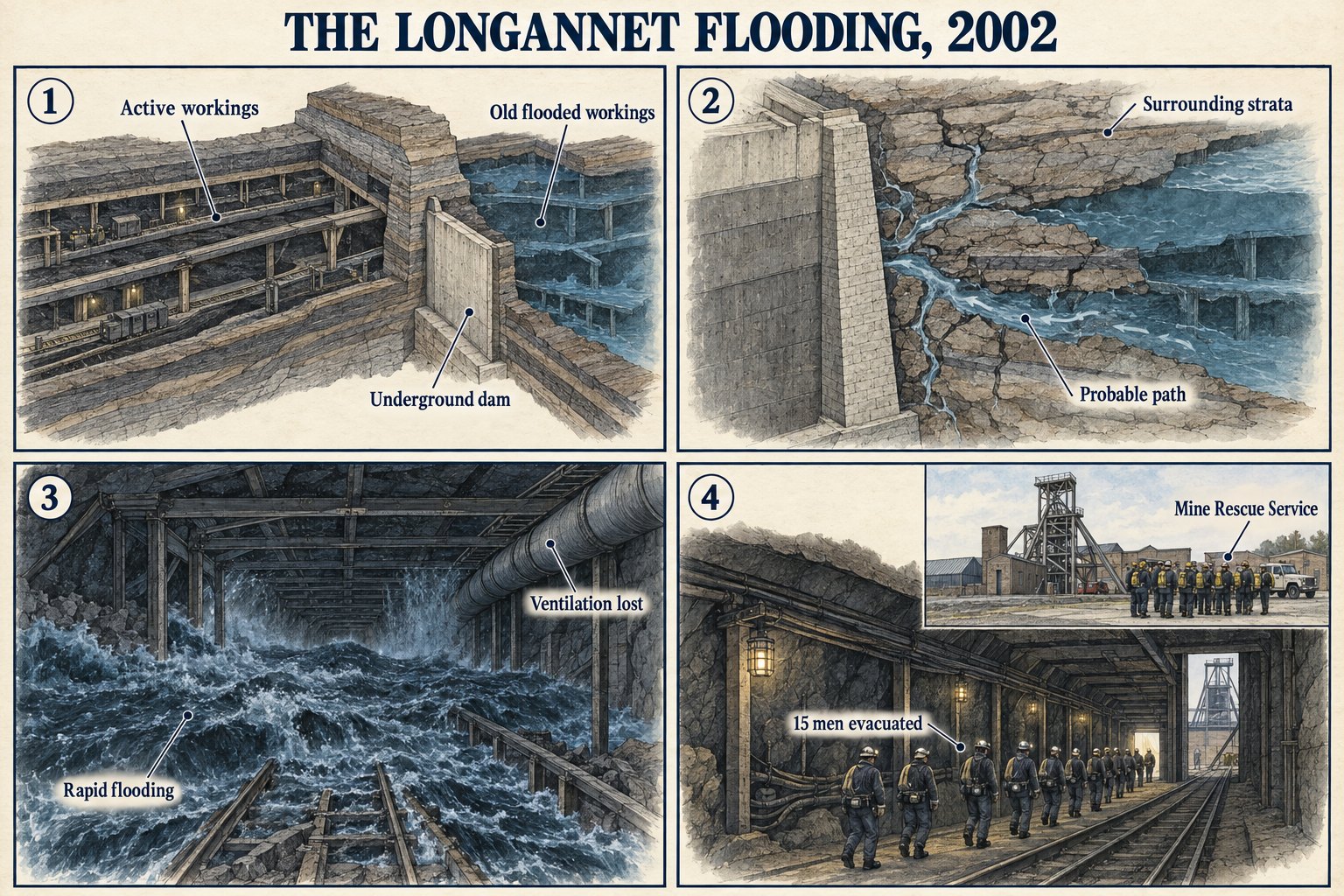
On the evening of Saturday 23 March 2002, roadways near the bottom of the Castlehill section of the Longannet Complex flooded within minutes, most likely through or around an underground dam sealing off older, worked-out ground. Fifteen men underground at the time were evacuated safely; the mine never reopened, ending deep coal mining in Scotland.
| Date | 23 March 2002 |
|---|---|
| Mine | Longannet Colliery |
| Region | Fife |
| Primary type | Flooding / Inundation |
| Associated types | Rescue |
| Fatalities | 0 (No injuries or fatalities — all 15 men below ground were in another part of the mine and were evacuated to the surface without incident.) |
| Context | During active mining |
Cause
HM Inspectorate of Mines concluded the most likely source was water passing through or around one of the dams built in 2001 to seal off the worked-out Castlebridge and Solsgirth sections from the active Kincardine workings, with failure of the surrounding strata considered more likely than failure of the dam itself. The investigation found no evidence of sabotage, and judged the dams to have been built to a standard exceeding the industry code of practice — the exact failure mechanism was never established with certainty.
What happened
Just after 17:00 on 23 March 2002, roadways near the bottom of the Castlehill Mines began flooding rapidly. An estimated 3.6 million gallons of water entered the workings in the first 20 minutes, and around 17 million gallons within two and a half hours — an average inflow rate exceeding 110,000 gallons a minute. The sudden rise in water interrupted mine ventilation and tripped the surface fan.
Rescue & recovery
Management on duty organised two exploration teams and, as a precaution, called out the Mines Rescue Service brigade of part-time Longannet workers. All 15 men underground were evacuated safely via the Longannet Mine; one official was briefly unaccounted for after a delay reporting in, and a rescue team was preparing to go below before he made contact from the surface telephone at Bogside.
Investigation & inquiry
HM Inspectorate of Mines (Health and Safety Executive) investigated, publishing its report on 20 September 2002. It found the evidence too limited to establish the precise failure mechanism with certainty, but concluded a dam or the surrounding strata had probably failed, and made recommendations for strengthened industry guidance on the design and construction of underground water dams.
Legal & regulatory aftermath
Pumping was abandoned on 3 April 2002 after mine owner Scottish Coal (Deep Mine) Ltd entered administration; reopening was later estimated to cost up to £100 million and was never pursued.
Changes to practice & legislation
The Mines Inspectorate used the findings to prompt other UK mine operators to reassess water-inrush risk in their own workings, and recommended supplementary guidance to the existing industry code of practice on disused shaft and adit treatment.
Related terminology
Mining terms this disaster is structurally linked to, with the nature of the relationship.
- Adit (contextual relationship)
The Mines Inspectorate used the findings here to push other UK operators to reassess water-inrush risk, and to recommend supplementary guidance on treating disused shafts and adits. - Coal (contextual relationship)
The flooding ended deep coal mining at Longannet outright: pumping was abandoned when Scottish Coal went into administration, and reopening, later put at up to £100 million, was never attempted. - HM Chief Inspector of Mines (contextual relationship)
Named 3 times in this record, first in the cause: “HM Inspectorate of Mines concluded the most likely source was water passing through or around…” - Shaft (contextual relationship)
Old shaft and adit treatment is what this disaster changed: the inquiry's findings fed into supplementary guidance on the industry code for dealing with disused ones. - Winze (contextual relationship)
Named in this record’s narrative: “…average inflow rate exceeding 110,000 gallons a minute. The sudden rise in water interrupted mine ventilation and tripped the surface fan.”
Sources
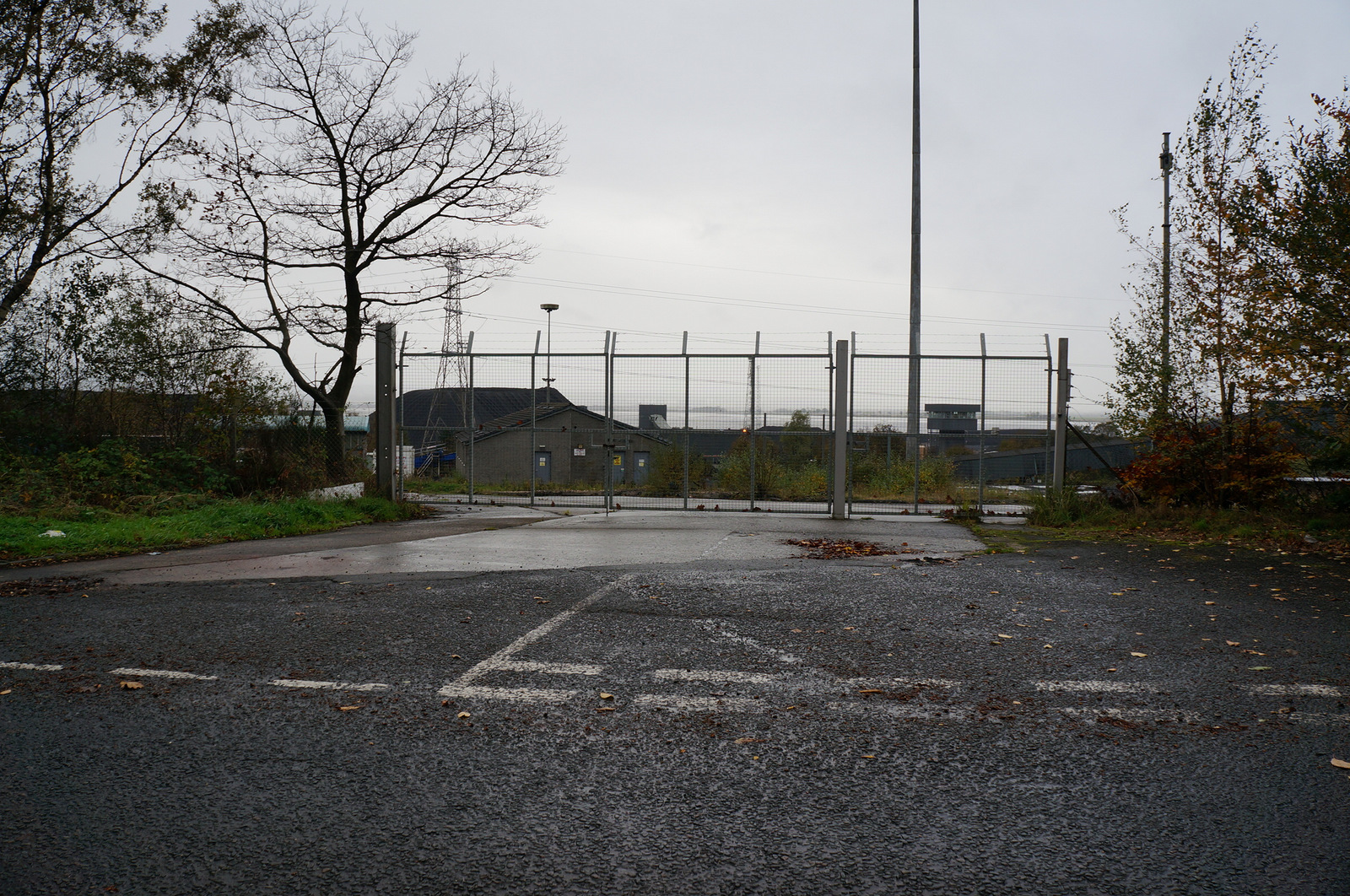
- (observational) Longannet Colliery, Fife, Jan. 2009 — 28DaysLater.co.uk
- (primary) The Circumstances Surrounding the Flooding of the Longannet Complex Mine, Fife, Scotland, 23 March 2002 — HM Inspectorate of Mines / Health and Safety Executive
- (secondary) Longannet coal mine — Wikipedia
Record created: 25 August 2026 · Last researched: 25 August 2026