 MineArchive
Deep Navigation Colliery shaft accident, 1902
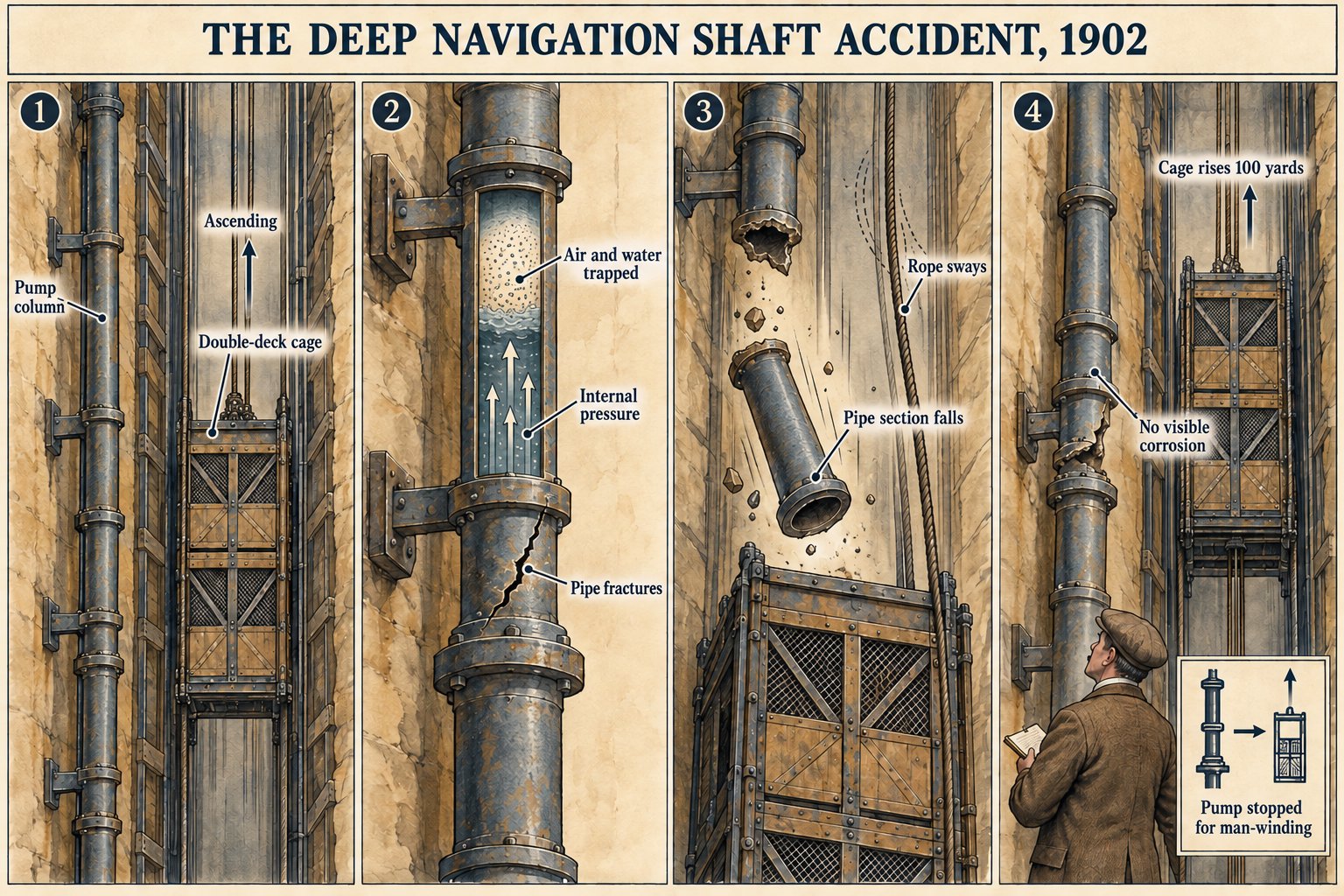
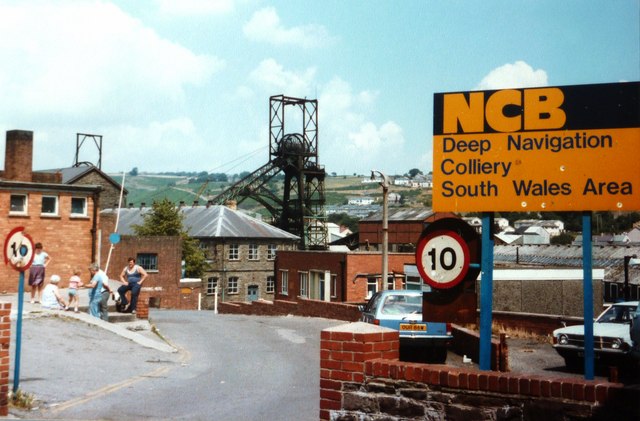
A fractured cast-iron pump pipe fell from the shaft wall onto an ascending, double-decked cage carrying 32 men at Deep Navigation Colliery on 11 November 1902, killing five and injuring two.
| Date | 11 November 1902 |
|---|---|
| Mine | Deep Navigation Colliery |
| Region | Merthyr Tydfil |
| Type | Winding / Shaft Accident |
| Fatalities | 5 (The five dead were named as J.E. Davies (34, collier), Llewellyn Davies (20, haulier), Cyrus Jones (20, haulier), D.J. Hughes (20, haulier) and Owen Griffith (23, repairer); casualties were concentrated on the cage's upper deck, closest to the falling pipe.) |
| Injuries | Two further men were injured. |
| Context | During active mining |
Cause
A section of cast-iron pumping pipe, part of the shaft's pump column and installed roughly 28 years earlier, burst and fell onto the ascending cage. The pipe showed no visible external corrosion; the inspecting officer, Mr Gray, concluded that air and water trapped in the pump barrel had built up sufficient pressure to rupture it when the pump's plunger struck.
Contributing factors
The pipe's failure could not be predicted from outward inspection, since the fracture originated from internal pressure rather than visible deterioration.
What happened
At around 4.45pm, 31 men were being raised in a two-decked cage from the South Pit, at 690 yards then the deepest shaft in the district, when the banksman heard a crash and saw the winding rope swaying violently. The engineman stopped the engine, but the cage continued to rise a further 100 yards under its own momentum before coming to rest.
Investigation & inquiry
A coroner's inquest returned a verdict of misadventure, finding no blame attached to anybody; afterward, the colliery's pumping engine was required to be stopped whenever the personnel cage was in operation.
Legal & regulatory aftermath
The colliery adopted a standing practice of halting the pumping engine during cage-winding of personnel, to prevent a recurrence.
Recorded claims
Individual factual claims, each attached to the source(s) that support it below. Where sources disagree, both are kept.
- A section of 28-year-old cast-iron pump pipe burst and fell onto an ascending, double-decked cage carrying 32 men; the inspecting officer concluded trapped air and water pressure in the pump barrel had ruptured it from within, without visible external corrosion. 1
- Five men died: J.E. Davies (34, collier), Llewellyn Davies (20, haulier), Cyrus Jones (20, haulier), D.J. Hughes (20, haulier) and Owen Griffith (23, repairer), with casualties concentrated on the cage's upper deck. 1
- A coroner's inquest returned a verdict of misadventure with no blame attached to anybody; afterward the colliery required its pumping engine to be halted whenever the personnel cage was in operation. 1
Related terminology
Mining terms this disaster is structurally linked to, with the nature of the relationship.
- Banksman (contextual relationship)
Named in this record’s narrative: “…Pit, at 690 yards then the deepest shaft in the district, when the banksman heard a crash and saw the winding rope swaying violently. The…” - Cage (contextual relationship)
Named 4 times in this record, first in the summary: “…pump pipe fell from the shaft wall onto an ascending, double-decked cage carrying 32 men at Deep Navigation Colliery on 11 November 1902,…” - Colliery (contextual relationship)
Named 3 times in this record, first in the summary: “…an ascending, double-decked cage carrying 32 men at Deep Navigation Colliery on 11 November 1902, killing five and injuring two.” - Pumping Engine (contextual relationship)
Named twice in this record, first in the investigation: “…finding no blame attached to anybody; afterward, the colliery's pumping engine was required to be stopped whenever the personnel cage was in…” - Shaft (contextual relationship)
Named 3 times in this record, first in the summary: “A fractured cast-iron pump pipe fell from the shaft wall onto an ascending, double-decked cage carrying 32 men at Deep…”
Sources
- (secondary) Deep Navigation Colliery Shaft Accident - Treharris - 1902 — Northern Mine Research Society
- (secondary) Deep Navigation Colliery — Wikipedia
Record created: 27 August 2026 · Last researched: 27 August 2026