 MineArchive
Featherstone Rovers and the Featherstone pits
| Category | Sports |
|---|---|
| Dates | Featherstone Main sunk 1868; club formed 1902 (Railway Hotel); Northern Union 1907; Featherstone Main Colliery Welfare Ground 1912–13; semi-professional 1921; Miners' Welfare buys Post Office Road 1926; miners' levy June 1934; Challenge Cups 1967, 1973, 1983; strike 1984–85; refused a 2026 place Jan 2026 |
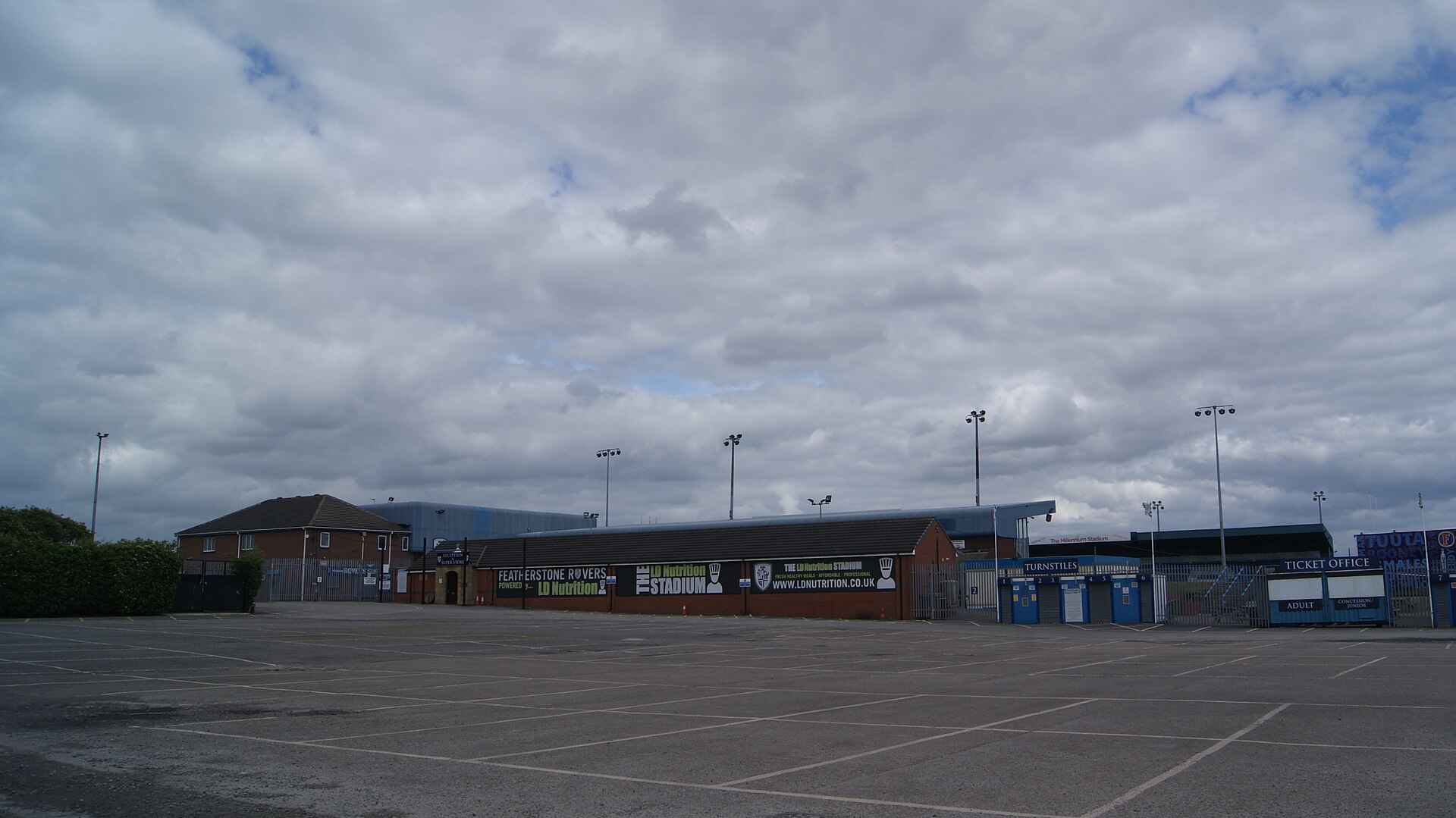
Featherstone Rovers, the rugby league club of a West Yorkshire town that grew up around its collieries, was originally made up of local miners and for most of its history rose and fell with the pits. The town's Miners' Welfare bought its Post Office Road ground in 1926, more than a thousand miners at Featherstone's two pits voted in 1934 to give it threepence a week from their wages, and in the strikes of 1926 and 1984–85 the club let miners in free or on trust; after its Challenge Cup win of 1983 the players took the trophy to the colliery and were photographed in mining gear.
The mining history in this record
A town built on coal
Featherstone was a village of a few hundred people until the first shaft of Featherstone Main Colliery was sunk in 1868; by 1900 more than 10,000 lived there, working at three collieries, Featherstone Main, Ackton Hall and Snydale, where more than 300 men and boys were killed over the years. Rugby grew up in the town in the 1880s alongside cricket, and a string of short-lived teams came and went.
The club and the pits
Featherstone Rovers was formed at the Railway Hotel in 1902 and re-formed in 1906 by one account, 1908 by another, joining the Northern Union in 1907. It was made up of local miners and in 1912–13 played on the Featherstone Main Colliery Welfare Ground. A plaque at the Railway Hotel records both the club's birth and the inquiry held there into the shooting of two men by soldiers during the 1893 lockout, the Featherstone Massacre at Ackton Hall Colliery. The club turned semi-professional in 1921; in 1926 the Featherstone Miners' Welfare bought the Post Office Road ground from its landlord on the club's behalf, and during that year's dispute the club let striking miners in free. In June 1934 more than a thousand miners at the town's two pits voted to give the club threepence a week from their wages. Its players were miners too, and some paid for it: the full-back Arthur Higgins lost his right arm in a shaft accident at Snydale Colliery, the subject of an inquest in March 1915.
People
Keith Bell, loose forward, whose 1983–84 testimonial year met the strike. Allan Agar, captain-coach of the 1983 Cup side. Arthur Higgins, full-back, who lost an arm at Snydale Colliery (inquest March 1915).
Legacy today
Featherstone won the Challenge Cup in 1967, 1973 and 1983, when as underdogs they beat Hull 14–12 at Wembley before 84,969; the town turned out for the open-top bus, and the players took the cup to the colliery and posed in full mining gear. Players who had come off a shift would go to training still black with coal dust. Weeks later the overtime ban that led to the 1984–85 strike began; Featherstone's miners came out at once, players spent the off-season picketing, and the club let season-ticket holders in free on the understanding that they would pay when the strike ended. The loose forward Keith Bell, a glassworks fitter rather than a miner, found his testimonial year overtaken by fundraising to feed the town. The club sold Post Office Road to the council in 1988. In January 2026, after failing to pay players and facing a tax petition, it was refused a place in the 2026 Championship by the Rugby Football League, which Wikipedia describes as effectively the end of the club.
Recorded claims
Individual factual claims, each tagged with how solidly it's grounded and attached to the source(s) that support it. Where sources disagree, both are kept.
- The club was originally made up of local miners and between 1912 and 1913 played at the Featherstone Main Colliery Welfare Ground. (documented fact) 1
- In 1926 Featherstone Miners' Welfare bought the Post Office Road ground from the landlord on behalf of the rugby club, and in June 1934 over 1,000 miners at Featherstone's two pits voted for a weekly wage deduction of threepence for the club. (documented fact) 2
- During the 1926 dispute the club let striking miners in free; after the 1983 Challenge Cup win the players took the trophy to the colliery and posed in full mining gear. (later recollection) 3
- During the 1984–85 miners' strike the club let pass holders in free on the understanding that they would pay when the strike ended. (documented fact) 1
- Featherstone Rovers was formed in the Railway Hotel in 1902, re-formed in 1906 and joined the Northern Union in 1907, merging in 1913 with Purston White Horse. (documented fact, disputed) 1
- Featherstone Rovers was formed in 1902 and re-formed in 1908, emerging as the town's only team after a merger with Tommy Side's Featherstone. (later recollection, disputed) 4
- A plaque at the Railway Hotel records it as the birthplace of Featherstone Rovers and as the site of the inquiry into the shooting dead of two striking miners in Featherstone during the 1893 strike. (documented fact) 2
- Featherstone Main Colliery's first shaft was sunk in 1868; the town's men worked at three collieries, where over 300 men and boys lost their lives. (documented fact) 4
- The Featherstone full-back Arthur Higgins lost his right arm in a shaft accident at Snydale Colliery, the subject of an inquest in March 1915. (documented fact) 5
- On 9 January 2026 the Rugby Football League announced that the club would not be able to take part in the 2026 Championship. (documented fact) 1
Mines
- Ackton Hall Colliery — West Yorkshire
The inquiry into the 1893 shootings at this colliery was held at the Railway Hotel, where the club was founded; a plaque there records both. - Snydale Colliery — West Yorkshire
The Featherstone full-back Arthur Higgins lost his right arm in a shaft accident here; an inquest was held in March 1915.
Regions
Real-world mining concepts used here
Miners' Strike, Miners' Welfare Fund
Sources
- (secondary) Featherstone Rovers — Wikipedia
- (secondary) Miners and rugby league at the National Coal Mining Museum — Tony Collins
- (secondary) How the Miners' Strike Remade Rugby League — Tribune
- (secondary) History of Featherstone — Featherstone Rovers Heritage Archive (fevarchive)
- (secondary) Arthur Higgins (rugby league) — Wikipedia
Record created: 19 September 2026 · Last researched: 19 September 2026