 MineArchive
Arthur Ransome's Pigeon Post and Tilberthwaite
| Category | Literature |
|---|---|
| Dates | Gnosspelius prospecting in the Lake District from 1925; Shaw's slate mine in the Tilberthwaite tunnel begun 1933; Ransome explored the workings, 1935; Pigeon Post published, 1936; Carnegie Medal, June 1936; the tunnel slate mine reworked 1989 to about 1999. |
Arthur Ransome's Pigeon Post (1936), the first winner of the Carnegie Medal, sends the Swallows, Amazons and Ds prospecting for gold on High Topps. Its old slate miner Slater Bob and his mine were drawn from John William (Willie) Shaw and the Penny Rigg workings at Tilberthwaite, which Ransome explored in 1935, and the rival prospector Squashy Hat from Oscar Gnosspelius, the engineer who backed Shaw's slate mine and advised Ransome on the mining.
The mining history in this record
Pigeon Post, published by Jonathan Cape in 1936, is the sixth of Ransome's twelve Swallows and Amazons books. Camping at Beckfoot while Captain Flint is away prospecting in South America, the children hear from Slater Bob, an old slate miner, of a lost gold vein in the fells, and set up a mining company on High Topps to find it before he comes home. Roger finds a seam of gold-coloured mineral in an old working; they crush it and smelt it in a charcoal furnace, lose the ingot when the crucible breaks, and are told by the returning Captain Flint, after his tests with aqua regia, that their gold is copper pyrites. Along the way a rival prospector they call Squashy Hat consults the old miner and enters the fell by an old mine working, Titty nearly dies when a tunnel collapses behind the younger children, and a pigeon carries the message that brings the fire-fighters to the burning Topps. The Library Association gave Ransome its inaugural Carnegie Medal for the book in June 1936.
The mining came from life. Ransome's friend Oscar Gnosspelius, a civil engineer and pioneer seaplane builder who had married Barbara Collingwood, prospected for copper and other minerals in the Lake District after 1925 and held the mining rights at Tilberthwaite, below Wetherlam. In 1933 John William Shaw began working a deposit of slate inside the old Tilberthwaite tunnel at Penny Rigg, between its entrance and a blockage, making a sizeable underground slate mine with Gnosspelius as his backer; he employed his granddaughter as a rock hand, and the mine ran for five years until he was too old to go on. Ransome walked the Tilberthwaite workings in 1935 while writing the book. Gnosspelius, whose mining and prospecting knowledge Ransome drew on, became Squashy Hat and had the book dedicated to him; his daughter modelled for a drawing of Nancy Blackett. Shaw became Slater Bob, and the Penny Rigg quarry he worked became Slater Bob's mine.
People
Arthur Ransome, author of the Swallows and Amazons books, who explored the Tilberthwaite workings in 1935. Oscar Gnosspelius (1878–1953), civil engineer, seaplane pioneer and Lake District prospector, the original of Squashy Hat and the book's dedicatee; he died at Coniston. John William (Willie) Shaw, the miner who worked slate in the Tilberthwaite tunnel for Gnosspelius from 1933, the original of Slater Bob. Barbara Collingwood, sculptor, Gnosspelius's wife and the daughter of W. G. Collingwood, to whom Ransome had earlier proposed.
Legacy today
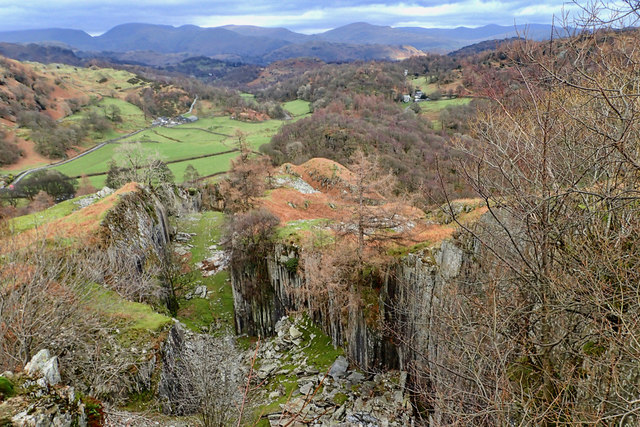
The mining company returns in The Picts and the Martyrs, with Slater Bob turned back from slate to metal, and is mentioned in Secret Water. The Penny Rigg quarries still cut their great gash into the lower slopes of Wetherlam above Tilberthwaite Gill, beside the remains of the Tilberthwaite copper mill, and the tunnel Shaw worked was taken up again as a slate mine between 1989 and about 1999. The Cumbria Amenity Trust Mining History Society has dug at the Tilberthwaite horse level at Penny Rigg.
Recorded claims
Individual factual claims, each tagged with how solidly it's grounded and attached to the source(s) that support it. Where sources disagree, both are kept.
- Pigeon Post was published by Jonathan Cape in 1936, the sixth of the twelve Swallows and Amazons books. (documented fact) 1
- Ransome received the Library Association's inaugural Carnegie Medal for Pigeon Post in June 1936. (documented fact) 1
- Slater Bob, an old slate miner, tells the children of a lost gold vein; what they find and smelt on High Topps proves to be copper pyrites. (documented fact) 1
- Ransome drew on the mining and prospecting knowledge of Oscar Gnosspelius, who appears as Squashy Hat and to whom the book is dedicated. (documented fact) 1,2,3
- Oscar Gnosspelius, a civil engineer and seaplane pioneer, prospected for copper and other minerals in the Lake District after his marriage in 1925 and died at Coniston in 1953. (documented fact) 2
- Slater Bob was based on John William (Willie) Shaw, who worked the original of Slater Bob's mine, Penny Rigg Quarry, for Gnosspelius, the holder of the mining rights. (documented fact) 4,3
- In 1933 John William Shaw began working slate inside the old Tilberthwaite tunnel, backed by Gnosspelius; the mine ran for five years. (documented fact) 4
- Ransome explored the Tilberthwaite workings in 1935, and they inspired Slater Bob's mine. (documented fact) 3,5
- The mining project is mentioned in Secret Water and returns in The Picts and the Martyrs, with Slater Bob mining for metal instead of slate. (documented fact) 1
- The slate mine in the Tilberthwaite tunnel was worked again by George Tarr from 1989 for about ten years. (documented fact) 4
Mines
- Tilberthwaite — Cumbria
Ransome explored the Tilberthwaite workings in 1935 while writing Pigeon Post; Willie Shaw's slate mine in the Tilberthwaite tunnel, backed by Oscar Gnosspelius, gave the book Slater Bob and Squashy Hat.
Real-world mining concepts used here
Sources
- (secondary) Pigeon Post — Wikipedia
- (secondary) Oscar Gnosspelius — Wikipedia
- (secondary) Inspirations for Arthur Ransome's Characters — All Things Ransome
- (secondary) CATMHS Newsletter No. 101, November 2010 (Coniston Local History Society report) — Cumbria Amenity Trust Mining History Society
- (observational) Penny Rigg Quarries, Tilberthwaite (Mick Garratt, 2019) — Geograph Britain and Ireland
Record created: 29 September 2026 · Last researched: 3 October 2026