 MineArchive

Oakdale Workmen's Institute
| Category | Learning |
|---|---|
| Also known as | The 'Stute (the village's name for it), Oakdale Institute (short form) |
| Dates | Committee formed 1913; architect appointed 6 January 1914; foundation stones laid 3 July 1916; opened 10 September 1917; cinema added 1927; sound films 1931; debt cleared July 1945; closed 1987; dismantled 1989; rebuilt from 1992; opened at St Fagans 1995; centenary 2017 |
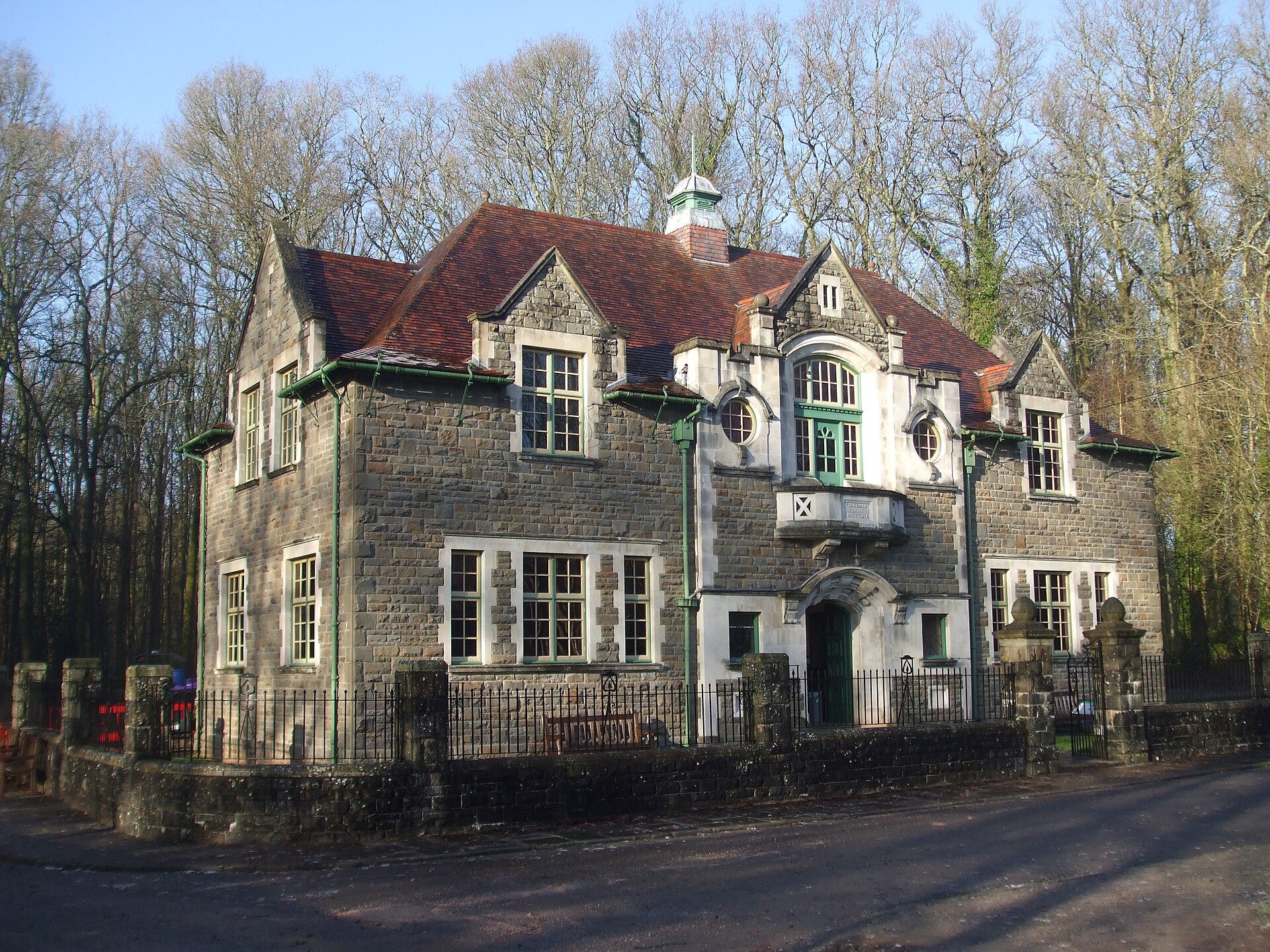
The Oakdale Workmen's Institute, built in 1916-17 for the men of Oakdale Colliery with their penny-a-week contributions and a loan from the Tredegar Iron and Coal Company, served the model village for seventy years, closed in 1987 and was dismantled and re-erected at St Fagans National Museum of History, where it opened in 1995.
The mining history in this record
Oakdale was a model village, laid out from 1909 by the Tredegar Iron and Coal Company for the men of its new colliery in the Sirhowy Valley, with modern houses set apart from the pit. An institute was planned from the start. The Oakdale Workmen's Institute Committee formed in 1913 and met in the Huts, the old barracks that had housed the shaft-sinkers; on 6 January 1914 Harry Blount moved that they proceed with the new Institute at once, and Arthur Webb, the company managing director's brother-in-law, who had designed the village's first street, was appointed architect. His sketch plan was accepted within the month.
On Monday 3 July 1916, after a cold lunch at the Oakdale Hotel and with the Oakdale Colliery Band playing round the village, two foundation stones were laid either side of the door: the left by Blount for the workmen of Oakdale Colliery, the right by Alfred S. Tallis for the company, which owned the pit. The building opened on 10 September 1917, when the committee presented Tallis with an engraved key for the company's loan. The workmen's penny a week had raised £1,554 and the company lent £3,000 on top (the museum's 2010 account says £10,000). Inside were a library, a reading room, a committee room and a concert hall upstairs, and it was used by choirs, bands, pigeon fanciers, drama societies, political rallies and dances. In December 1921 the library lent 503 books; during the 1926 lockout borrowing doubled, and a distress fund helped families through 1926 and the 1930s.
In 1927 a 650-seat cinema, always the Picture House and never the cinema in Oakdale, was built on with a £2,500 grant from the Miners' Welfare Fund at a cost of £8,106; talkies arrived in 1931. The war filled the hall with evacuees, American troops and Bevin Boys, and their takings cleared the debt to the company in July 1945, nearly thirty years after the stones were laid.
People
Harry Blount, original committee member from 1913, who laid the workmen's stone. Alfred S. Tallis, managing director of the Tredegar Iron and Coal Company, promoter of the model village, who laid the company's stone and arranged its loan. Arthur Webb, architect, Tallis's brother-in-law. Neil Kinnock, who opened the rebuilt Institute in 1995.
Legacy today
Village life changed from the 1960s. The Picture House stopped showing films, the Saturday children's matinees lasted into the early 1970s and then the projector gave way to a bingo caller; membership fell, the Institute was turned into a club against much of the village's wishes, ran at a loss and closed in 1987. It was given to what was then the Welsh Folk Museum, dismantled in 1989, two years before the colliery itself closed, and rebuilt at St Fagans from 1992. Neil Kinnock, formerly MP for Bedwellty, opened it to the public in 1995, restored to its late-1930s state; the cinema was too large to move. The 1916 trowels, one found in the Isle of Wight and one in Swansea, were given back by Blount's grandson and Tallis's granddaughters and hang in the committee room. The museum marked the centenary in 2017 and the thirty years at St Fagans in 2019 with a bilingual booklet of villagers' recollections.
Recorded claims
Individual factual claims, each tagged with how solidly it's grounded and attached to the source(s) that support it. Where sources disagree, both are kept.
- The Oakdale Workmen's Institute Committee formed in 1913 and met in the Huts, the old barracks built for the men sinking Oakdale Colliery; on 6 January 1914 Harry Blount moved to proceed with the new Institute at once and Arthur Webb was appointed architect. (documented fact) 1,2
- Two foundation stones were laid on 3 July 1916, by Harry Blount for the workmen of Oakdale Colliery and by Alfred S. Tallis for the Tredegar Iron and Coal Company, the colliery's owner, and the building opened on 10 September 1917. (documented fact) 1,3,2,4
- The museum's 2010 blog post gives the stone-laying as 3 July 1917. (documented fact, disputed) 5
- The company lent £3,000 on top of £1,554 raised by the workmen's penny-a-week contributions; the museum's 2010 blog post gives the loan as £10,000. (documented fact, disputed) 3,5,4
- The architect Arthur Webb was Tallis's brother-in-law and had designed the first street of the model village, Syr Dafydd Avenue, finished in 1913. (documented fact) 2,4
- The Institute had a library, reading room and committee room with a concert hall upstairs, and in December 1921 503 books were borrowed, a figure that doubled during the 1926 lockout. (documented fact) 1,3
- A 650-seat cinema, the Picture House, was added in 1927 at a cost of £8,106, with a £2,500 grant from the Miners' Welfare Fund; sound came in 1931 and films stopped in the 1960s. (documented fact) 1,3,4
- Takings from evacuees, American troops and Bevin Boys in the Second World War cleared the building debt to the company in July 1945. (documented fact) 3,4
- Membership declined from the 1960s, the Institute was turned into a club, ran at a loss and closed in 1987; it was dismantled and moved to St Fagans in 1989, two years before Oakdale Colliery closed. (documented fact) 1,3,4
- Rebuilding at St Fagans began in 1992 and Neil Kinnock, formerly MP for Bedwellty, opened the Institute to the public in 1995, restored to its late-1930s appearance; the cinema was too big to move. (documented fact) 1,3,5
- The engraved trowels from the 1916 ceremony were given to the museum by Harry Blount's grandson and Alfred Tallis's granddaughters before the 1995 opening and hang in the committee room. (documented fact) 5,2
Mines
- Oakdale Colliery — Caerphilly
Built in 1916-17 for the workmen of Oakdale Colliery with their penny-a-week contributions and a loan from the colliery company, and closed in 1987, two years before the pit.
Regions
Real-world mining concepts used here
Colliery, Colliery Band, Miners' Barracks, Miners' Welfare Fund
Related Culture records
- Celynen Collieries' Workmen's Institute and Memorial Hall
Another Gwent colliery institute, at Newbridge in the next valley. - Llanhilleth Miners' Institute
Another Gwent miners' institute of the same generation.
Sources
- (secondary) Oakdale Workmen's Institute — Wikipedia
- (secondary) Building on strong foundations: Oakdale Workmen's Institute (Sioned Williams) — Amgueddfa Cymru - Museum Wales
- (secondary) Oakdale Workmen's Institute (historic building F96.1) — Amgueddfa Cymru - Museum Wales
- (secondary) Stiwt Oakdale / Oakdale Institute (centenary booklet) — Amgueddfa Cymru - Museum Wales
- (secondary) Laying foundations: Workmen's Institutes — Amgueddfa Cymru - Museum Wales
Record created: 20 October 2026 · Last researched: 21 October 2026