 MineArchive
Sultan the Pit Pony
| Category | Art |
|---|---|
| Dates | Colliery closed 1 November 1991; Penallta Country Park planned from 1996; the sculpture completed 1999 (Coflein), made 1996-1999 (Wikipedia) |
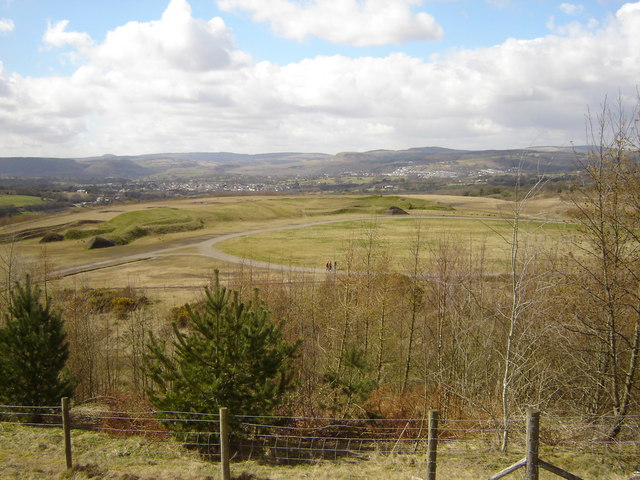
A bund of sixty thousand tons of coal shale, raised to shelter the events arena of the country park built on Penallta Colliery's tip, was shaped by the artist Mick Petts into a two-hundred-metre leaping pony and grassed over. The people who live there named it Sultan, after a pony from the pit.
The mining history in this record
Penallta closed on 1 November 1991, the last deep mine working in the Rhymney Valley, its final shift led out of the pit by a brass band. In 1996 Caerphilly County Borough Council put forward a plan for the site with Groundwork Wales and a range of local, statutory and voluntary partners; the first stage turned a hundred and eighty hectares of derelict ground into Penallta Country Park.
Mick Petts was then artist in residence with Groundwork Caerphilly, under Groundwork's national Millennium Projects scheme. By his own account the park's events arena was to be sheltered from the prevailing wind by a bund of sixty thousand tons of coal shale, and his job was to animate that landform into a recreational landscape and a sculptural icon — one that would stand for the final release of the pit ponies onto the mountainside. The finished work measures seven metres by forty by two hundred. Coflein records it as completed in 1999; the Wikipedia article on the colliery gives 1996 to 1999 for its making.
It is a landscape sculpture in the strict sense: the pony is the ground itself, built from the colliery's own spoil and turfed, and it still does the job the bund was raised for.
People
Mick Petts, the landscape sculptor, then artist in residence with Groundwork Caerphilly; the Wikipedia article on the colliery gives his name as Mike Petts, but Coflein and his own listing have Mick. Photographs of the work on the artist's own record are credited to Steve Brockett.
Legacy today
The name came from the people who live around the park rather than from the artist. Petts writes that as soon as the sculpture was finished locals nicknamed it Sultan, after a prize-winning pony from Penallta Pit. Coflein records that it was named locally after a famous pit pony called Sultan. The Wikipedia article says it was named after one of the last pit ponies of the area, which was still living at the time.
The country park is now the public face of the colliery: several of Penallta's buildings and structures are listed at Grade II*, including the pithead baths, the engine hall and the headframe, and the pithead baths and canteen were added to the Twentieth Century Society's Risk List in 2025. Sultan is the part of it that people come to see.
Recorded claims
Individual factual claims, each tagged with how solidly it's grounded and attached to the source(s) that support it. Where sources disagree, both are kept.
- Sultan is a landscape sculpture at Parc Penallta, two hundred metres long and made from the colliery's own coal spoil, by the Welsh landscape sculptor Mick Petts. Coflein records it as completed in 1999; the Wikipedia article on the colliery gives 1996 to 1999. (documented fact)
- By the artist's own account the events arena of the new country park was to be sheltered from the prevailing wind by a bund of sixty thousand tons of coal shale, and his role was to animate that landform into a recreational landscape and sculptural icon symbolising the final release of the pit ponies onto the mountainside. (contemporary account)
- The artist's own record of the work gives its dimensions as seven metres by forty metres by two hundred metres. (contemporary account)
- The sculpture was named by local people, not by the artist, after a pit pony called Sultan. The accounts differ on which pony: Coflein calls it a famous pit pony, the artist a prize-winning pony from Penallta Pit, and the Wikipedia article one of the last pit ponies from the area, still living at the time. (documented fact, disputed)
- A hundred and eighty hectares of derelict colliery land became Penallta Country Park under a scheme put forward in 1996 by Caerphilly County Borough Council with Groundwork Wales and local, statutory and voluntary partners. The work was made under Groundwork's national Millennium Projects scheme, with Petts as artist in residence with Groundwork Caerphilly. (documented fact)
Mines
- Penallta Colliery — Caerphilly
The sculpture stands on the colliery's spoil tip, is built from sixty thousand tons of the colliery's own shale, and is named by local people after a pony that worked at the pit.
Sources
- (primary) Pit Pony Sculpture, Penallta Community Park, SE of Nelson; Sultan The Pit Pony — Coflein (Royal Commission on the Ancient and Historical Monuments of Wales)
- (secondary) Penallta Colliery — Wikipedia
- (secondary) Sultan, Pit Pony Landform — Axis (the artist's own record)
Record created: 23 September 2026 · Last researched: 23 September 2026