 MineArchive
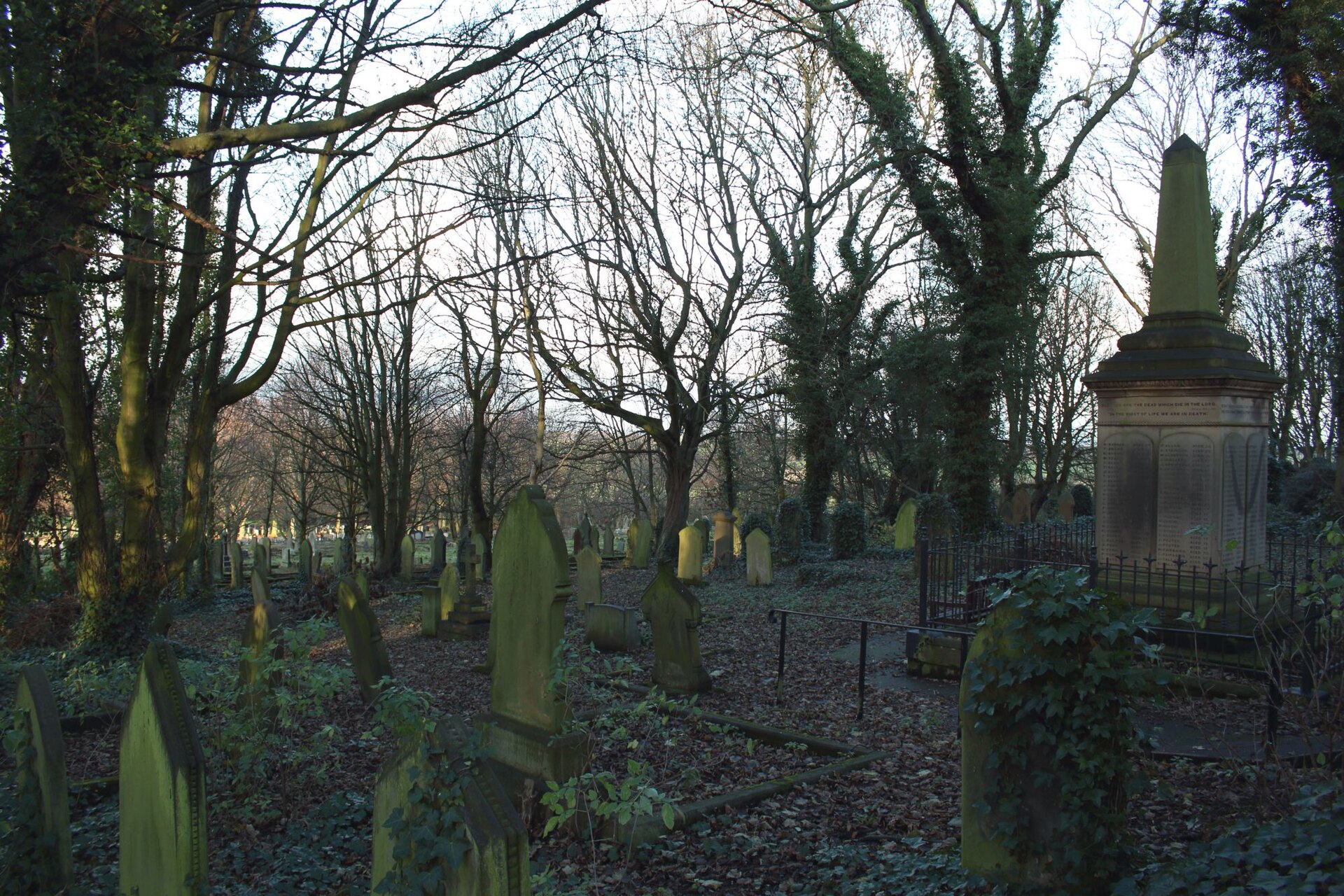
Hartley Disaster Memorial, Earsdon
| Category | Art |
|---|---|
| Dates | 16 January 1862: the Hartley disaster. About 1862: the memorial erected. |
The Grade II listed obelisk in St Alban's churchyard, Earsdon, North Tyneside, raised about 1862 over the graves of the men and boys killed at Hartley Colliery, its pedestal carrying the names of all 204 who died when the engine beam broke and sealed the Hester Pit.
The mining history in this record
On 16 January 1862 the beam of the pumping engine at the Hester Pit of Hartley Colliery broke and fell down the only shaft, sealing in the men and boys below; all 204 died before rescuers could reach them. They were buried at Earsdon, in graves dug on land given by the Duke of Northumberland next to the churchyard, which became part of the extended cemetery, and 60,000 people watched the funeral procession.
The memorial was put up about 1862: a tall corniced pedestal of sandstone ashlar, with cord moulding and an egg-and-dart cornice, carrying a tall obelisk, inside a low round-coped wall. The east face of the pedestal records the 204 miners who lost their lives in Hartley Pit by the fatal catastrophe of the engine beam breaking; the other faces carry biblical quotations and the names of the dead, the youngest of them William Davidson, aged 11.
People
William Davidson, aged 11, the youngest of the dead named on the memorial.
Legacy today
The memorial is listed Grade II. 159 of the 204 dead lie at Earsdon. The disaster it marks led to the law requiring every mine to have at least two means of escape.
Recorded claims
Individual factual claims, each tagged with how solidly it's grounded and attached to the source(s) that support it. Where sources disagree, both are kept.
- The memorial is a tall corniced pedestal of sandstone ashlar with cord moulding and an egg-and-dart cornice, carrying a tall obelisk, inside a round-coped dwarf wall; it is listed Grade II and dates from about 1862. (documented fact) 1,2
- Its east face records the 204 miners who lost their lives in Hartley Pit 'by the fatal catastrophe of the engine beam breaking' on 16 January 1862; the other faces carry biblical quotations and the names of the dead, the youngest William Davidson, aged 11. (documented fact) 1,2
- Graves for the dead were dug on land given by the Duke of Northumberland next to Earsdon churchyard, which became part of the extended cemetery; 60,000 people watched the funeral procession. (documented fact) 1
- 159 of the 204 are buried at Earsdon. (documented fact) 3
Mines
- Hartley Colliery (Hester Pit) — Northumberland
The memorial stands over the graves of most of the 204 men and boys who died in the Hester Pit of Hartley Colliery in January 1862.
Disasters
- Hartley Colliery disaster, 1862 — 16 January 1862
Real-world mining concepts used here
Ashlar, Colliery, Pumping Engine, Shaft
Sources
- (primary) Church of St. Alban, Hartley Colliery Disaster Memorial (HER 5247) — Tyne and Wear Historic Environment Record
- (secondary) Hartley Disaster Memorial north-east of Church of St Alban, and surrounding wall: list entry (quoted) — Co-Curate (Newcastle University)
- (secondary) Hartley Pit Memorial, Earsdon — Co-Curate (Newcastle University)
Record created: 5 October 2026 · Last researched: 5 October 2026