 MineArchive
The Ashington Group
| Category | Art |
|---|---|
| Also known as | Pitmen Painters (the name the group is widely known by) |
| Dates | WEA branch class 1927; art class begins 1934; first exhibition, Hatton Gallery 1936; Mass Observation exhibition 1938; China exhibition 1980; hut demolished 1983; collection to Woodhorn 1989; Cutter gallery 2006; last member dies 2004 |
The 'Pitmen Painters': a Workers' Educational Association class of Ashington miners, mostly from Woodhorn and Ellington collieries, who began painting in 1934, exhibited in London and China, met weekly for fifty years, and whose permanent collection now hangs at Woodhorn Colliery, now Woodhorn Museum.
The mining history in this record
The group grew out of the Ashington branch of the Workers' Educational Association, which advertised a class on evolution in 1927. In 1934 its members, mainly men employed at Woodhorn and Ellington collieries, moved on to art appreciation under a tutor arranged by the WEA and Durham University, the painter Robert Lyon. Lyon soon abandoned lectures and slides and had the men learn by doing, setting weekly homework subjects that the group then criticised together. Their paintings became increasingly about Ashington itself: the pit, the canteen, the onsetter at the shaft, bait time, pit accidents.
The group named itself and drew up its rules by 1936, when it held its first exhibition at the Hatton Gallery, Armstrong College, Newcastle. Mass Observation took it up in 1938 as working men's documentary art, and by the early 1940s it had exhibited in London and drawn the attention of Julian Trevelyan and Henry Moore; Helen Sutherland collected its work. In wartime the men painted air-raid shelters, gas masks, evacuation and extra shifts. After the war the group moved its hut from Longhorsley to Hirst Yard behind the Central Hall in Ashington and carried on meeting weekly.
People
Robert Lyon (1894–1978), the WEA tutor who set the men painting. Members included Oliver Kilbourn (1904–1993), who held the collection in trust, Jimmy Floyd, Harry Wilson, Leslie Brownrigg, Andrew Rankin, Fred Laidler and Jack Harrison (1904–2004), the last survivor. William Feaver, critic and co-trustee, wrote Pitmen Painters.
Legacy today
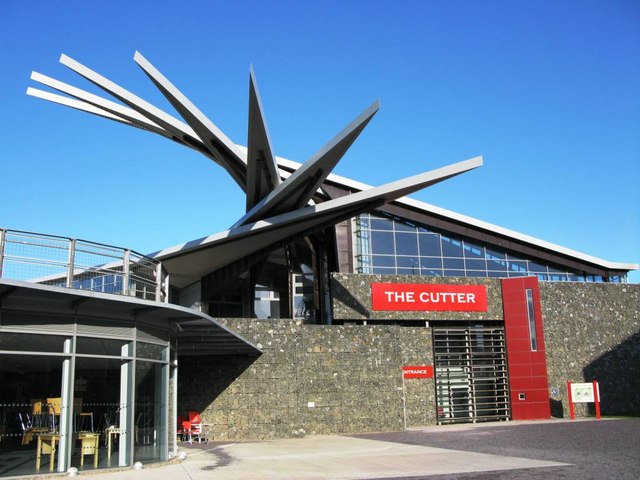
Interest revived in the 1970s, largely through the critic William Feaver, who met the central member Oliver Kilbourn; exhibitions followed in Durham, at the Whitechapel Gallery and in Germany and the Netherlands, and in 1980 the collection became the first exhibition of Western art shown in China since the Cultural Revolution. The hut was demolished in 1983. Kilbourn held the best paintings in trust for the others, and in 1989 an agreement with Wansbeck District Council moved the permanent collection of more than a hundred works to Woodhorn Museum, on the site of the former colliery; since 2006 it has hung in its own gallery in the museum's Cutter building. Feaver's book Pitmen Painters became Lee Hall's play The Pitmen Painters. The last surviving member, Jack Harrison, died in 2004.
Mining language in this record
Words and phrases in this record that are genuine mining terminology, occupations, methods or economic practice — not scenery or ordinary regional language that merely appears in a mining-adjacent work.
| Expression | Meaning | MineArchive connection |
|---|---|---|
| onsetter | The worker at the shaft bottom who loads and signals the cage; the subject of Jimmy Floyd's painting The Onsetter (c.1942). (Northumberland) | Onsetter — Same concept, same word: links the Onsetter term. |
Recorded claims
Individual factual claims, each tagged with how solidly it's grounded and attached to the source(s) that support it. Where sources disagree, both are kept.
- The group began as the Ashington branch of the WEA; its members were mainly men employed at the Woodhorn and Ellington collieries, taught from 1934 by Robert Lyon. (documented fact) 1,2
- The group was founded in 1934 by local miners as an art appreciation class that turned to painting. (documented fact) 2,3
- The Ashington Group held its first exhibition at the Hatton Gallery, Armstrong College, Newcastle, in 1936. (documented fact) 1,2
- The group's collection was the first exhibition of Western art shown in China after the Cultural Revolution; North East Museums dates it to 1980, Wikipedia to 'the 1980s'. (documented fact) 1,2
- Under a 1989 agreement between Oliver Kilbourn and Wansbeck District Council the permanent collection moved to Woodhorn Museum, and since 2006 has had a permanent gallery in the Cutter building. (documented fact) 4,2
- William Feaver's book Pitmen Painters was adapted by Lee Hall as the play The Pitmen Painters. (documented fact) 1,2
Mines
- Ellington Colliery — Northumberland
With Woodhorn, the colliery that employed most of the group's members. - Woodhorn Colliery — Northumberland
Many of the group's members worked here, and the former colliery, now Woodhorn Museum, has housed its permanent collection since 1989.
Regions
Real-world mining concepts used here
Related Culture records
- Billy Elliot
Lee Hall wrote both Billy Elliot and The Pitmen Painters, the play about the Ashington Group. - Norman Cornish
In 1942 Cornish applied for a grant to study under Robert Lyon, the Ashington Group's tutor, but was ruled ineligible.
Sources
- (secondary) Ashington Group — Wikipedia
- (secondary) The Ashington Group Gallery | Woodhorn Museum — North East Museums
- (secondary) The Ashington Group | Pictures at Woodhorn museum — The Ashington Group Trustees
- (secondary) Woodhorn Museum — Fabulous North
Record created: 17 September 2026 · Last researched: 17 September 2026