 MineArchive
Purbeck Marblers
| Also known as | Company of Marblers and Stonecutters of Purbeck (the guild's fuller, formal name) |
|---|---|
| Dialect | Purbeck |
| Category | Law & Custom |
A guild of hereditary freemen, formally styled the Company of Marblers and Stonecutters of Purbeck, that controlled who could quarry and sell stone across the Isle of Purbeck -- membership passing by descent, marriage or a seven-year apprenticeship rather than by purchase.
Historical usage
The earliest surviving bylaws of the Company of Marblers of Corfe Castle were renewed and confirmed on 3 March 1651, their own preamble stating they were themselves drawn from older, undated records; a further Articles of Agreement, including provision for a joint-stock company, is dated 8 March 1697/8.
How it worked
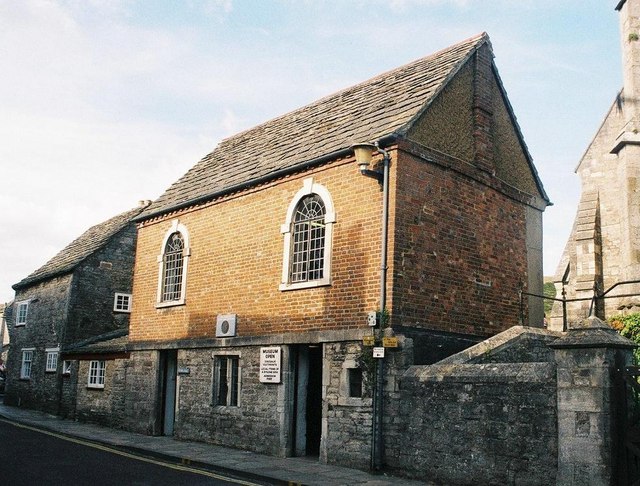
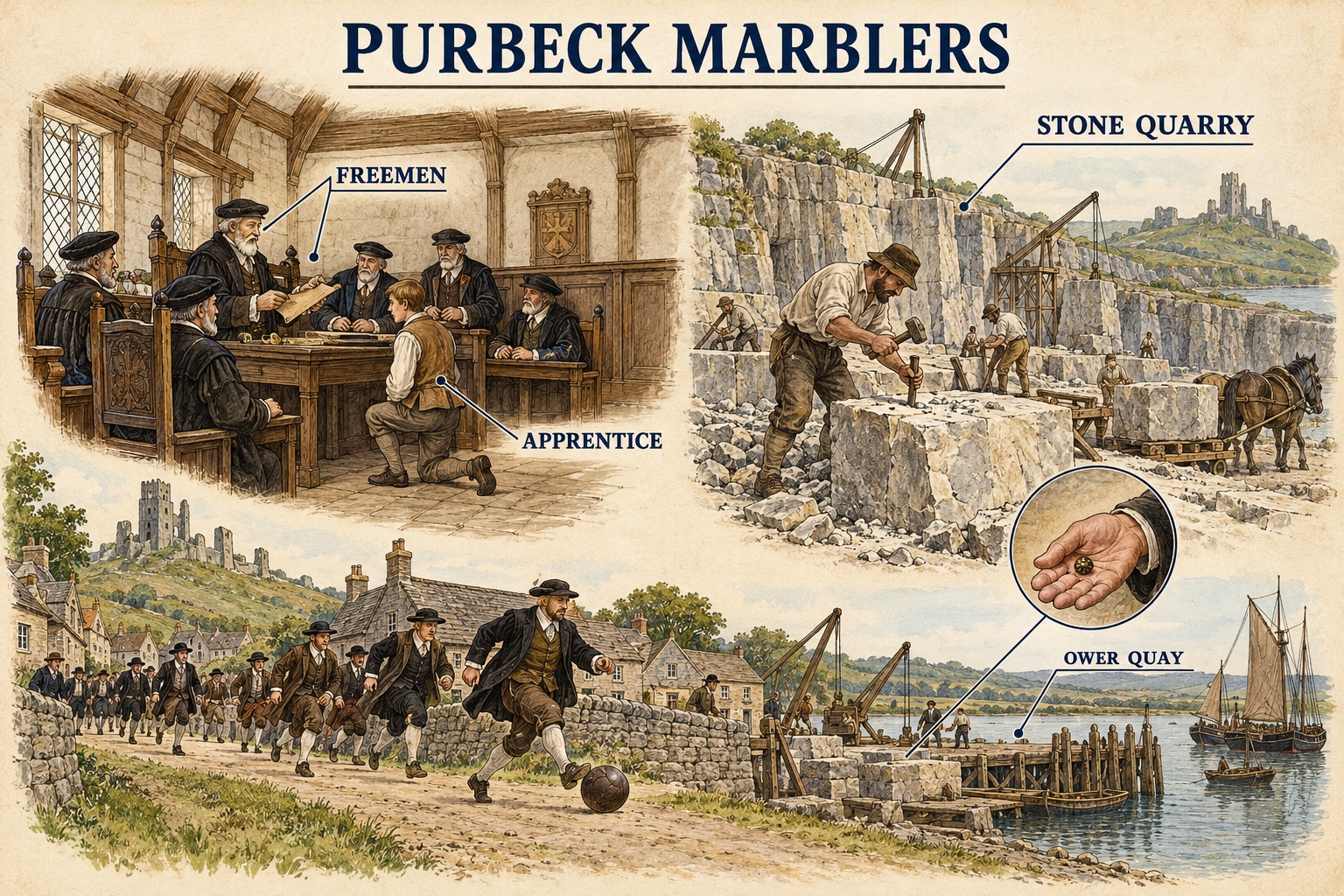
Freemen met annually on Shrove Tuesday at Corfe Castle's Town Hall -- reputedly the smallest town hall in England -- to admit new members (who had to be a Freeman's legitimate son or grandson, marry a quarryman's daughter, or complete a seven-year apprenticeship) and elect officers. New apprentices historically had to bring a fixed toll of ale, bread and a small cash payment. Following the meeting, freemen traditionally dribbled a football three miles from the village to Ower Quay, preserving the old right of way along which quarried stone was carried to the sea for shipment; on reaching the quay, the ball was kicked into the water and doused with pepper, in memory of the token 'peppercorn rent' once paid to the landowner for that right of way.
Why it was used
Restricting quarrying rights to a closed circle of hereditary freemen kept control of the trade, its profits, and its accumulated working knowledge within Purbeck's own quarrying families, rather than open to outside competition.
Risks & limitations
Historical disputes are recorded within the Company's own archives over the illegal selling of quarries and the avoidance of royalties owed to landowners, particularly around the time of the English Civil War.
Regional variation
A regional counterpart to several other British customary systems governing who could open and work a mine or quarry: the Free Miners of the Forest of Dean, the Derbyshire Barmote Court, and the Stannary system of Cornwall and Devon -- each restricting a different resource to a locally defined class of workers, though the Purbeck Marblers' system is unusual in passing membership by inheritance and marriage rather than by a personal labour qualification.
Related terminology
Mines associated with this term
Included only where MineArchive's own research gives a reasonable evidential basis — not every mine where this might plausibly apply.
- Winspit — Dorset (well documented example)
Winspit's own operator record names the Company of Marblers of Corfe Castle as the guild whose freemen traditionally worked Purbeck's stone quarries.
Sources
- (primary) Four documents related to the Stone Merchants and Marblers of Corfe Castle, Dorset — GENUKI (transcribing the 1651 Bylaws of the Marblers of Corfe Castle)
- (secondary) Corfe Purbeck Marblers Meeting — Calendar Customs
Record created: 2 September 2026 · Last researched: 2 September 2026