 MineArchive
Graphite
| Category | Commodities |
|---|---|
| Commodity page | Graphite → |
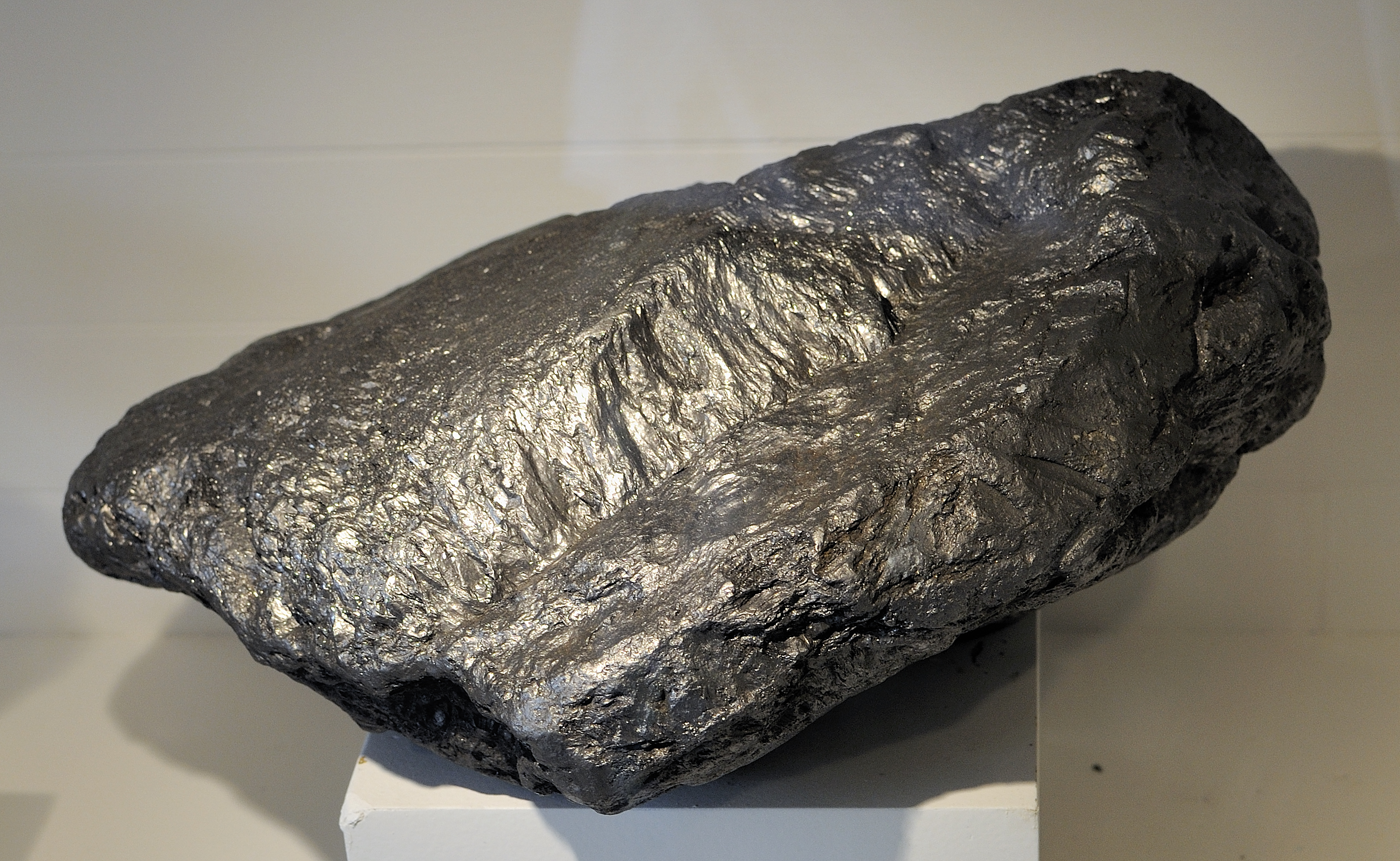
A soft, crystalline form of carbon, historically known in Cumberland as 'wad', 'plumbago' or 'black lead' — mined at Seathwaite, Borrowdale, in a purity never matched elsewhere in Britain.
Historical usage
Seathwaite's graphite was being worked by at least the early 16th century, prized first for marking sheep, then for casting smoother cannonballs, then — from the 1560s — for the first true pencils. Its value made theft a serious problem, leading to an Act of Parliament in 1752 making graphite theft a felony; the mine was worked out and abandoned in 1891. The Keswick pencil industry, later the world-famous Derwent Pencils firm, grew directly from Borrowdale's graphite.
How it worked
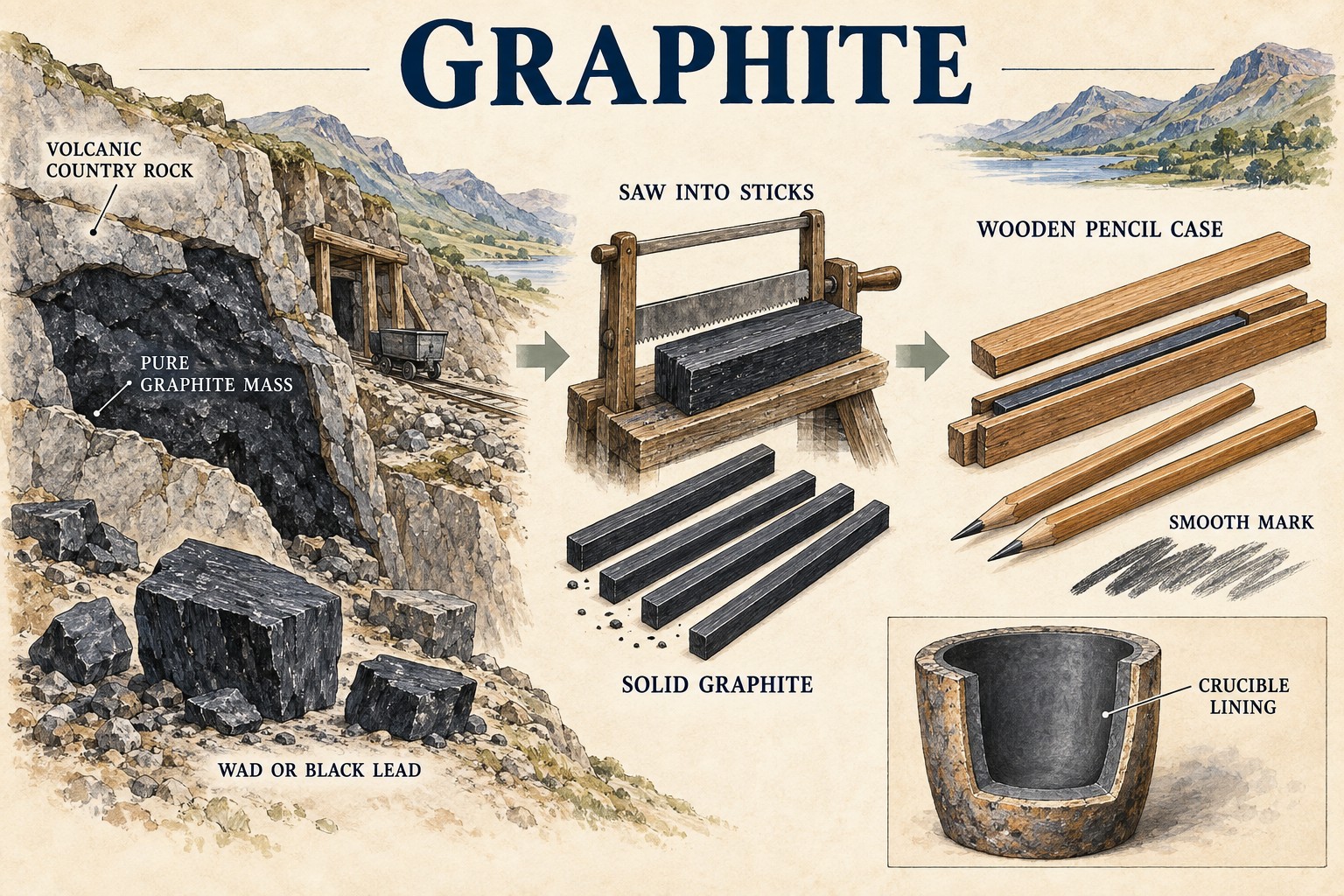
Solid, pure graphite could be sawn directly into sticks or moulded, rather than needing to be bonded with clay the way lower-grade graphite does — the basis of the true pencil 'lead'.
Why it was used
Graphite's softness and lubricating slip made it invaluable for pencils and as a lining for furnace crucibles able to withstand extreme heat without cracking; its earliest large-scale use, casting cannonball moulds, exploited the same smooth, heat-resistant qualities.
Value over time
For most of its working life graphite's value came from scarcity and purity rather than bulk demand: Seathwaite's uniquely solid, pure deposit commanded prices high enough (around thirty shillings a pound by 1779) to justify armed guards and a felony law against theft. Modern graphite demand is a completely different story, driven by battery anodes for electric vehicles — a market that pushed prices to historic highs around 2012 before Chinese production growth brought them back down.
Hazards & challenges
Graphite itself is low in toxicity, and most lung disease historically attributed to graphite dust is now understood to come from silica contamination rather than the graphite itself — graphite ore containing up to 10% silica has been linked to genuine silicosis in miners and millers, making dust exposure still a real, if lesser, hazard.
Risks & limitations
Once Seathwaite's exceptionally pure deposit was exhausted, no comparable British source existed — later pencil manufacture switched to imported graphite bonded with clay, a lower-grade but far more widely available alternative.
Regional variation
Seathwaite's deposit, formed in unusual association with volcanic rock, was singular in Britain — no other British source matched its purity, which is why the mine's exhaustion in 1891 effectively ended domestic high-grade graphite mining rather than simply shifting production elsewhere.
Mines associated with this term
Included only where MineArchive's own research gives a reasonable evidential basis — not every mine where this might plausibly apply.
- Brandelhow Mine — Cumbria (well documented example)
The German miners were brought in to extract graphite — plumbago — alongside the silver, lead and copper, and the veins here carry all four. - Seathwaite Wad Mine — Cumbria (well documented example)
The original, exceptionally pure source of Britain's commercial graphite, worked from at least the 16th century to 1891.
See every mine that worked graphite →
Sources
- (secondary) Detection of graphite using laser microprobe mass analysis of a transbronchial biopsy from a foundry worker with mixed dust pneumoconiosis — PubMed
- (secondary) The Seathwaite Plumbago Mine Background Above Derwent — Cumbria County History Trust
Record created: 21 August 2026 · Last researched: 22 August 2026