 MineArchive
Colliery Check
| Also known as | Pit Check (The commonest general form.), Lamp Check (After the exchange for a safety lamp at the lamp room.), Colliery Token (Used interchangeably with check.), Motty (North East England and East Midlands), Mottee (North East England and East Midlands), Mottie (North East England and East Midlands), Hutch Pin (Scottish) |
|---|---|
| Category | Labour & Roles |
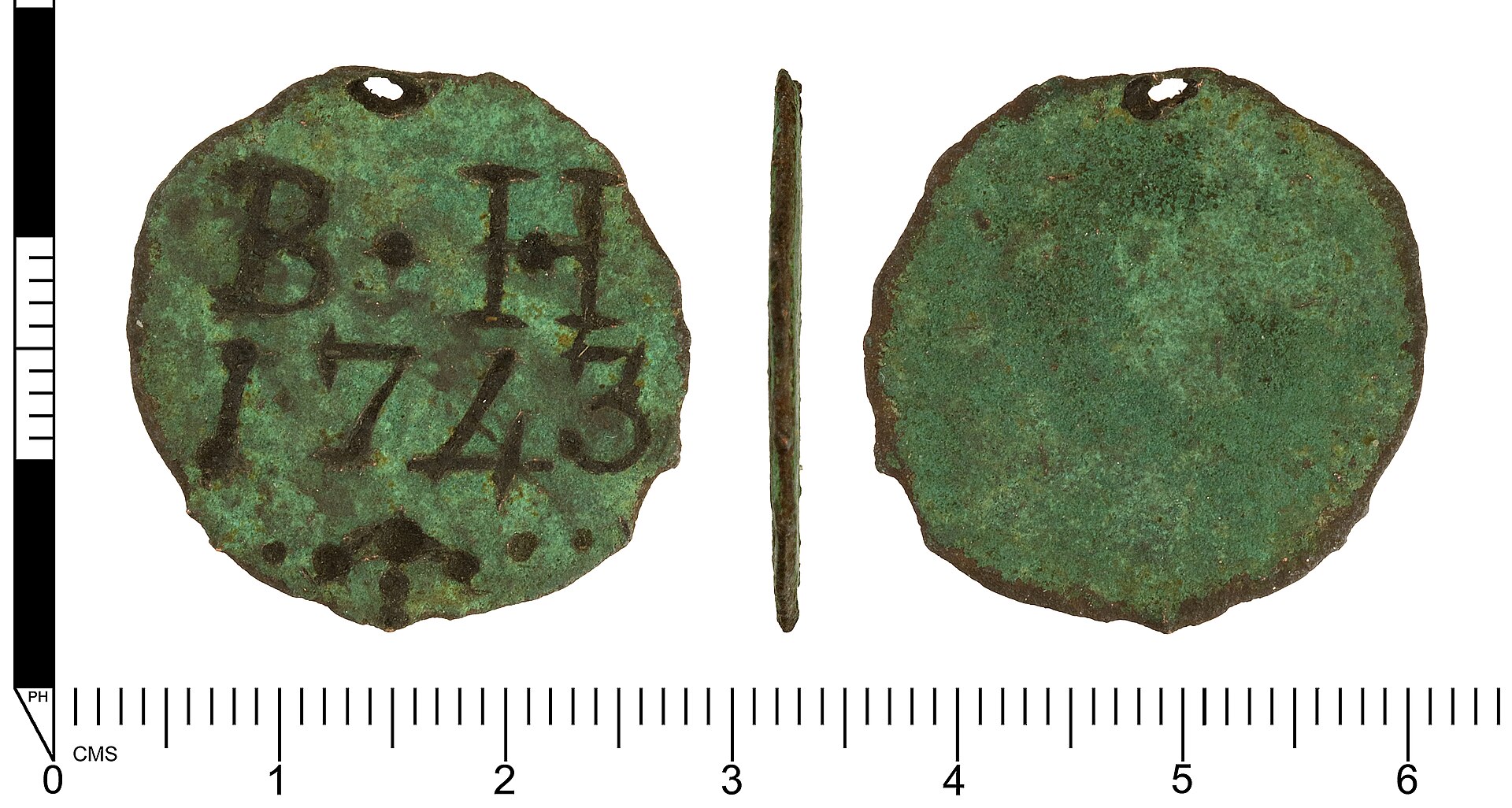
A small numbered tag, usually brass, standing for one named man: handed in to be exchanged for his lamp or given to the banksman as he went down, so that the colliery knew who was underground, and hung on the tubs he filled so that the weighman knew whose coal he was weighing.
Historical usage
Check systems became common in the later nineteenth century and were made compulsory in 1913, by an amendment to the Coal Mines Act 1911. The early arrangement gave each underground worker a single check, usually taken home at the end of the shift: at the start of the next he handed it to the lamp man and got back a safety lamp stamped with the same number, and at the end he handed in the lamp and took his check from the lamp man or from a tally board. Elsewhere a man gave one check to the banksman getting into the cage and another coming out. By the late 1970s a three-check system was usual — one to the lamp room, one to the banksman, one kept on the person — and by the late 1990s the check was giving way to a plastic swipe card. The same numbering served the wage. A hewer's tub carried his check, or his tally, or simply his number chalked on the side, and the checkweighman and the company weigher each entered the weight against that number. The system was open to abuse from both ends, and the Scottish coalfield had a name for one form of it: 'hutch pinning', substituting your own tally for another man's on a better-loaded hutch. Checks were stamped with a number and usually the colliery or company name, and after nationalisation with 'National Coal Board' and often the division; brass was commonest but zinc, aluminium, Bakelite and plastic were all used, in squares, rounds, ovals, hexagons and octagons. The industry issued checks for a good deal else besides — shotfiring, canteens, pithead baths, bus and train passes, union contributions, and beer at the mining institute.
How it worked
The check works as a physical token of a fact that has to be true in two places at once. A board of hooks or a rack of numbers at the lamp room or the pit head shows, at a glance, which numbers are out and therefore which men are below ground: that is why it stops being a convenience and becomes vital the moment there is a fire or an explosion and the rescue brigades need to know how many are inside. The logic runs through the lamp. A collier handed his check to the lamp room attendant at the start of the shift and took in exchange a safety lamp stamped with the same number; at the end he gave the lamp back and took his check from the attendant or from a tally board, and the safe return of the lamp was itself the evidence that he was no longer down the mine. Underground the same number, on a tub, carried his claim to be paid for it as far as the surface weighing machine. A related arrangement controlled numbers rather than identities: a motty or peg board at the entrance to a heading held a fixed count of tags, and a man took one as he went in, so that no more than the permitted number — often nine — could be inside at once. Mines rescue used its own version, pre-dating the three-check system, in which a red disc went to the lamp room, a yellow to the banksman, and a copper one was worn round the neck while the man was underground.
Why it was used
Two problems, one object. A colliery must be able to say how many men are below ground and who they are, and a colliery paying by the tub must be able to say whose tub it is. A stamped brass disc answers both, survives being dropped down a shaft, and cannot be argued with.
Risks & limitations
A check only records what somebody remembers to do with it. A man who forgot to hand one in, or took the wrong one, corrupted the count that a rescue would depend on — which is why the single check gave way to two and then three, and eventually to the swipe card. On the wage side the tag or chalked mark was only as good as the honesty of the men and officials handling it, and both hutch pinning and outright substitution of another man's number are recorded.
Regional variation
Called a motty, mottee or mottie in the North East and the East Midlands, a hutch pin in Scotland, and a lamp check, pit check, token or tally more generally.
Mines associated with this term
Included only where MineArchive's own research gives a reasonable evidential basis — not every mine where this might plausibly apply.
- Gelli Colliery — Rhondda Cynon Taf (well documented example)
Gelli's house coal and steam coal pits were separate units sharing one run of numbered tickets, and in November 1882 four colliers in the Six-Feet seam cashed the tickets belonging to two men in the other pit. The record calls them tickets rather than checks, so the link is made by hand.
Disasters associated with this term
Included only where MineArchive's own research gives a reasonable evidential basis, with the nature of the relationship stated — not every disaster where this term might plausibly apply.
- Sacriston Colliery inrush, 1903 (contextual relationship)
Decades after the 1903 inrush, workmen found a full tub of coal still bearing its owner's token beside the skeleton of a drowned pit pony, and because the men were on piece work he received his back pay.
Sources
- (secondary) Colliery checks and tokens — Amgueddfa Cymru / Museum Wales (Ceri Thompson)
- (secondary) Glossary of mining terms (C) — Apedale Heritage Centre / North Staffordshire Mining Group
- (secondary) Glossary of mining terms (H) — North Staffordshire Miners’ Group, Apedale
- (secondary) Pit Terminology - Glossary — Sutton-in-Ashfield (pit terminology glossary)
- (secondary) Pit or Colliery Checks, tokens or tallies — Middleton Life (Paul Hebden)
Record created: 24 September 2026 · Last researched: 24 September 2026