 MineArchive
Stoke Prior Salt Works
| Also known as | Stoke Works, Stoke Prior Salt Works (ICI Salt Ltd) |
|---|---|
| Location | Stoke Works, near Bromsgrove, Worcestershire — 52.2975, -2.0894 (approximate) |
| Commodity | Salt |
| Type | Mineral |
| Worked | c. 1828–1972 |
| Operators | Imperial Salt and Alkali Company (1830–1857), John Corbett (1857–1888), Salt Union Ltd (1888–1937), Imperial Chemical Industries (1937–1972) |
Overview
John Corbett bought a bankrupt salt works beside the Worcester and Birmingham Canal in 1857 and made it the biggest in Europe — not by digging salt but by dissolving it, pumping water down and brine back up. It closed in 1972 because carrying on would have dropped the ground out from under the village.
History
Salt working at Stoke Prior began around 1828-30 with the British Alkali Company and the Imperial Salt and Alkali Company, both of which had run into financial trouble by mid-century. John Corbett — a Black Country man whose family were canal carriers, and who would be known locally as the Salt King — took the lease of the Imperial works in 1857 at £1,000 a year and bought the site outright for £25,000 in 1867. He mechanised and expanded relentlessly, with a major rebuilding in 1871-72, and made Stoke Prior the largest salt works in Europe. The works straddled both sides of the Worcester and Birmingham Canal and ran its own railway system, with steam locomotives bought in 1875 and 1883 and a fleet of more than 400 wagons kept in its own workshops. Corbett built the village of Stoke Works for his workforce, and spent the fortune elsewhere on the extravagant Chateau Impney near Droitwich. He sold out to Salt Union Ltd in 1888; the works passed eventually to ICI, and closed in 1972.
Geology
The salt lies in the Mercia Mudstone Group, in a bed roughly 90 m thick of which about 40 per cent is halite. Because rock salt dissolves readily, groundwater reaching the top of the bed creates natural underground streams of saturated brine — the wild brine runs — and it was these, rather than dry rock salt, that Worcestershire exploited: brine had been drawn from natural springs at Droitwich since the Iron Age. The catch is that every litre of brine pumped out is salt removed from underground, and the cavities left behind eventually collapse. A wild brine run whose course is known largely from the subsidence it has caused at the surface flows from Yew Tree Hill to Stoke Prior.
Geological setting: Evaporite Deposits (well documented example)
Workings
Extraction was by solution rather than by shaft and roadway. Water was pumped down to the salt, and the resulting brine drawn back up and run into vast open evaporating pans, where it was boiled until the salt crystallised out — a process closer to a chemical works than to a mine, and one that consumed coal on an industrial scale, which is why a canal-side site mattered so much.
Closure
ICI closed Stoke Prior in 1972 as part of a rationalisation, and to stop further brine extraction causing subsidence — by then the works stood in an area under pressure for housing, and the ground beneath it was being steadily dissolved away. It was the last large brine works in Worcestershire. Small-scale commercial salt production using locally extracted brine continues on the outskirts of Droitwich, and there have been proposals to supply brine to a new spa there.
What remains
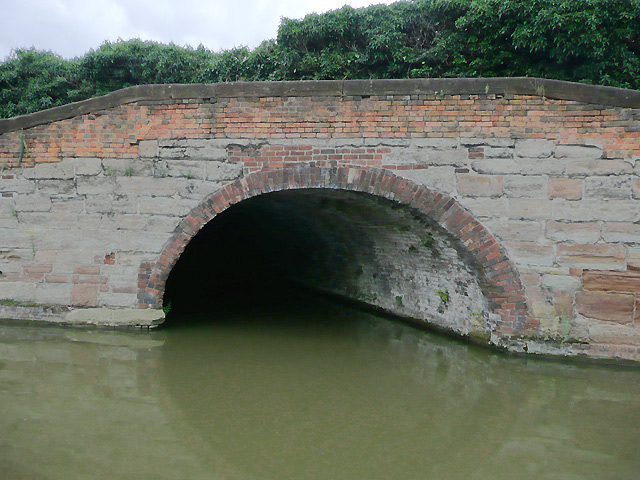
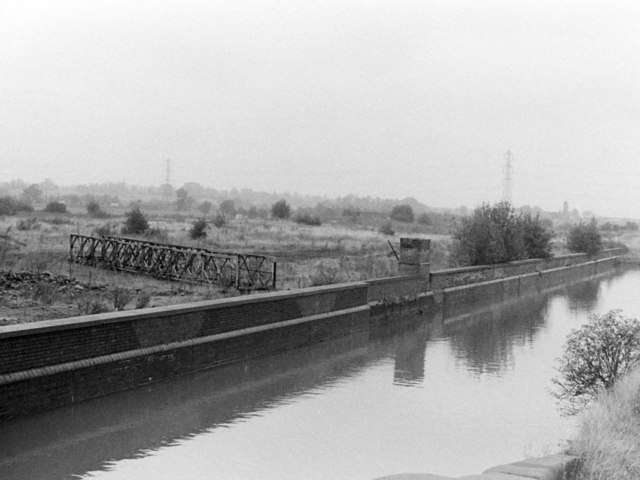
The works have gone. The Salt Works arm of the canal survives as a water feature, and the village of Stoke Works that Corbett built for his workers is still lived in.
Little of the works itself; the canal arm cut to serve it is the clearest physical trace, together with Corbett's village and, in St Michael's churchyard at Stoke Prior, the family graves.
Redevelopment
The site was cleared and the surrounding area given over to housing — the very pressure that helped end the brine pumping, since subsidence and new estates do not mix.
Nearby mines
- Droitwich Salt Wells — 3.2 miles (5.1 km) SW
Straight-line distance, within 9 miles (15 km). Show on the map.
Recorded claims
Individual factual claims, each attached to the source(s) that support it below. Where sources disagree, both are kept.
- Salt extraction at Stoke Prior began around 1828-30 under the British Alkali Company and the Imperial Salt and Alkali Company, both of which were in financial difficulty by mid-century. 1
- John Corbett took the lease of the Imperial works in 1857 at £1,000 a year and bought the site outright in 1867 for £25,000. 1
- Corbett mechanised and expanded the works, with major rebuilding in 1871-72, making it the largest salt works in Europe. 1,2
- The works straddled the Worcester and Birmingham Canal and ran its own railway, with steam locomotives bought in 1875 and 1883 and over 400 wagons maintained in its own workshops. 1
- Salt was won by solution mining: water was pumped underground and the resulting brine drawn back up and boiled in large evaporating pans. 2
- Corbett sold the works to Salt Union Ltd in 1888, together with its locomotives; ownership passed eventually to ICI. 1
- Worcestershire's salt lies in the Mercia Mudstone Group in a stratum about 90 m thick, roughly 40 per cent of it halite; groundwater dissolving the top of the bed creates the underground streams of saturated 'wild brine' that were worked. 3
- A wild brine run flows from Yew Tree Hill to Stoke Prior, its course known mainly from the subsidence it has caused at the surface. 3
- ICI closed the Stoke Prior works in 1972, both as part of a rationalisation and to avoid further brine extraction causing land subsidence; it was the last large-scale salt working in Worcestershire. 3,2
- Small-scale commercial salt production continues on the outskirts of Droitwich using locally extracted brine, and a brine bath beside the Droitwich Spa lido has been given outline permission. 3
- Salt has been worked around Droitwich and Stoke Prior since the Iron Age; Droitwich was known to the Romans as Salinae. 3
Photographs & further reading
A biography of the man who made Stoke Prior, from canal carrier's son to MP and builder of the Chateau Impney.
View sourceSources
- (secondary) John Corbett, salt works, Stoke Prior — Midlands Industrial Archaeology / miac.org.uk
- (secondary) John Corbett (industrialist) — Wikipedia
- (primary) Salt and Brine in Worcestershire (background document, September 2018) — Worcestershire County Council
- (secondary) Sources of salt in Worcestershire — Earth Heritage Trust
Record created: 24 August 2026 · Last researched: 24 August 2026