 MineArchive
Droitwich Salt Wells
| Also known as | Droitwich Wich, Upwich |
|---|---|
| Location | Vines Park and the town centre, Droitwich, Worcestershire — 52.2701, -2.1492 (approximate) |
| Commodity | Salt |
| Type | Mineral |
| Worked | From around 600 BC–1922 |
| Operators | Burgesses of Wich (1215–1695) |
Overview
Britain's own Dead Sea, brought to the surface under natural pressure in a Worcestershire valley and fought over for two and a half thousand years — a resource so concentrated the Romans may have invaded partly to secure it, and one small enough in area that thirty wells could work it within sight of each other.
History
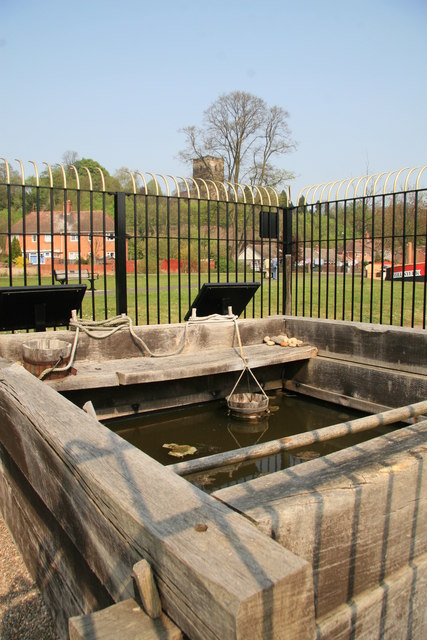
Salt has been made at Droitwich since at least the Bronze Age, with production on an industrial scale from around 300 BC as brine was collected in large storage pits — one set found north of the town's High Street and Friar Street held perhaps 100,000 litres between them — and distributed by pack horse across central and southern England. The Romans reorganised production after their conquest from AD 47, almost certainly valuing the brine resource highly enough that it was a real target of the invasion itself; they built a fort at Dodderhill overlooking the springs, probably constructed the first timber-lined brine well later known as Upwich, and laid roads out in six directions to move the salt, marking the site 'Salinae' on their own maps. Production continued through the Saxon period, and in 1215 King John granted the burgesses of Wich an effective royal monopoly on salt production by charter — a monopoly that endured, despite a major fire in 1290, until a successful legal challenge by Robert Steynor broke it in 1695 after five years of litigation. The 18th century brought rebuilding in brick and, from 1768, a new canal improving transport; steam technology allowed year-round production, and from the 1830s brine was also put to therapeutic use, creating the fashionable spa resort of Droitwich Spa around baths fed by the same wells. At its Victorian peak around thirty separate wells worked the brine near Vines Park, until industrialist John Corbett moved the main point of extraction to a purpose-built works at Stoke Prior, just outside the town, at the end of the 19th century. Salt production at Droitwich itself finally ceased in 1922, and most of its old works were demolished within decades.
Geology
Droitwich sits above underground brine streams that rise to the surface in the Salwarpe valley under natural artesian pressure, drawing on Triassic salt deposits of the same broad evaporite sequence worked as rock salt at Winsford and elsewhere in the Cheshire and Worcestershire salt basins. The brine here is exceptionally concentrated, at around 25 per cent salt by volume — saltier than the Dead Sea — which is what let it rise to the surface unaided and made Droitwich workable by simple wells rather than deep rock-salt mining.
Geological setting: Evaporite Deposits (well documented example)
Workings
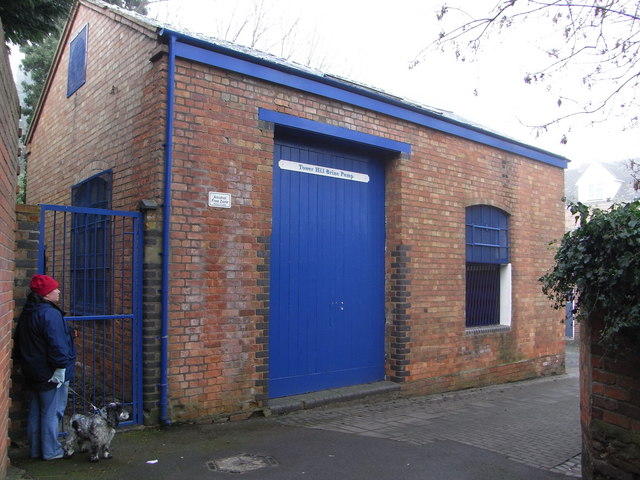
Brine was drawn directly from artesian wells sunk into the valley floor — Upwich, probably the oldest, and around thirty others clustered near Vines Park at the industry's peak — rather than by mining solid rock salt. Roman engineers built a large plank-lined brine collection tank at the springs in the 2nd century, reusing timber originally felled decades earlier; later works added steam-powered pumps, of which the surviving Tower Hill Brine Pump is one example, to lift brine for evaporation in purpose-built pans.
Closure
Extraction shifted decisively to John Corbett's new works at Stoke Prior from the 1880s, and salt production at Droitwich itself ended for good in 1922, most of the old works being demolished in the following decades.
What remains
Little of the working brine industry survives in physical form, but its traces remain woven through the town: the Upwich brine pit itself, the Tower Hill Brine Pump, the Droitwich Barge and Junction Canals through Vines Park, and the spa architecture of Droitwich Spa that grew out of the same wells once they were put to therapeutic rather than industrial use.
The Upwich brine pit, the Tower Hill Brine Pump, the Droitwich canals through Vines Park, and the spa-era buildings of Droitwich Spa.
Redevelopment
The town has grown around and over the old works; Vines Park and the canal corridor are preserved as public open space.
Nearby mines
- Stoke Prior Salt Works — 3.2 miles (5.1 km) NE
Straight-line distance, within 9 miles (15 km). Show on the map.
Recorded claims
Individual factual claims, each attached to the source(s) that support it below. Where sources disagree, both are kept.
- Salt has been produced at Droitwich since at least the Bronze Age, with industrial-scale production from around 300 BC using large brine storage pits, and Roman reorganisation of the industry from AD 47. 1
- Droitwich's brine rises under natural artesian pressure at around 25% salt by volume — saltier than the Dead Sea. 2
- King John granted the burgesses of Wich an effective royal monopoly on salt production by charter in 1215, which endured until Robert Steynor's legal challenge succeeded in 1695. 1
- At the Victorian peak around thirty separate wells worked the brine near Vines Park, with steam pumps such as the surviving Tower Hill Brine Pump lifting brine to evaporation pans. 2
- John Corbett moved the main point of extraction to a new works at Stoke Prior from the 1880s, and salt production at Droitwich itself ended in 1922. 2
Sources
- (secondary) History — Historic Droitwich — Historic Droitwich
- (primary) Brine Baths — Wychavon District Council — Wychavon District Council
Record created: 25 August 2026 · Last researched: 25 August 2026