 MineArchive
Meldon Quarry
| Location | Meldon, near Okehampton, Devon — 50.7104, -4.0322 (approximate) |
|---|---|
| Commodities | Aplite, Granite |
| Type | Quarry |
| Worked | 1874–2012 |
| Operators | London and South Western Railway (1874–1948), Aggregate Industries |
Overview
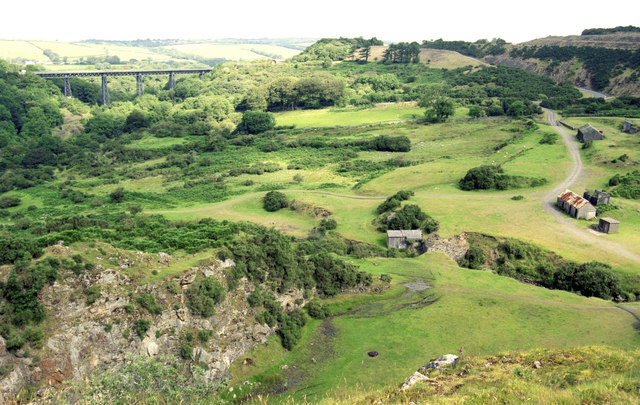
A working railway quarry on the northern edge of Dartmoor, opened in 1874 to supply track ballast and developed on an industrial scale from 1897, that turned out to sit beside one of the rarest rock exposures in Britain — an aplite dyke whose unusual chemistry produces minerals found nowhere else in the country, rare enough that both the main quarry and the adjoining aplite pits are separately designated Sites of Special Scientific Interest.
History
A small quarry was opened at Meldon in 1874, alongside the London and South Western Railway's new extension from Okehampton to Lydford, to supply stone for the railway's own needs. It was developed on a much larger scale from 1897, when the LSWR needed a reliable source of track ballast harder-wearing than stone available elsewhere on its network; by then the quarry was supplying around 100,000 tons of ballast a year, a figure that had grown to some 340,000 tons annually by 1953 as the worked area expanded to around 200 acres. Ownership passed from the LSWR to British Rail on nationalisation in 1948, and then, when British Rail's aggregates business was privatised on 4 March 1994, to ECC Quarries Ltd; the quarry later passed into the ownership of Aggregate Industries.
In 1889, well before the quarry's industrial expansion, a quite different and much rarer rock had already been identified on the far side of the site, along Red-a-Ven Brook: an aplite dyke, worked from its own separate pits for use in glassmaking rather than track ballast, its unusual chemistry making it valuable for the particular balance of potassium, aluminium, sodium and silica it offered. The two workings — the main hornfels quarry and the smaller aplite pits — operated side by side as physically distinct parts of the same Meldon site, worked for entirely different products by the same successive owners. Hornfels extraction at the main quarry ceased in 2012, and the site remains under Aggregate Industries' ownership but mothballed rather than actively worked.
Geology
Meldon exposes two geologically unrelated features side by side. The main quarry cuts through complexly folded and faulted cherts, siliceous shales and volcanic tuffs of the Lower Carboniferous Greystone Formation, baked to a hard hornfels by the heat of the intruding Dartmoor granite; three decades of study here have been genuinely influential in working out the structure of the Variscan mountain belt across south-west England, with the site now understood to expose a cross-section through the Greystone Nappe rather than a simple fold. Separately, on the far side of the site along Red-a-Ven Brook, the Meldon Aplite forms a dyke some 3.5km long and up to 20m wide, intruded into the same Carboniferous host rocks — a fine-to-medium-grained granite with pegmatitic zones, unusual in Britain for its enrichment in rubidium, caesium, fluorine, boron, beryllium and niobium and its near-total absence of the tin and tungsten mineralisation typical of Dartmoor's other granite-related deposits. It is recognised as the only sodium-potassium-lithium pegmatite recorded anywhere in Britain, and has yielded rare accessory minerals — including petalite, topaz, fluorite, bavenite, pollucite and spodumene — many otherwise unknown in the country and known from only a handful of localities worldwide; some individual mineral records from the site attributed to the collector A.W.G. Kingsbury have since been questioned by researchers and should be treated with some caution rather than taken at face value.
Workings
The main quarry was worked as a large open pit for hornfels track ballast, its output crushed and graded on site for direct rail dispatch; the separate aplite pits along Red-a-Ven Brook were worked on a much smaller scale for the specialist glassmaking market.
Closure
Hornfels extraction at the main quarry ceased in 2012; the site remains in the ownership of Aggregate Industries but is currently mothballed rather than worked.
What remains
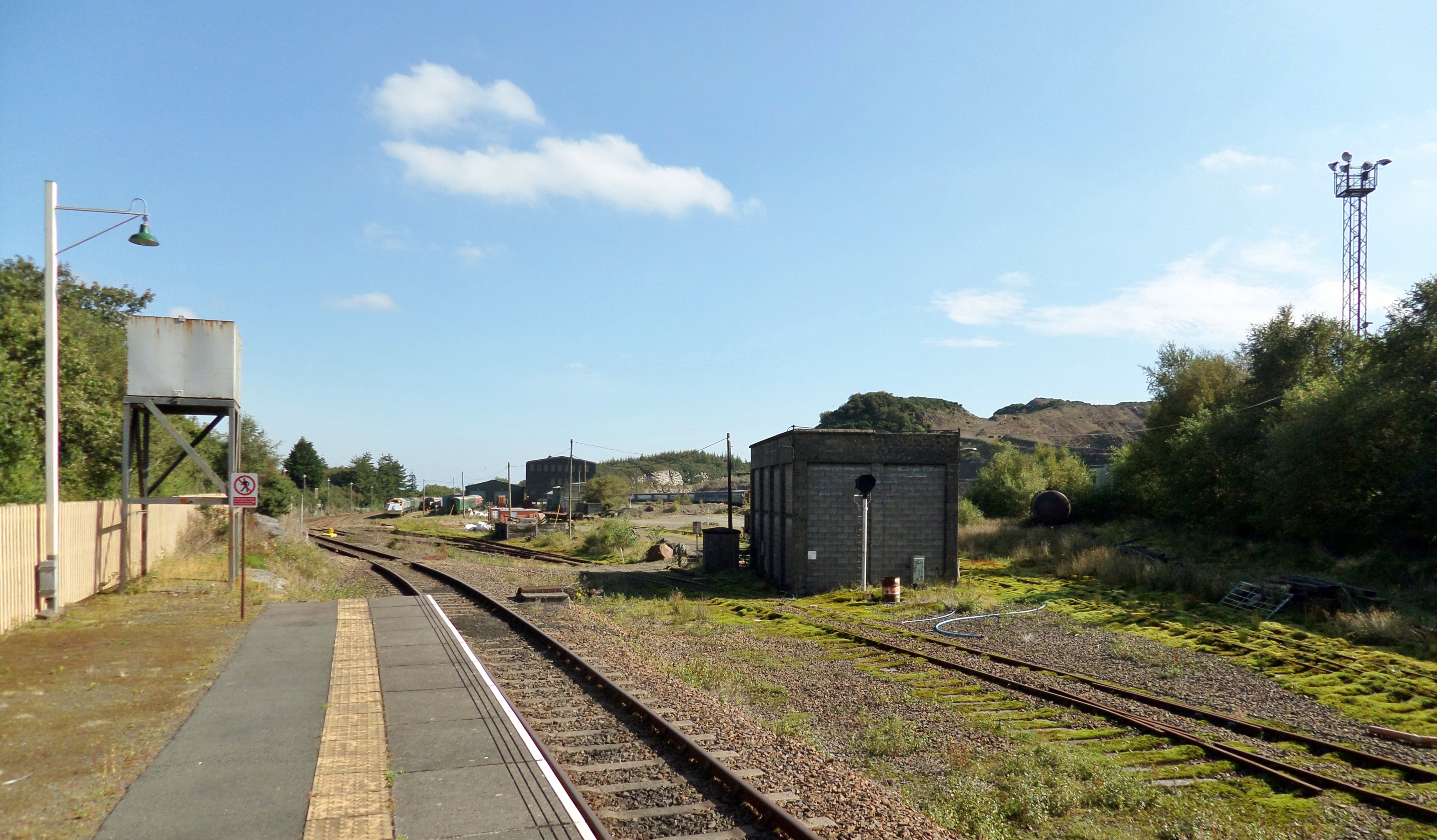
Both the main Meldon Quarry and the adjoining Meldon Aplite Quarry are separately notified Sites of Special Scientific Interest — the main quarry (75.7ha, notified 1964 and 1990) for its structural geology, and the aplite pits for their exceptional mineralogy. The former quarry railway now carries the Dartmoor Railway's heritage passenger service to Meldon Quarry station, and the adjacent Meldon Viaduct, closed to trains in 1968 and later found structurally too weak to carry rail traffic again, was refurbished in 1996 to carry the 11-mile Granite Way cycling and walking route instead.
Quarry faces, spoil and former rail sidings survive across the mothballed site, with nature reclaiming parts of the disused ground; the restored Meldon Viaduct and the heritage railway's Meldon Quarry station are the most visited features.
Nearby mines
- Ivy Tor Mine — 3.8 miles (6.2 km) E
- Belstone Mine — 4.3 miles (7.0 km) E
- Ramsley Mine — 5.3 miles (8.6 km) E
- Devon United Mine — 8.3 miles (13.3 km) S
- Wheal Jewell — 8.7 miles (14.0 km) SW
Straight-line distance, within 9 miles (15 km). Show on the map.
The quarry faces are steep and the site is a working/mothballed industrial quarry rather than open access land — this entry describes history and general location only, not an access guide.
Recorded claims
Individual factual claims, each attached to the source(s) that support it below. Where sources disagree, both are kept.
- A small quarry opened at Meldon in 1874 alongside the LSWR's Okehampton–Lydford railway extension, and was considerably developed from 1897 to supply track ballast, reaching around 340,000 tons of output a year by 1953. 1
- The quarry passed from the London and South Western Railway to British Rail at nationalisation in 1948, then to ECC Quarries Ltd on privatisation of British Rail's aggregates business on 4 March 1994, and later to Aggregate Industries. 1
- The Meldon Aplite dyke, identified in 1889, is up to 20m wide and around 3.5km long, and is recognised as the only sodium-potassium-lithium pegmatite recorded in Britain, hosting rare accessory minerals including petalite, topaz, pollucite and spodumene. 2
- The main Meldon Quarry (75.7ha) is separately notified as an SSSI for exposing complexly folded and faulted Greystone Formation rocks that have been influential in understanding the structure of the Variscan orogeny in south-west England, distinct from the adjoining Meldon Aplite Quarry SSSI. 3
Sources
- (secondary) Meldon Quarry — Wikipedia
- (secondary) Meldon Aplite Quarries, Devon (GCR block 36) — Geological Conservation Review / Scottish Geology Trust GeoGuide
- (primary) Meldon Quarry SSSI citation — Natural England
Record created: 26 August 2026 · Last researched: 26 August 2026