 MineArchive
Medomsley Colliery
| Location | Medomsley Edge, about two miles north of Consett, County Durham — 54.8769, -1.8208 (approximate) |
|---|---|
| Commodity | Coal |
| Type | Coal |
| Worked | 1839–6 October 1972 |
| Maximum depth | The Busty shaft was 453 feet deep to the Brockwell seam in 1923. |
| Operators | Edward Richardson and Co. (1839–?), Consett Iron Company (?–1947), National Coal Board (1947–1972) |
Overview
A colliery north of Consett in the Derwent valley, begun in 1839 and later part of the Consett Iron Company's group, where in 1923 an ascending cage came off its guides in the Busty shaft and eight men and boys fell to their deaths; it closed in 1972.
History
Medomsley Colliery, about two miles north of Consett, began working in 1839 under Edward Richardson and Company. In the 1890s its Medomsley or Busty Pit, north-west of the village, had a shaft sunk to the Three Quarter seam but worked only the Busty, about 5 feet 6 inches thick with a stone band that thickened northward until the seam had to be worked in two parts. The waste heat of its coke ovens drove the underground engines. In 1898 the Isabella shaft was sunk to the Brockwell seam for the Consett Iron Company, which owned the colliery by the 1920s; the Hutton seam was abandoned as exhausted in 1900. On the morning of Saturday 24 February 1923 eight men and youths — two onsetters and six youths from the shaft-bottom siding — were riding up the 453-foot Busty shaft when the north cage came out of its guide rails and struck the shaft fittings, and they fell to the bottom (see Disasters, below). The coroner found that they fell after the breakage of one or more cage shoes; the Chief Inspector, Henry Walker, concluded that worn shoes had been left in use too long and that replacing only part of the north-west guide with rail of a different section had made matters worse. Employment reached 967 in 1925. The colliery passed to the National Coal Board in 1947 and closed on 6 October 1972.
Geology
The Main Coal, Busty (about 5 feet 6 inches, split by a stone band that thickens northward), Three Quarter and Brockwell seams of north-west Durham; the Hutton was worked out by 1900.
Workings
The Busty Pit, with a 10-foot shaft 453 feet deep to the Brockwell and insets to the Main Coal and Busty, and the Isabella Pit, sunk to the Brockwell in 1898; coke ovens whose waste heat drove the underground engines, and an electric Ward Leonard-Ilgner winder from 1914.
Closure
Closed on 6 October 1972, when 155 people were employed.
What remains
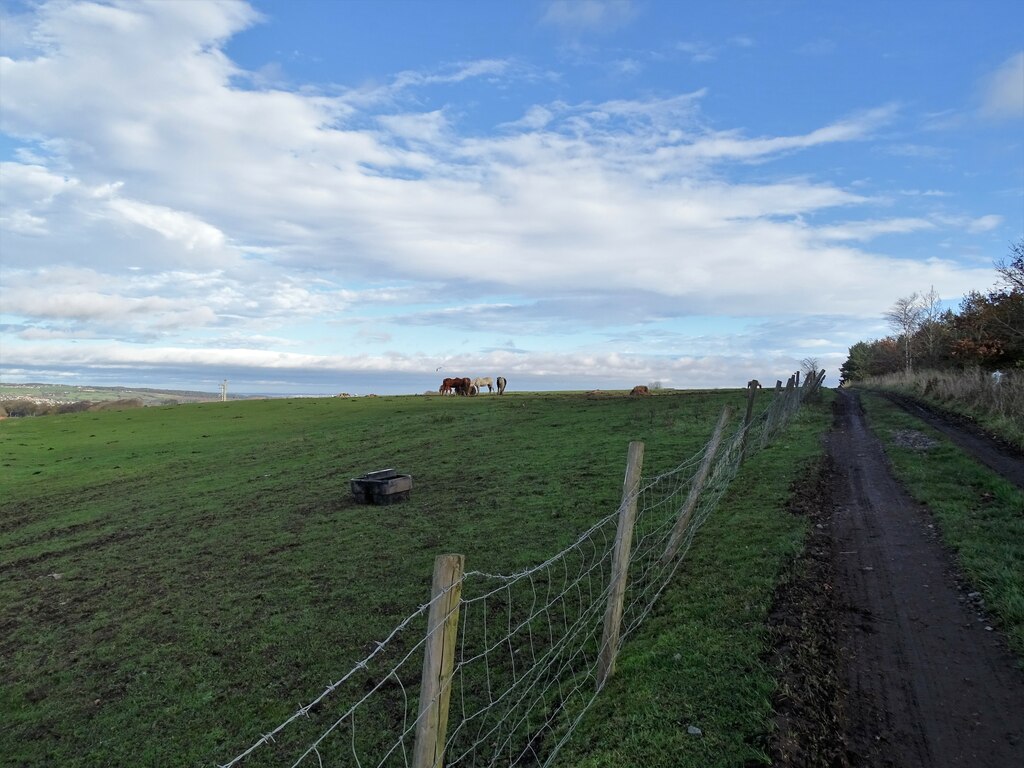
The site is grazing land west of Medomsley Edge, crossed by a field path.
None recorded.
Related mines
- Eden Colliery — Both opened by Edward Richardson and Company and later owned by the Consett Iron Company.
Nearby mines
- Eden Colliery — 2.3 km SE
- Healeyfield Mine — 6.4 km SW
- Chopwell Colliery — 6.6 km NW, Tyne and Wear
- West Stanley Colliery — 7.7 km E
- Louisa Colliery — 7.8 km E
Straight-line distance, within 15 km. Show on the map.
People
- Thomas Cant · victim, 1923 — Aged 48, of Leadgate, killed in the 1923 cage accident.
- Timothy Collinson · worker, 1923 — Shaftsman who examined the Busty shaft nightly and found it in good order hours before the 1923 accident.
- Joseph Simpson · engineer, 1923 — Colliery enginewright who went down the shaft after the 1923 accident and found the broken guide rail.
Recorded claims
Individual factual claims, each attached to the source(s) that support it below. Where sources disagree, both are kept.
- Medomsley Colliery commenced working in 1839 under Edward Richardson and Company; the Isabella shaft was sunk to the Brockwell in 1898 for the Consett Iron Company. 1
- In the 1890s the Busty Pit worked only the Busty seam, and the waste heat of the coke ovens drove the underground engines. 1
- On 24 February 1923 eight men and youths ascending the 453-foot Busty shaft were killed when their cage came out of its guides. 1,2
- The coroner found that one or more cage shoes broke; the Chief Inspector blamed worn shoes left in use too long and the partial replacement of a guide rail with rail of a different section. 2
- Medomsley Colliery closed on 6 October 1972. 1
- The path across grazing land west of Medomsley Edge runs over the former site of Medomsley Colliery (2020). 3
- The national catalogue holds a Medomsley Colliery surface plan. 4
Photographs & further reading
Owners, pits, seams and employment from 1883 to 1972.
View sourceThe 1923 cage accident, the shaft's equipment and the Chief Inspector's conclusions.
View sourceSources
- (secondary) Medomsley Colliery (Durham Mining Museum) — Durham Mining Museum
- (secondary) Medomsley Colliery Shaft Accident – Consett – 1923 — Northern Mine Research Society
- (observational) Path over the fields at Medomsley (Geograph photo 6683937, 2020) — Geograph Britain and Ireland
- (primary) BGS / Mining Remediation Authority mine plans catalogue: Medomsley Colliery (surface plan) — British Geological Survey
Record created: 17 September 2026 · Last researched: 17 September 2026