 MineArchive
Lochaline Mine
| Also known as | Lochaline Sand Mine, Loch Aline Silica Mine |
|---|---|
| Location | Lochaline, Morvern, Highland — 56.5411, -5.7739 (exact) |
| Commodity | Silica Sand |
| Type | Mineral |
| Worked | 1940–2008 (closure) |
| Operators | Tilcon Lochaline Limited (1940–?), Tarmac (?–2008), Lochaline Quartz Sand Ltd (2012–?) |
Overview
An underground silica sand mine on the Morvern peninsula, working an exceptionally pure white Cretaceous sandstone first developed urgently in 1940 to supply Britain's wartime optical-glass industry, and still the only underground sand mine in Europe.
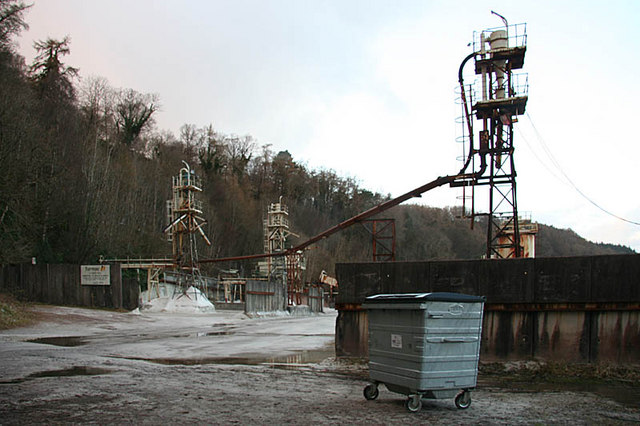
History
The deposit was first identified as a potential source of glass sand in 1895, but was judged uneconomic against cheap Belgian and German imports. That changed in 1940, when the Second World War cut off continental supplies of optical-quality glass sand needed for binoculars, periscopes and gunsights; Lochaline's exceptionally pure, low-iron sandstone was put into production within the year under Tilcon Lochaline Limited. Much of the first workforce was recruited from the slate quarries of Ballachulish, under manager Donald Noel Paton and foreman Jimmy McGregor. The sand the war made valuable is Cretaceous: quartz worn from the Scottish landmass and laid down on a tropical shore over Jurassic shales some 93 million years ago, sorted by the sea into grains of even size and then sealed for 60 million years under the basalts of the Mull volcano, which is why it survived so pure. Historic Environment Scotland surveyed the mine in 2007, the year before Tarmac announced its closure.
Geology
The sandstone was laid down on the shore of a tropical sea around 93 million years ago, in the middle of the Cretaceous period — the same episode of deposition that produced the chalk of the White Cliffs of Dover. Cretaceous rock is otherwise almost entirely absent from Scotland, having been stripped away everywhere else by later erosion, making the Lochaline deposit a geological rarity as much as an industrial one.
Workings
The sandstone is worked underground by stoop-and-room mining, extracted through around a dozen adits driven into the hillside above the shore of Loch Aline, rather than by open quarrying — several of these adits are now disused even though the mine as a whole remains active.
Closure
Tarmac's 2008 closure hit the small village of Lochaline, home to around 200 people, disproportionately hard: close to every household in the village had some connection to the mine, and its loss cost the area a substantial share of its working population. The mine reopened under new ownership in September 2012.
What remains
Operated by Tarmac until closure in 2008; reopened in September 2012 under Lochaline Quartz Sand Ltd, a joint venture between the Italian minerals group Minerali Industriali and the glass manufacturer NSG Group, and remains in production. As of the early 2020s the mine processed around 140,000 tonnes of sand a year, employed around 30 people and shipped its output weekly by boat; alongside long-standing glass customers such as Pilkington, some output now supplies the Norwegian firm Fiven for silicon carbide production used in satellite components.
A former single-gauge railway line once carried sand from the mine entrance to the West Pier, the original loading point on Loch Aline, and the site's former dormitories and canteen now house The Whitehouse Restaurant. A heritage trail linking these locations opened to the public in June 2024, at a ceremony attended by current and former miners and their families, maintained by the Morvern Heritage Society with funding from the mine's current owners.
Nearby mines
- Glensanda Quarry — 9.2 miles (14.8 km) E
Straight-line distance, within 9 miles (15 km). Show on the map.
Recorded claims
Individual factual claims, each attached to the source(s) that support it below. Where sources disagree, both are kept.
- The deposit was first identified as a potential glass-sand source in 1895 but judged uneconomic against cheap continental imports; production only began in 1940 once the Second World War cut off those supplies. 1,2
- The sandstone was deposited in the middle Cretaceous period, around 93 million years ago, at the same time as the chalk of the White Cliffs of Dover — a rare surviving patch of Cretaceous rock in Scotland. 1
- The mine closed in 2008 under Tarmac and reopened in 2012 under Lochaline Quartz Sand Ltd, a joint venture of Minerali Industriali and NSG Group. 1
- Much of Lochaline's first workforce in 1940 was recruited from the slate quarries of Ballachulish, under manager Donald Noel Paton and foreman Jimmy McGregor. 3
- The mine is worked through around a dozen adits driven into the hillside above Loch Aline, several of which are now disused even though the mine as a whole remains active. 4
- Tarmac's 2008 closure hit the roughly 200-person village of Lochaline disproportionately hard, with close to every household having some connection to the mine. 5
- As of the early 2020s the mine processed around 140,000 tonnes of sand a year, employed around 30 people and shipped weekly by boat; alongside established glass customers such as Pilkington, some output now supplies the Norwegian firm Fiven for silicon carbide used in satellite components. 5
- A heritage trail linking sites including the original mine entrance, the former railway route to the West Pier, and the former dormitories (now The Whitehouse Restaurant) opened to the public in June 2024, organised by the Morvern Heritage Society with funding from the mine's current owners. 3
- The quartz came from the erosion of the Scottish landmass and was deposited on the shore of a tropical sea on Jurassic shales about 93 million years ago, as the chalk of Dover was forming; repeated changes of sea level reworked the sand and natural winnowing sorted the quartz from other minerals into grains of like size, and for 60 million years a covering of basalt from the Mull volcano protected it from erosion. The closure was announced in November 2008 and the mine reopened in September 2012. 6
- Historic Environment Scotland holds a word-processed site report on Lochaline Silica Sand Mine, Morvern, dated 2007, by Miriam McDonald (reference WP 007445), viewable at its archive. 7
Sources
- (secondary) Lochaline Mine — Wikipedia
- (secondary) A Unique Resource — Agg-Net
- (secondary) Lochaline mine: Tunnels to open to public for first time — The Press and Journal
- (secondary) Lochaline Silica Sand Mine — Subterranea Britannica
- (secondary) Space a new frontier as revival of remote Highland mine continues — The Press and Journal
- (secondary) Lochaline (Wikipedia) — Wikipedia
- (primary) Site report, Lochaline Silica Sand Mine, Morvern, Argyll, 2007 (Historic Environment Scotland archive WP 007445, via trove.scot) — Historic Environment Scotland
- (observational) Silica sand mine at Lochaline (Secret Scotland) — Secret Scotland
- (primary) Mine plan: TILCON LOCHALINE LIMITED — Plan of Silica Sandstone Workings — BGS mine plans catalogue (Survey Plan SP1514)
Record created: 25 August 2026 · Last researched: 24 September 2026