 MineArchive
Fernhurst Furnace (North Park Furnace)
| Also known as | North Park Furnace |
|---|---|
| Location | Fernhurst, near Haslemere, West Sussex — 51.0486, -0.7228 (approximate) |
| Commodity | Iron |
| Type | Ironstone |
| Worked | Working by 1614–1776 or 1777 |
| Operators | John Butler (1762–1777) |
Overview
A Wealden blast furnace so completely abandoned for a century that a 1664 survey called it 'ruined' — before it was brought back from the dead to cast cannon for two wars, and is now reckoned the best-preserved ironworks site anywhere in the Weald.
History
North Park Furnace, in the parish of Fernhurst on the West Sussex-Hampshire border, was working by 1614 under a lease held by William Shotter, part of the wider 16th and 17th-century boom in Wealden ironmaking driven by ordnance demand and the region's abundant timber and water power. By 1664 the furnace was recorded as 'ruined', and it appears to have lain idle for very close to a century. It was revived by John Butler around 1762 specifically to cast cannon during the Seven Years' War and the American War of Independence, a period of renewed ordnance demand that briefly gave the old furnace a second working life. It closed for the last time in 1776 or 1777, ending ironmaking in this corner of the Weald.
Geology
Like other Wealden furnace sites, North Park drew its iron ore from surface deposits in the district's characteristic sands and clays rather than from any deep mine, with local place names still recording exactly where: Minepit Copse, west of the furnace pond, and Furnace Wood to the east, mark the specific woods the ore and charcoal were taken from.
Workings
The furnace was powered by a dammed pond and its associated waterwheel, driving the bellows that supplied the blast; iron produced here, cast mainly as pig iron, supplied Pophole Forge across the county boundary in Hampshire for further working. During its 1760s-70s revival the furnace cast cannon directly rather than only pig iron, meeting wartime ordnance demand.
Closure
The furnace closed for the last time in 1776 or 1777, once the wartime cannon demand that had revived it eased and cheaper coke-smelted iron from the Midlands made small Wealden charcoal furnaces increasingly uneconomic generally.
What remains
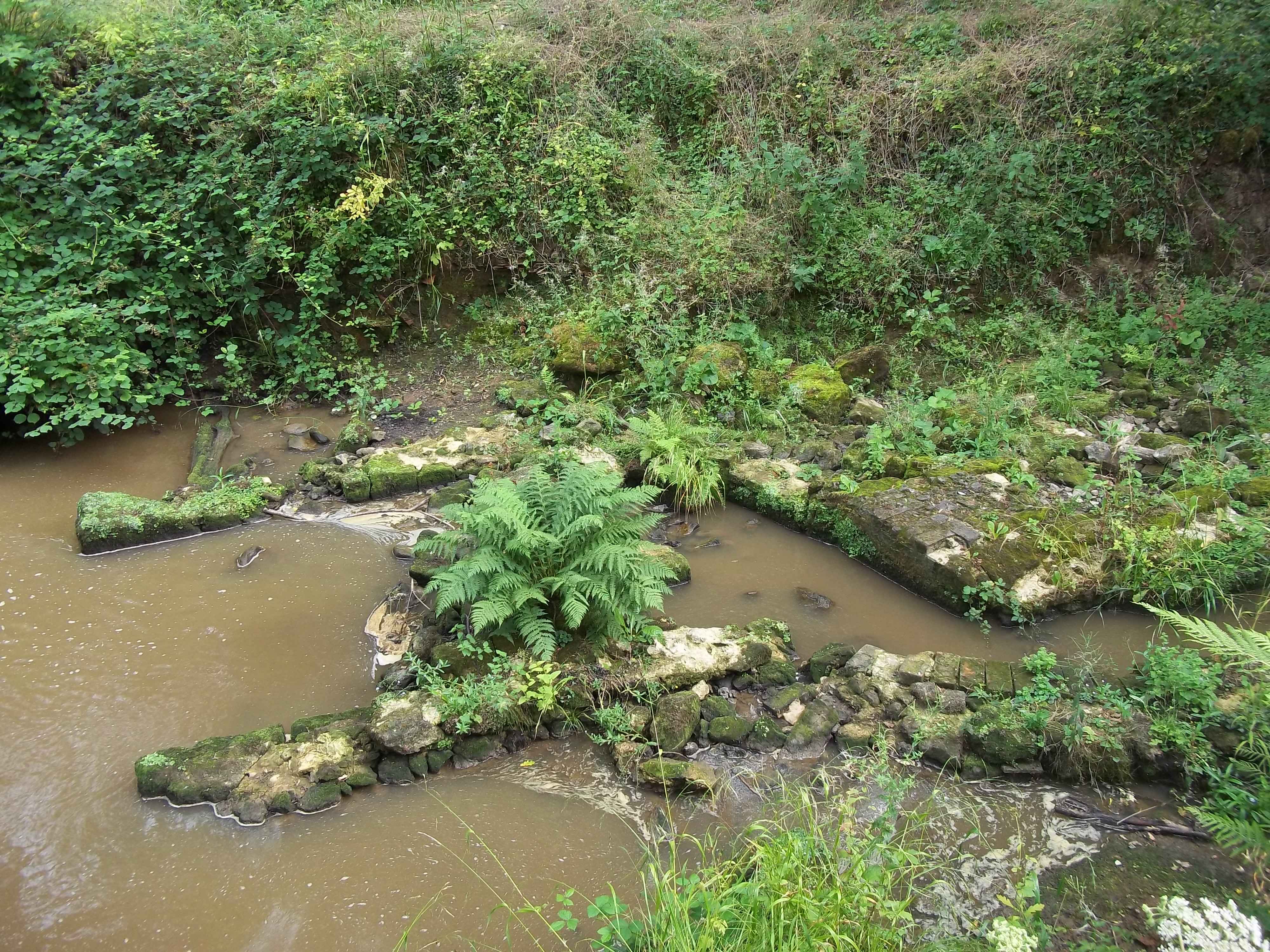
Despite considerable erosion by the stream that once powered it, North Park is considered probably the best-preserved Wealden ironworks site to visit: furnace foundations and the tailrace remain clearly visible from the dam, extensively excavated and labelled by the current owners working with the Fernhurst Society, now organised as the Fernhurst Furnace Preservation Group. The site was scheduled as an Ancient Monument in 2005 and holds regular public open weekends.
Furnace foundations, the tailrace, and the dam and pond that powered the furnace's waterwheel, extensively excavated and interpreted on site.
Redevelopment
None — preserved in situ and managed by the Fernhurst Furnace Preservation Group, with public access on open weekends.
Nearby mines
- Cocking Quarry — 7.1 miles (11.5 km) S
Straight-line distance, within 9 miles (15 km). Show on the map.
Recorded claims
Individual factual claims, each attached to the source(s) that support it below. Where sources disagree, both are kept.
- North Park Furnace was working by 1614 under a lease held by William Shotter. 1
- The furnace was recorded as 'ruined' by 1664 and lay idle for close to a century before John Butler revived it around 1762 to cast cannon during the American and French wars of 1762-83. 1
- Ore was dug from Minepit Copse west of the furnace pond and charcoal cut from Furnace Wood to the east, place names that still record the original sources. 1
- Pig iron cast here supplied Pophole Forge in Hampshire; during its 1760s-70s revival the furnace cast cannon directly. 1
- The furnace closed for the last time in 1776 or 1777. 1
- Furnace foundations and the tailrace survive clearly visible and are considered probably the best-preserved Wealden ironworks site; the site was scheduled as an Ancient Monument in 2005. 1,2
Sources
- (primary) North Park Furnace: iron works and gun foundry, Fernhurst — Historic England
- (secondary) Fernhurst Furnace Preservation Group — Fernhurst Furnace Preservation Group
Record created: 25 August 2026 · Last researched: 25 August 2026