 MineArchive
Collyweston Slate Mines
| Also known as | Collyweston Slate Mine, Collyweston Stone Slate Mines |
|---|---|
| Location | Collyweston and Duddington, near Stamford, Northamptonshire — 52.6115, -0.4700 (approximate) |
| Commodity | Limestone |
| Type | Mineral |
| Worked | Medieval–1960s |
| Maximum depth | Unknown. Worked in narrow beds at shallow depth. |
| Operators | Claude N Smith Ltd (2016–?) |
Overview
Underground workings near the Northamptonshire village of Collyweston for a stone that is not slate but a limestone occurring in narrow beds, split into roofing slates by frost. The mined stone was traditionally left outside for three winters until freezing revealed the layers, which could then be broken — "clived" — into flat slates. The mines fell out of use in the 1960s; the technique was reconstructed artificially by English Heritage, the Burghley Estate and Sheffield Hallam University in the late 1990s, and a mine reopened in 2015. Its slates have since gone onto King’s College and Clare College in Cambridge and a mansion on Long Island.
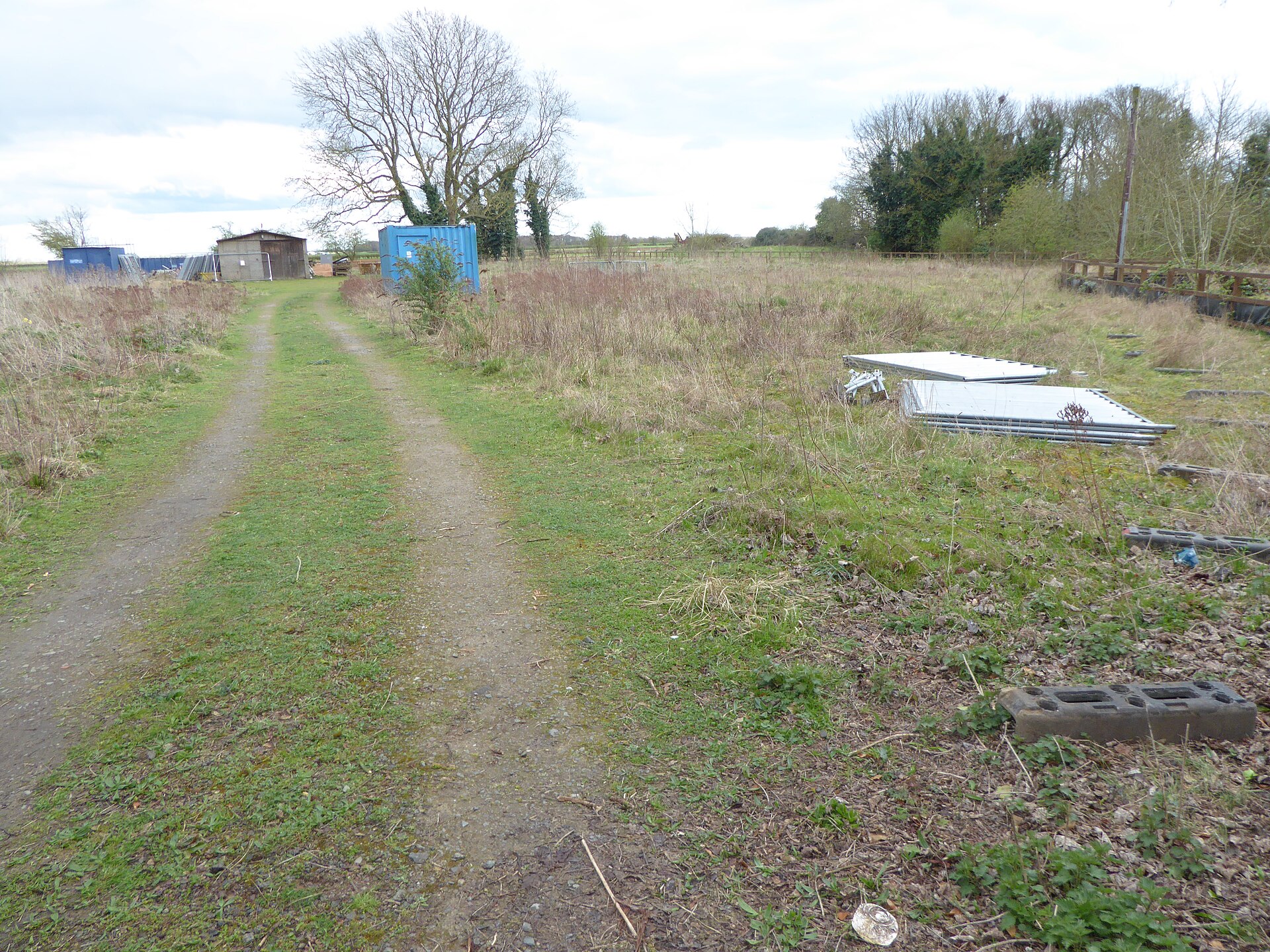
History
Collyweston stone slate is the traditional roofing material of east-central England, found across Northamptonshire, Cambridgeshire, Lincolnshire and Rutland, and quarried near the village of Collyweston close to Stamford and the Lincolnshire and Rutland borders. The material is not a true slate: it is a limestone that occurs in narrow beds, and it is considerably heavier than slate. What made it usable was frost. The mined stone was traditionally left outside through three winters until freezing had opened the layers, which could then be broken — the trade word is clived — into flat slates. It is a method that depends on the weather, and the workings had gone out of use by the 1960s. The revival was deliberate. In the late 1990s English Heritage, now Historic England, worked with the Burghley Estate and Sheffield Hallam University to develop an artificial system reproducing the freeze-thaw cycle. In 2012, when new slates were needed to reroof parts of Apethorpe Palace, English Heritage commissioned further testing and new Collyweston slates were produced; they were used to repair the roofs of Ufford Church in Cambridgeshire and High Wycombe Guildhall. In 2015 a planning application to reopen a slate mine at Collyweston was approved, the mines having been unused since the 1960s, and slate from it has since gone to Bodley’s Court at King’s College, Cambridge, to Clare College, and to Old Westbury Gardens on Long Island in New York. The mine that reopened in 2016 is worked by Claude N Smith Ltd, a long-established local slating business, which makes around 1,000 square metres of new Collyweston slate a year by artificial frosting and is the only producer of the stone.
Geology
The Collyweston slate forms part of the Lower Lincolnshire Limestone Member of the Lincolnshire Limestone Formation, in the Inferior Oolite Group, of Bajocian age in the Middle Jurassic — around 170 million years old. Its usefulness is a matter of how it lies rather than what it is: a limestone laid down in beds narrow enough that frost, working along them, opens the rock into sheets thin enough to roof with. Because it is limestone and not slate it is much heavier than Welsh slate, and roofs built with it are framed accordingly.
Workings
Underground mining rather than open quarrying, following the narrow productive beds. The mined stone was brought out and laid outside to weather; three winters of frost were traditionally needed before it would clive. The artificial freeze-thaw system developed from the late 1990s does the same work in a controlled cycle, which is what allowed production to resume without waiting on the seasons.
Closure
The slate mines had not been used since the 1960s when a planning application to reopen one was approved in 2015. Welsh slate and mass-produced tiles had long since taken the roofing market, and the three-winter frosting method could not compete with either on cost or certainty.
What remains
Working again, on a small scale and for conservation work. A mine reopened after 2015 supplies slates for repairs to historic roofs. Collyweston Slate Mine is a geological Site of Special Scientific Interest.
The village and its neighbours are themselves the surviving evidence: Collyweston roofs are the material’s own monument, on buildings from the Collyweston Slater public house to the Round Church in Cambridge.
Related mines
- Ketton Quarry — Both work the Lincolnshire Limestone Formation within a few miles of Stamford — Ketton the oolitic freestone beds, Collyweston the narrow beds of the Lower Lincolnshire Limestone Member that frost splits into roofing slates. The same formation put a wall stone and a roof stone within carting distance of each other, which is why so many buildings around Stamford are made of both.
Nearby mines
- Barnack Quarries — 2.7 miles (4.4 km) NE, Cambridgeshire
- Ketton Quarry — 4.5 miles (7.3 km) NW, Rutland
- Clipsham Quarry — 8.2 miles (13.2 km) NW, Rutland
Straight-line distance, within 9 miles (15 km). Show on the map.
Recorded claims
Individual factual claims, each attached to the source(s) that support it below. Where sources disagree, both are kept.
- Collyweston stone slate is a traditional roofing material found in east-central England, primarily in Northamptonshire, Cambridgeshire, Lincolnshire and Rutland. It is not a proper slate but a limestone found in narrow beds, and is considerably heavier than true slate. 1
- The Collyweston slate forms part of the Lower Lincolnshire Limestone Member of the Lincolnshire Limestone Formation, part of the Inferior Oolite Group, dating to the Bajocian age of the Middle Jurassic, around 170 million years ago. 1
- Traditionally the mined stone was left outside for three winters until the frost revealed layers that could be broken — "clived" — into flat slates. 1
- In the late 1990s English Heritage, now Historic England, worked with the Burghley Estate and Sheffield Hallam University to develop an artificial system to reproduce the freeze-thaw cycle needed to produce slates. Further testing was commissioned in 2012 when new slates were needed to reroof parts of Apethorpe Palace, and new Collyweston slates were produced and used to repair the roofs of Ufford Church in Cambridgeshire and High Wycombe Guildhall. 1
- In 2015 a planning application to reopen a slate mine in Collyweston was approved; the slate mines had not been used since the 1960s. Slate from the mine has since been used to repair Bodley’s Court at King’s College, Cambridge, Clare College, Cambridge, and Old Westbury Gardens on Long Island, New York. 1
- Claude N Smith Ltd, a long-established Collyweston slating business, reopened the mine in 2016 and works it as the only producing Collyweston stone slate mine, making around 1,000 square metres of slate a year. 2,3
- The traditional production relied on frosting: the log was laid out in the fields when frost was expected and kept wet until it began to split, so a run of warm winters in the late twentieth century cut production and cost many roofs. 3
Photographs & further reading
What the material is and is not, where it lies geologically, the three-winter frosting that made it workable, the artificial freeze-thaw system that replaced it, and the 2015 reopening and the buildings the new slates have gone onto.
View sourceSources
- (secondary) Collyweston stone slate — Wikipedia
- (primary) Collyweston Stone Slate Mine: about (Claude N Smith Ltd) — Claude N Smith Ltd
- (secondary) The Historic England Collyweston project (Stone Roofing Association) — Stone Roofing Association
- (secondary) Collyweston — Wikipedia
Record created: 8 September 2026 · Last researched: 24 September 2026