 MineArchive
Boaterby Mine
| Also known as | Boaterby Quarry, Boaterby Gypsum Mine |
|---|---|
| Location | Boaterby, between Cotehill and Cumwhinton, south of Carlisle, Cumbria — 54.8358, -2.8195 (approximate) |
| Commodity | Gypsum |
| Type | Mineral |
| Worked | 1885–1920 |
| Operators | Joseph Robinson & Co. Ltd (1885–1911, owner) Carlisle Plaster and Cement Company Ltd. (1911–1920, owner) |
Overview
A gypsum quarry in the Eden valley that ran out of room and went underground. Opened in 1885 to replace Joseph Robinson's worked-out quarries, it reached its limit as an open working by 1898, was driven as a pillar-and-stall mine from the quarry face, and was exhausted by 1920.
History
Joseph Robinson and Company worked gypsum around Cotehill south of Carlisle from the middle of the nineteenth century, with a plaster mill at Knot Hill connected to the Settle and Carlisle railway by a siding agreed with the Midland Railway in 1877 and worked by an 0-6-0 saddle tank called Inglewood.
By 1881 Robinson's original quarries were worked out and the Thomlinson Quarry was getting difficult, so a new quarry was begun nearby at Boaterby. It went into production in 1885 and produced 10,000 tons of gypsum in its first year. To secure the future the company ratified a new lease with the Duke of Devonshire for the Cotehill land and took 33 acres from the Earl of Lonsdale near Kirkby Thore.
Demand kept rising, and by 1898 Boaterby had reached its limit as a quarry. A drift was driven into the quarry face to follow the gypsum bed and the working changed from quarrying to pillar-and-stall mining. The official returns catch the change: three people in 1900, none in 1902 with the mine marked reopening, then 36 in 1905 of whom 31 were below ground.
Joseph Robinson and Company amalgamated with J. Howe and Company and the Long Meg Plaster Company in 1911 to form the Carlisle Plaster and Cement Company. By 1920 the resources at Boaterby were almost exhausted, mining ceased, the Knot Hill mill closed and its employees moved to Cocklakes. By 1922 all quarrying in the district had ended and production came from the Cocklakes mine alone.
Geology
The Permian and Triassic gypsum beds of the Eden valley, the same series worked at Cocklakes, Long Meg and Kirkby Thore. The bed at Boaterby could be followed inwards from the quarry face, which is what made the change to mining possible.
Workings
An open quarry from 1885, and from 1898 a drift driven into the quarry face working the gypsum by pillar and stall. The returns put 31 of 36 workers below ground in 1905 and 20 of 26 in 1910. A tramway ran from the Knot Hill plaster mill to the quarry.
Closure
Resources were almost exhausted by 1920 and mining ceased, which closed the Knot Hill mill; its employees went to Cocklakes. All quarrying in the district had stopped by 1922.
What remains
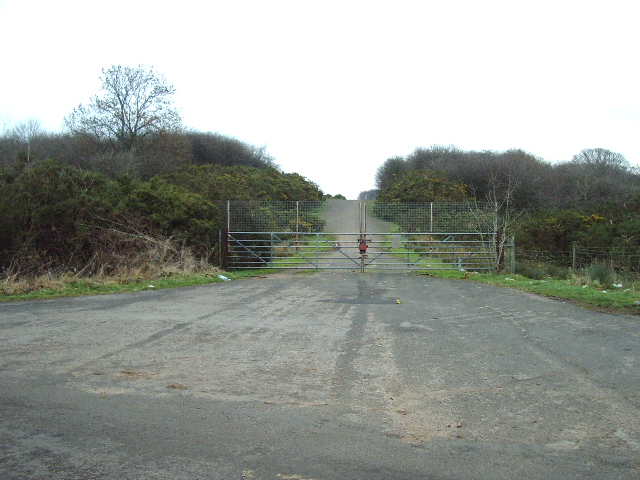
The quarry is disused, flooded, and described by a visitor in 2007 as a peaceful place for wildlife. It is fenced off from the road between Cotehill and Cumwhinton, and an old quarry boundary marker stands on its edge.
The flooded quarry, a boundary marker on its edge, and the parapets of the bridge that carried Robinson's siding to the Settle and Carlisle line.
Nearby mines
- Cocklakes Mine — 1.9 miles (3.1 km) NW
- Talkin Colliery — 7.7 miles (12.4 km) NE
- Long Meg Mine — 9.1 miles (14.6 km) SE
Straight-line distance, within 9 miles (15 km). Show on the map.
What's uncertain
Points where sources disagree or the record could not be settled; both accounts are kept. All open questions in the archive.
- John Messenger, a labourer of 50, was killed at Boaterby on 9 August 1879 by a fall of earth — six years before the quarry is recorded as going into production, which suggests work on the site began earlier than the 1885 date. (uncertain) 2
- The BGS mine-plans catalogue holds a Mining Remediation Authority abandonment plan titled 'Boaterby' (catalogue OM7192, Gypsum, dated 1921); the catalogue gives no location and the plan's details do not clearly tie it to this working, so it may belong to another of the same name. (uncertain) 3
Recorded claims
Individual factual claims, each attached to the source(s) that support it below. Where sources disagree, both are kept.
- By 1881 Robinson and Company's original quarries were worked out and the Thomlinson Quarry was becoming more difficult to work, so the development of a new quarry nearby at Boaterby was begun. It went into production in 1885 and produced 10,000 tons of gypsum in its first year. 1
- By 1898 Boaterby had reached its limit as a quarry. A drift was driven into the quarry face to follow the gypsum deposit and the extraction method switched to mining using pillar and stall methods. 1
- The official returns give gypsum from Boaterby in 1900, 1902, 1905, 1908, 1910 and 1915, with Joseph Robinson & Co. Ltd. as owner in the 1900s and the Carlisle Plaster & Cement Co. Ltd. in the 1910s. Employment was three in 1900, none in 1902 with the mine marked reopening, then 36 in 1905 (31 below ground), 25 in 1908, 26 in 1910 and 14 in 1915. 2
- Resources at Boaterby were almost exhausted by 1920 and mining operations ceased, leading to the closure of the Knot Hill processing mill with the employees moving to Cocklakes. By 1922 all quarrying had ceased and production came from the Cocklakes mine. 1
- John Messenger, a labourer of 50, was killed at Boaterby on 9 August 1879 by a fall of earth — six years before the quarry is recorded as going into production, which suggests work on the site began earlier than the 1885 date. (uncertain) 2
- The BGS mine-plans catalogue holds a Mining Remediation Authority abandonment plan titled 'Boaterby' (catalogue OM7192, Gypsum, dated 1921); the catalogue gives no location and the plan's details do not clearly tie it to this working, so it may belong to another of the same name. (uncertain) 3
Photographs & further reading
Robinson's quarries and mill, why Boaterby was opened in 1885, the drift driven into its face in 1898, and the amalgamation that made the Carlisle Plaster and Cement Company.
View sourceThe returns from 1900 to 1915 with the two owners, the workforce split above and below ground, and one man killed in 1879.
View sourceSources
- (secondary) Gypsum Production in the Cotehill Area — Settle-Carlisle Railway Conservation Area partnership
- (primary) Boaterby (Gypsum) — Durham Mining Museum
- (primary) BGS / Mining Remediation Authority mine plans: BOATERBY — British Geological Survey / Mining Remediation Authority
Record created: 11 September 2026 · Last researched: 11 September 2026