 MineArchive
Belnahua Slate Quarries
| Location | Belnahua, Firth of Lorn, west of Luing, Argyll and Bute — 56.2516, -5.6934 (approximate) |
|---|---|
| Commodity | Slate |
| Type | Slate |
| Worked | 1632 (Old Statistical Account); remains mainly mid-18th century on–1914 |
| Maximum depth | Unknown. |
| Operators | Stevenson brothers of Oban |
Overview
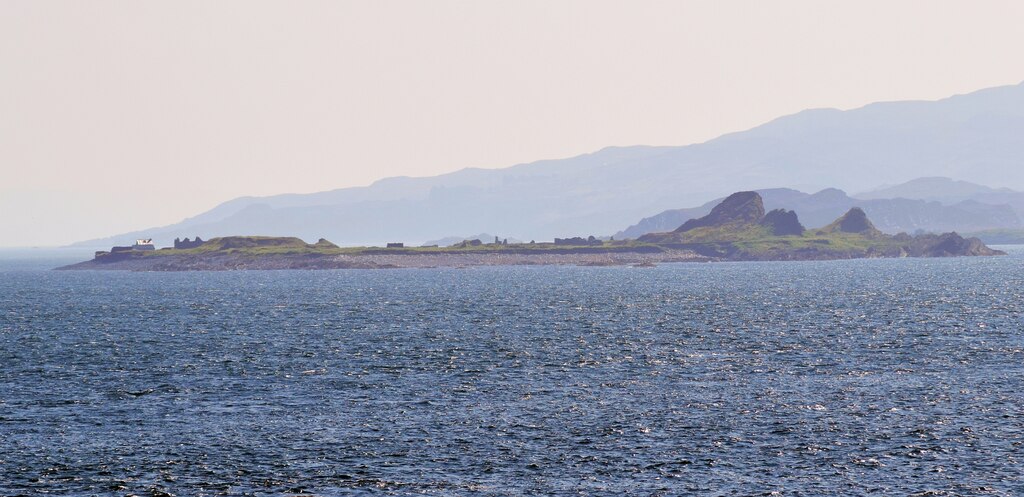
The smallest of the Slate Islands in the Firth of Lorn, quarried so hard that its middle is a flooded pit up to 180 metres across; worked from at least the 18th century and home to over 150 people, it was abandoned in 1914 when the quarrymen went to war, and has stood almost untouched since.
History
Donald Monro noted in 1549 that the island had slate in plenty. The Old Statistical Account dates quarrying on Belnahua to 1632, while Historic Environment Scotland places most of the surviving remains between the mid-18th and early 20th centuries. In the 1790s the Stevenson brothers leased the island to supply slate for the new town of Oban, and built cottages for the workers in the south-east corner with a school and a company store; by the early 19th century they were shipping slate from Belnahua and neighbouring Fladda to Campbeltown. The lease later passed to the Shaw family of Luing, whose quarry master lived in a two-storey house on the island. Almost everything, drinking water included, came by boat from Luing, and the rainwater gathered in reservoirs went to the steam engines that drove the quarry pumps. At its height some 30 quarrymen and their families lived there, a population of over 150. Slate demand was already falling to clay tiles, and when war came in 1914 the men left, the women and children moved to Luing and elsewhere, and the island has been uninhabited since. Quarrying so gutted the island that it is described as having broken its back. Belnahua was scheduled as a monument in 2016.
Geology
Neoproterozoic Jura Slate Member of the Scarba Conglomerate Formation (Dalradian, Easdale Subgroup), a graphitic pelite, cut by a Palaeogene dolerite dyke of the Mull swarm.
Workings
Two large quarries, now flooded, the main one up to 180 metres across, with waste tips, steam-powered pumping and hauling machinery, a jetty on the east side and a quarry village of workers' cottages.
Closure
Work stopped in 1914 when the workforce went to war, with the market already lost to clay tiles.
What remains
Roofless cottages, abandoned machinery including a Cornish boiler and a steam derrick crane, and sea-flooded quarries; the jetty was worn away in the late 20th century.
Ruined quarrymen's cottages and workshops, machinery, waste tips and the flooded quarries.
Redevelopment
None; one building, formerly the shop, has been re-roofed.
Related mines
- Easdale Slate Quarries — Neighbouring Slate Islands quarries in the Firth of Lorn, both ended by the collapse of the slate trade before the First World War.
- Luing Slate Quarries — Luing supplied Belnahua with water and provisions, its Shaw family later held the lease, and Belnahua's families moved there in 1914.
Nearby mines
- Luing Slate Quarries — 4.1 km SE
- Easdale Slate Quarries — 5.9 km NE
Straight-line distance, within 15 km. Show on the map.
What's uncertain
Points where sources disagree or the record could not be settled; both accounts are kept. All open questions in the archive.
- The Old Statistical Account gives quarrying on Belnahua from 1632; Withall calls the island probably uninhabited before the Easdale company's formation in the 18th century. (disputed) 3
Recorded claims
Individual factual claims, each attached to the source(s) that support it below. Where sources disagree, both are kept.
- The monument comprises the remains of slate quarrying on Belnahua, dating mainly from the middle of the 18th to the early 20th century: two flooded quarries, the main one up to 180m across, waste, buildings, machinery and accommodation; scheduled 15 February 2016. 1
- 19th century: the flooded pit of a large quarry, with ruins of houses and workshops (J R Hume 1977). 2
- The Old Statistical Account gives quarrying on Belnahua from 1632; Withall calls the island probably uninhabited before the Easdale company's formation in the 18th century. (disputed) 3
- In the 1790s the Stevenson brothers took a lease on Belnahua to supply slate for Oban; a village with workers' cottages and a school was built. 3,4
- At its height about 30 quarry workers and their families lived there, a population of over 150 (Engine Shed: nearly 200 at its peak). 3,4
- Quarrying stopped in 1914 when the workforce went to war; women and children moved to Luing or elsewhere. 3,4
Photographs & further reading
The national record entry, with 56 images including John Hume's industrial survey photographs and aerial views.
View sourceSources
- (primary) Belnahua, slate quarries and settlement (SM13216), scheduling text as reproduced by AncientMonuments.uk — Historic Environment Scotland, via AncientMonuments.uk
- (primary) Belnahua, Slate Quarries (Canmore 22639) — Historic Environment Scotland (Canmore)
- (secondary) Belnahua — Wikipedia
- (secondary) The rise and demise of Scotland's historic slate industry — Engine Shed (Historic Environment Scotland)
Record created: 21 September 2026 · Last researched: 21 September 2026