 MineArchive
Ballachulish Slate Quarries
| Location | Ballachulish, Highland — 56.6762, -5.1446 (exact) |
|---|---|
| Commodity | Slate |
| Type | Slate |
| Worked | 1693–1955 |
| Operators | Ballachulish Slate Quarries Company (1693–1955) |
Overview
Once called the 'Slate Capital of Scotland', producing over half the country's domestic slate at its peak, worked continuously for over two and a half centuries before finally closing in 1955.
History
According to local tradition, itinerant quarriers travelling through the Glencoe area in 1693 spotted slate outcropping in the hills and began digging on the spot rather than continuing their journey — a story that places the quarry's opening within a year of the nearby Massacre of Glencoe. Ballachulish grew into the dominant force in the Scottish slate trade, at its turn-of-the-century peak producing more than half of all domestically quarried slate in Scotland and employing up to 300 men at any one time; 1845 alone saw around 26 million slates produced. The workforce endured two prolonged and bitter labour disputes in the early 1900s: an 18-month lockout beginning in 1902, triggered by the sudden dismissal of the quarry doctor and demands for safer conditions and fairer treatment at the company store, and a second dispute in 1905 lasting until 1907 over the same underlying grievances. The Scottish slate trade collapsed in the 20th century in the face of cheaper Welsh competition and changing roofing materials, and Ballachulish's last two quarries closed in 1955.
Geology
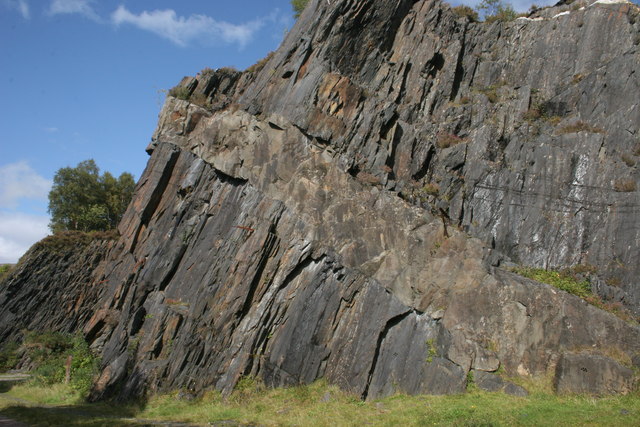
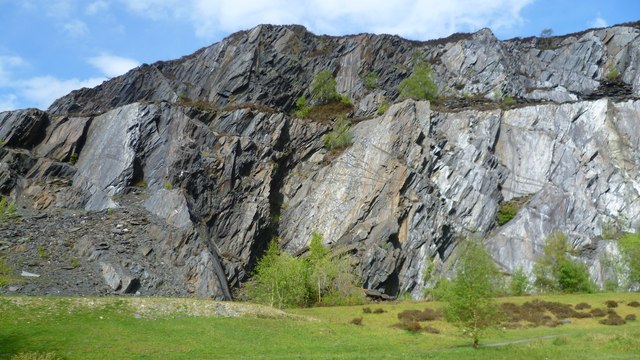
Ballachulish slate is a metamorphic rock formed from Dalradian-age mudstones, valued for splitting cleanly into durable, weather-resistant roofing slates.
Geological setting: Slate and Regional Metamorphism (well documented example)
Workings
Slate was worked from open quarry faces cut into the hillside, split and dressed by hand on site before export, initially by sea and later increasingly by rail and road.
Closure
The quarries closed in 1955 as the Scottish slate industry as a whole collapsed under competition from cheaper Welsh slate and alternative roofing materials.
What remains
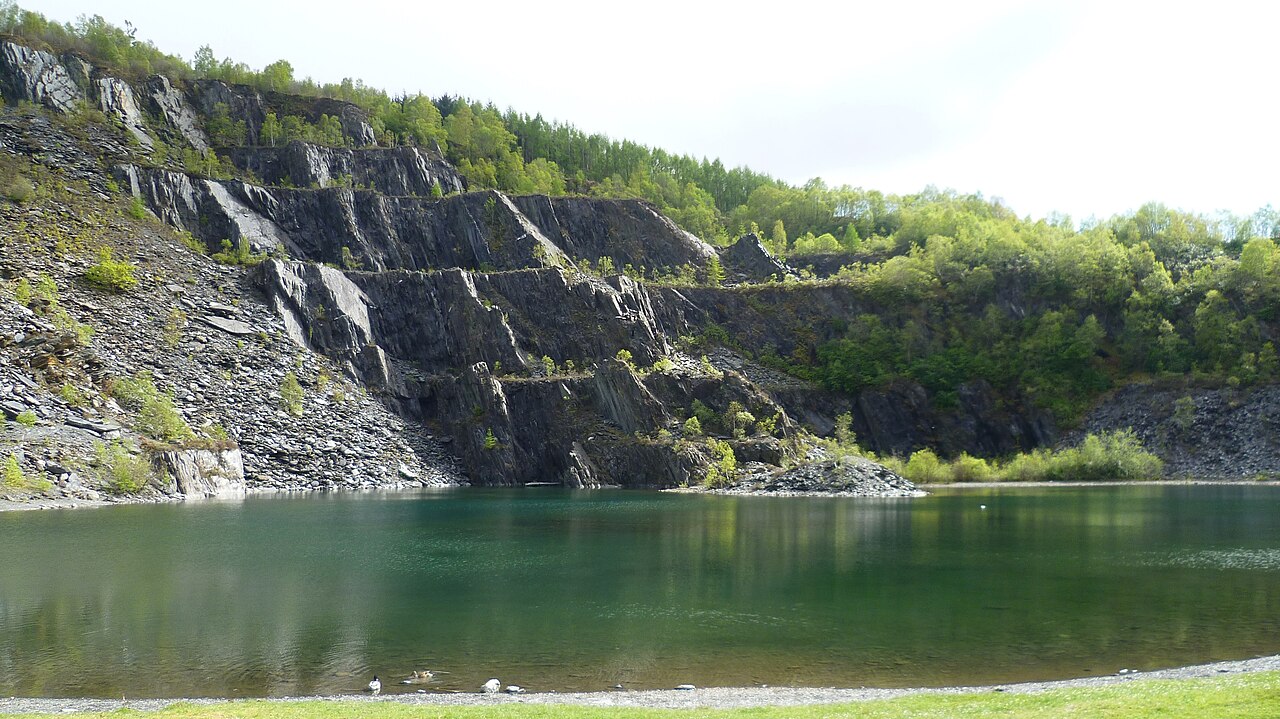
The former East Quarry is preserved and managed by Highland Council in partnership with the local community as a heritage and geology site open to visitors.
A large open quarry void survives at the East Quarry, along with waste tips and interpretive trails explaining the site's history and geology.
Related mines
- Easdale Slate Quarries — Historic Scotland's heritage management team names Ballachulish and Easdale as Scotland's two slate 'super quarries' of the late nineteenth century — the pair that between them roofed much of the country, and the comparison by which Ballachulish's national significance is judged.
Recorded claims
Individual factual claims, each attached to the source(s) that support it below. Where sources disagree, both are kept.
- Tradition holds the quarry was discovered in 1693 by travelling quarriers who spotted slate in the hills and began digging rather than continuing their journey. 1,2
- At its peak Ballachulish produced over half of all domestic slate quarried in Scotland, employing up to 300 men; in 1845 alone some 26 million slates were produced. 1,2
- An 18-month lockout began in 1902 after the quarry doctor was dismissed, with workers demanding his reinstatement, safer conditions and fairer treatment; a second dispute over the same issues ran from 1905 to 1907. 1
- The last two Ballachulish slate quarries closed in 1955, ending over 260 years of continuous working. 2,3
- The last visible structural relic of the quarry's working life is the Ballachulish slate arch, properly the Tom Beag Inclined Plane, standing beside the A82 close to the village. Built in the nineteenth century and made entirely of slate, it carried wagons of dressed slate down to the piers on the loch side and empty wagons back up to the quarry. Historic Scotland called it nationally important because the other Scottish inclined planes survive only as earthworks. 4
- The arch, which belongs to Highland Council, was the subject of a 277,000 pound conservation and interpretation project announced on 28 January 2015 and funded jointly by the Heritage Lottery Fund, Historic Scotland and Highland Council. Alongside the physical works it gathered photographs and documents from the village, recorded the memories of people who had worked in or grown up around the slate industry, upgraded the paths to the arch and through the East Quarry for wheelchairs and pushchairs, and paid for a free two-day course in traditional slate building. Research began that February, the conservation work in July, and the project was due to finish in December 2015. 4
- Historic Scotland's heritage management team described Ballachulish in the late nineteenth century as one of Scotland's two slate 'super quarries', the other being Easdale, and its slates as part of the character of many Scottish buildings. 4
Photographs & further reading
The 2015 conservation and interpretation project on the Tom Beag Inclined Plane, with the funders, the community oral history work and the assessment of why the arch matters nationally.
View sourceThe museum's account of the quarry from the 1693 beginning to the 1955 closure, including the lockouts of 1902 and 1905 and the life of the quarrying village.
View sourceA visitor's description of the quarries as they are now, with the scale of the workings and how to reach them from the village.
View sourceThe village's own history of the quarry, its output and its workforce.
View sourceSources
- (secondary) The Story of the Ballachulish Slate Quarry — Glencoe Folk Museum
- (secondary) Ballachulish Slate Quarries — Undiscovered Scotland
- (secondary) Ballachulish Community Council, Shinty Club & Quarry — Ballachulish Community Council
- (primary) Historic Ballachulish slate arch project gets underway — The National Lottery Heritage Fund
Record created: 21 August 2026 · Last researched: 10 September 2026