 MineArchive
Wood Pit Explosion, 1878
An underground gas explosion at Wood Pit, Haydock, killed 189 men and boys — one of the deadliest mining disasters in English history, and the worst to strike the Haydock Collieries complex.
| Date | 7 June 1878 |
|---|---|
| Mine | Haydock Colliery |
| Region | Lancashire |
| Type | Explosion |
| Fatalities | 189 (189 confirmed dead, though contemporary reports initially claimed over 200; one family, the Boons, lost eight members in the disaster.) |
| Context | During active mining |
Cause
A gas explosion at around 11am in the Florida section of the mine, accompanied by a fall at the coal face; the gas is believed to have escaped from a particularly dangerous seam known locally as the 'fiery 9ft', but the source of ignition was never established.
What happened
Wood Pit consisted of two linked underground sections, the Ravenhead mine and the Florida mine, one of at least twenty collieries then worked by Richard Evans & Co's Haydock Collieries complex. On the morning of 7 June 1878, around 250 men and boys were underground — eighteen in the Ravenhead section, the rest in the Florida section — when, at around eleven o'clock, a gas explosion tore through the Florida workings, accompanied by a collapse of the coal face. The gas is thought to have escaped from the 'fiery 9ft', a seam already known for its dangerous gas content, but exactly how it was ignited was never established. The men working in the Ravenhead section were successfully evacuated, but the Florida section reported no survivors at all in the disaster's immediate aftermath. Recovery teams brought out bodies described at the time as 'shockingly mutilated' by the force of the blast; by 10 June, three days after the explosion, 182 deaths had been confirmed, with a further sixteen survivors seriously injured, and the final toll rose to 189. The disaster fell hardest on individual families sharing the same workplace: the Boon family alone lost eight of its members in a single morning.
Rescue & recovery
The Ravenhead section was evacuated successfully, but no survivors were found in the Florida section; recovery teams worked through continuing gas and damaged ventilation to bring out the dead, whose injuries were described at the time as severe.
Investigation & inquiry
Chief Inspector of Mines Joseph Dickinson investigated the disaster; recovery efforts were hampered by continuing gas and by failures in the mine's ventilation apparatus. The pit was known to have chronic firedamp problems, and in the disaster's aftermath the operators banned the use of explosives underground and required all workers to carry safety lamps.
Legal & regulatory aftermath
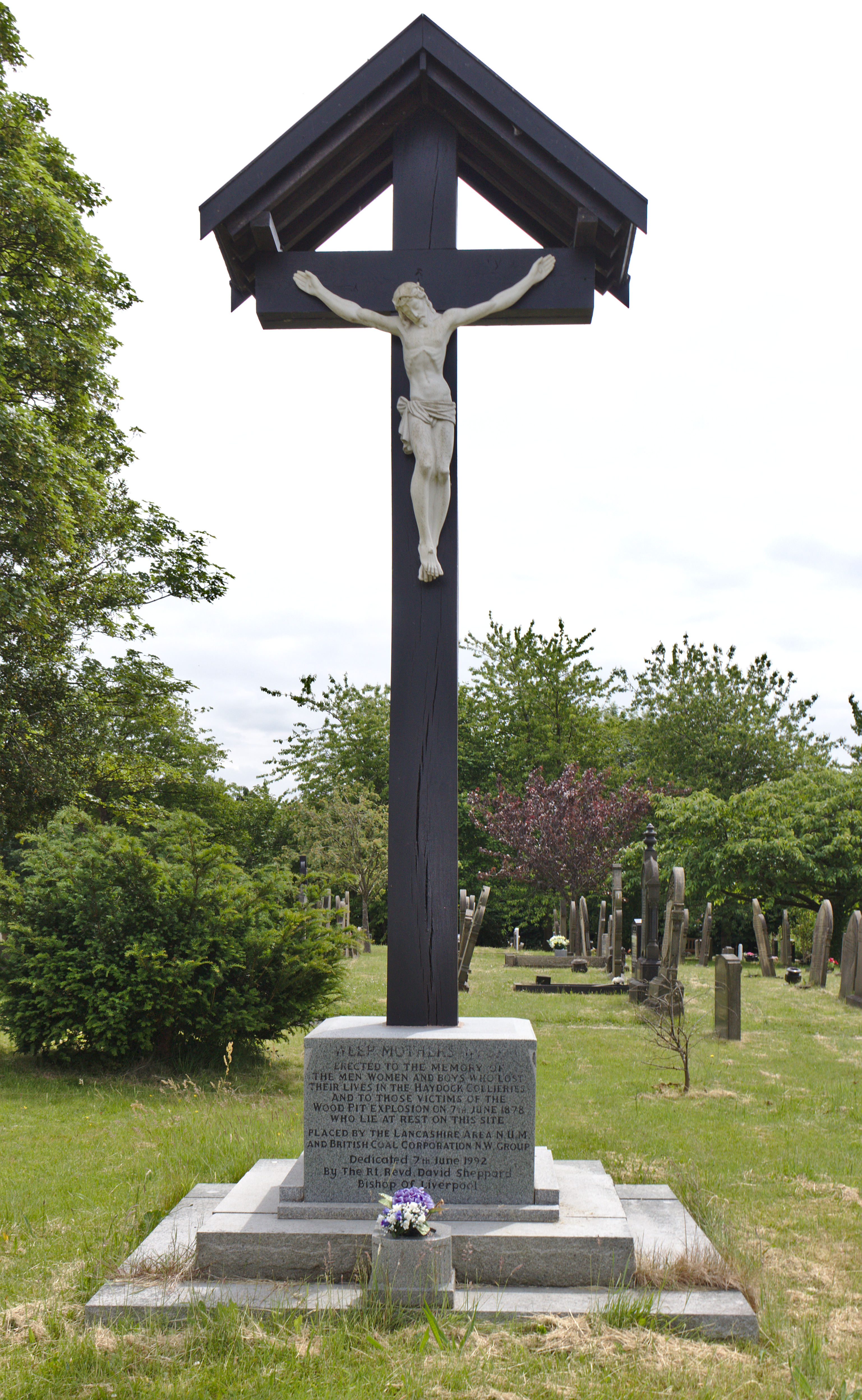
Lord Derby organised a public fundraising campaign for the bereaved families that raised £25,000. Thirty of the victims were buried together at St James the Great churchyard in Haydock, where a memorial to them and to Haydock's other mining disasters, including the Wood Pit explosion, still stands.
Memorials & commemoration
A memorial in the form of a calvary stands in the churchyard of St James the Great, Haydock, dedicated to the victims of local mining disasters, especially the Wood Pit explosion. A second memorial was installed near the disaster site itself in 2009.
Recorded claims
Individual factual claims, each attached to the source(s) that support it below. Where sources disagree, both are kept.
- 189 men and boys were confirmed dead, though contemporary reports initially claimed over 200; the Boon family alone lost eight of its members. 1
- The explosion occurred around 11am in the Florida section, accompanied by a fall at the coal face; the gas is believed to have escaped from the 'fiery 9ft' seam, but the source of ignition was never established. 1
- Around 250 men and boys were underground at the time, 18 in the Ravenhead section (evacuated successfully) and the rest in the Florida section, which reported no survivors. 2,1
- The operators banned explosives underground and required all workers to carry safety lamps in the disaster's aftermath; Lord Derby organised a relief fund that raised £25,000 for the bereaved families. 1
Related terminology
Mining terms this disaster is structurally linked to, with the nature of the relationship.
- Coal (contextual relationship)
Named twice in this record, first in the cause: “…in the Florida section of the mine, accompanied by a fall at the coal face; the gas is believed to have escaped from a particularly…” - Colliery (contextual relationship)
Named 3 times in this record, first in the summary: “…disasters in English history, and the worst to strike the Haydock Collieries complex.” - Firedamp (direct cause)
The disaster was caused by an explosion of firedamp escaping from the notoriously gassy 'fiery 9ft' seam. - HM Chief Inspector of Mines (contextual relationship)
Named in this record’s investigation: “Chief Inspector of Mines Joseph Dickinson investigated the disaster; recovery efforts were…” - Safety Lamp (contextual relationship)
Named in this record’s investigation: “…the use of explosives underground and required all workers to carry safety lamps.”
Sources
- (secondary) Wood Pit disaster — Wikipedia — Wikipedia
- (primary) Wood Pit Explosion — Haydock — 1878 — Northern Mine Research Society
Record created: 2 September 2026 · Last researched: 2 September 2026